📈 Check Your Blood Pressure Now
Use our free calculator to see whether your reading falls within the normal range and what your numbers mean.
Most conversations about blood pressure focus on readings that are too high. But what happens when your numbers drop too low? Low blood pressure — known medically as hypotension — can be perfectly harmless for some people and a warning sign for others. The difference usually comes down to whether you experience symptoms and how quickly the drop occurs.
This guide explains everything you need to know about low blood pressure in the UK: what the readings mean, the most common causes, the symptoms to watch for, and the situations where you need to act fast. Whether you are monitoring your own numbers or supporting someone else, this page will help you make sense of the readings and know when to speak with a GP.
In the UK, low blood pressure is defined as a reading below 90/60 mmHg. It is only a concern when it causes symptoms such as dizziness, fainting, or fatigue. Many healthy people — especially young adults and athletes — live with naturally low readings without any problems at all.
📖 In This Guide
- What Is Low Blood Pressure?
- Understanding Your BP Reading
- Types of Low Blood Pressure
- What Causes Low Blood Pressure?
- Symptoms of Low Blood Pressure
- When to Worry About Low Blood Pressure
- How Is Hypotension Diagnosed?
- Treatment and Management
- Practical Tips to Raise Low Blood Pressure Naturally
- Low Blood Pressure During Pregnancy
- Frequently Asked Questions
1. What Is Low Blood Pressure?
Blood pressure is the force that your blood exerts against the walls of your arteries as your heart pumps it around your body. You need a certain amount of pressure to deliver oxygen and nutrients to your brain, kidneys, and other vital organs.
When that pressure drops too low, your organs may not receive the blood flow they need to function properly. This is what doctors call hypotension.
According to the NHS, low blood pressure is defined as a reading below 90/60 mmHg. However, the NHS also makes an important distinction: a low reading is not a problem on its own. It only becomes a medical concern when it produces noticeable symptoms.
Many people have naturally low blood pressure throughout their lives and never experience a single issue. In fact, for young, active adults and athletes, lower blood pressure is often a sign of excellent cardiovascular fitness.
2. Understanding Your Blood Pressure Reading
A blood pressure reading consists of two numbers, measured in millimetres of mercury (mmHg):
- Systolic pressure (top number): The pressure in your arteries when your heart beats and pumps blood out.
- Diastolic pressure (bottom number): The pressure in your arteries between beats, when your heart is resting and refilling.
Source: NHS and British Heart Foundation blood pressure guidelines.
📈 Check Your Blood Pressure Now
Use our free calculator to see whether your reading falls within the normal range and what your numbers mean.
3. Types of Low Blood Pressure
Not all low blood pressure is the same. The type you experience depends on when and why the drop happens. Understanding the different types can help you and your doctor identify the right approach.
Orthostatic (Postural) Hypotension
This is the most common type. It happens when your blood pressure drops suddenly after you stand up from a sitting or lying position. Normally, your body compensates by constricting blood vessels and increasing your heart rate. When that response is too slow or too weak, you feel dizzy or lightheaded.
Orthostatic hypotension is more common in older adults and in people taking blood pressure medications. The Guy’s and St Thomas’ NHS Foundation Trust lists dehydration, heart conditions, and hormonal problems as key triggers.
Postprandial Hypotension
Some people experience a blood pressure drop within one to two hours after eating a meal. This happens because digestion requires extra blood flow to the stomach and intestines, which temporarily diverts blood away from other parts of the body. It is most common in older adults and people with autonomic nervous system disorders.
Neurally Mediated Hypotension (NMH)
This type occurs after standing for a long period or following an emotional or stressful event. It results from a miscommunication between the brain and the heart — the brain signals the heart to slow down even though blood pressure is already dropping. It is more common in young people and children.
Severe Hypotension (Shock)
The most dangerous form. Shock happens when blood pressure drops so low that the brain, kidneys, and other organs cannot receive enough blood to function. It can be caused by severe infection (sepsis), major blood loss, severe allergic reactions (anaphylaxis), or heart failure. Shock is a life-threatening medical emergency.
If someone is showing signs of shock — confusion, cold and clammy skin, rapid shallow breathing, a weak or rapid pulse, or loss of consciousness — call 999 immediately. Do not wait to see if symptoms improve.
4. What Causes Low Blood Pressure?
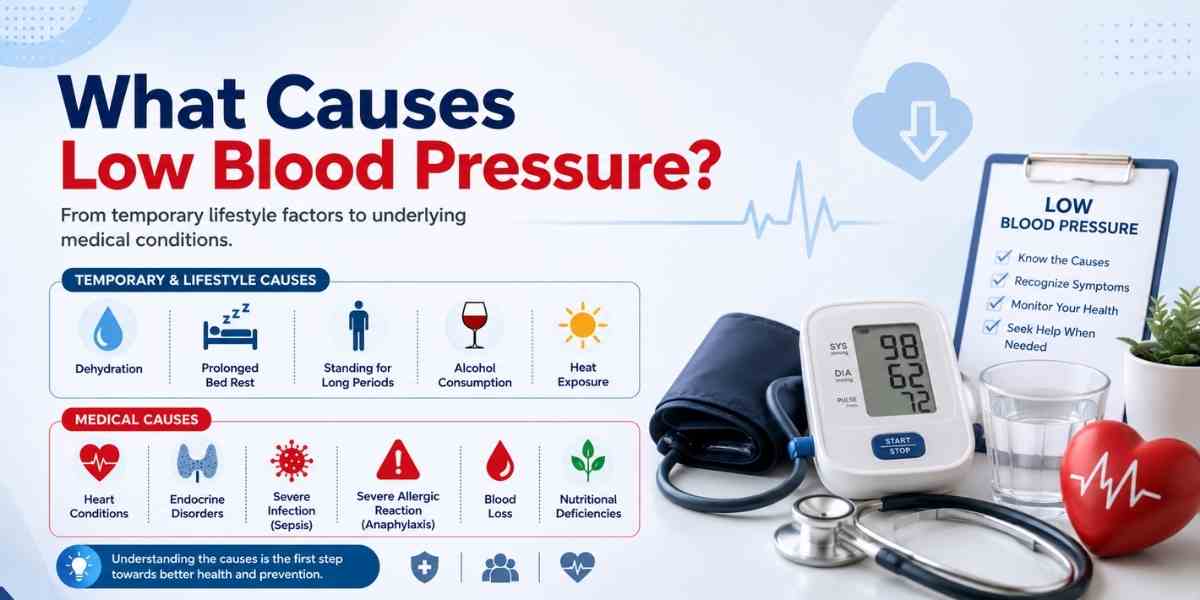 Low blood pressure can result from a wide range of factors, from temporary and harmless triggers to more serious underlying conditions. Here are the most common causes:
Temporary and Lifestyle Causes
- Dehydration: When your body loses more water than it takes in, your blood volume decreases, causing pressure to fall. This is especially common during hot weather, exercise, or illness involving vomiting or diarrhoea.
- Prolonged bed rest: Spending extended periods lying down can weaken the cardiovascular system’s ability to adjust when you stand up.
- Standing for long periods: Blood can pool in the legs, reducing the volume returning to the heart.
- Alcohol consumption: Alcohol dilates blood vessels and can lower blood pressure, particularly on an empty stomach.
- Heat exposure: Hot baths, saunas, and warm weather cause blood vessels to widen, which may trigger a pressure drop.
Medical Causes
- Heart conditions: Heart valve problems, heart failure, and very low heart rate (bradycardia) can reduce the heart’s pumping ability.
- Endocrine disorders: Conditions affecting hormone-producing glands — such as underactive thyroid (hypothyroidism), adrenal insufficiency (Addison’s disease), and low blood sugar (hypoglycaemia) — can interfere with blood pressure regulation.
- Severe infection (sepsis): When an infection enters the bloodstream, it can cause a dramatic and dangerous drop in blood pressure.
- Severe allergic reaction (anaphylaxis): This causes widespread blood vessel dilation and a rapid, life-threatening fall in pressure.
- Blood loss: Significant blood loss from injury or internal bleeding reduces blood volume and pressure.
- Nutritional deficiencies: A lack of vitamin B12, folate, or iron can lead to anaemia, which reduces the number of red blood cells and can lower blood pressure.
Medication-Related Causes
According to the British Heart Foundation, several types of medication can cause or contribute to low blood pressure:
- Diuretics (water tablets)
- Beta-blockers and other blood pressure medications
- Some antidepressants (particularly tricyclics)
- Medications for Parkinson’s disease
- Medications for erectile dysfunction
- Alpha-blockers (used for prostate conditions)
If you suspect your medication is causing low blood pressure, do not stop taking it without speaking to your GP first. Sudden withdrawal from certain medications can cause serious rebound effects. Your doctor can adjust the dosage or switch you to an alternative.
5. Symptoms of Low Blood Pressure
Many people with low blood pressure readings have absolutely no symptoms. In these cases, no treatment is needed. However, when blood pressure drops low enough to reduce blood flow to the brain and vital organs, you will usually notice it.
Common symptoms of hypotension include:
- Dizziness or lightheadedness
- Feeling faint or actually fainting (syncope)
- Blurred or narrowing vision
- Nausea
- Fatigue and general weakness
- Difficulty concentrating or mental confusion
- Cold, clammy, or pale skin
- Rapid, shallow breathing
These symptoms often come and go rather than persisting constantly. They are frequently triggered by specific situations: standing up quickly, eating a large meal, spending time in the heat, or becoming dehydrated. Keeping note of when your symptoms occur can help your GP identify the type and cause of your low blood pressure.
Keep a symptom diary. Record the date, time, what you were doing when the symptoms started, your blood pressure reading (if available), and how long the symptoms lasted. Bring this diary to your GP appointment — it can significantly speed up diagnosis.
Related: 20 Low Blood Pressure Diet Meals for Sustainable Wellness
Practical meal ideas designed to help stabilise low blood pressure readings.
6. When to Worry About Low Blood Pressure
Low blood pressure on its own is rarely dangerous. The critical question is: are you experiencing symptoms, and how severe are they?
See Your GP If:
- You experience frequent episodes of dizziness or lightheadedness
- You have fainted or come close to fainting more than once
- Your symptoms are interfering with daily activities
- You notice symptoms after starting a new medication
- Low blood pressure symptoms have developed gradually over weeks or months
Seek Urgent Help (Call 999 or Go to A&E) If:
Seek emergency medical help if low blood pressure is accompanied by any of the following:
- Confusion, drowsiness, or difficulty staying awake
- Cold, clammy, pale, or blue-tinged skin
- Rapid, weak pulse or rapid shallow breathing
- Loss of consciousness or collapse
- Severe chest pain or difficulty breathing
- Signs of a severe allergic reaction (swelling of face, lips, or throat)
- High fever above 38°C alongside a rapid drop in blood pressure
These could be signs of shock, sepsis, or anaphylaxis — all of which are medical emergencies requiring immediate treatment.
As a general rule: if you feel unwell and your blood pressure is low, it is always worth contacting your GP surgery or calling NHS 111 for advice. It is far better to check and be reassured than to ignore something that may need attention.
7. How Is Hypotension Diagnosed?
Your GP will begin by measuring your blood pressure — typically while you are sitting down and then again while you are standing. A significant drop in reading when moving from sitting to standing can confirm orthostatic hypotension.
Depending on your symptoms and history, your doctor may also recommend:
- Blood tests: To check for anaemia, blood sugar levels, thyroid function, or signs of infection.
- Electrocardiogram (ECG): To detect heart rhythm irregularities or structural problems.
- Echocardiogram: An ultrasound scan of the heart to assess its structure and pumping ability.
- Tilt table test: You lie on a table that slowly tilts you to an upright position while your blood pressure and heart rate are monitored. This is used to diagnose neurally mediated hypotension and orthostatic hypotension.
- 24-hour ambulatory blood pressure monitoring: You wear a portable device that records your blood pressure at regular intervals throughout a normal day.
The NHS Health Check programme offers blood pressure assessment for adults aged 40 to 74. If you have not had your blood pressure checked recently, your GP surgery or local pharmacy can usually do this quickly and free of charge.
8. Treatment and Management
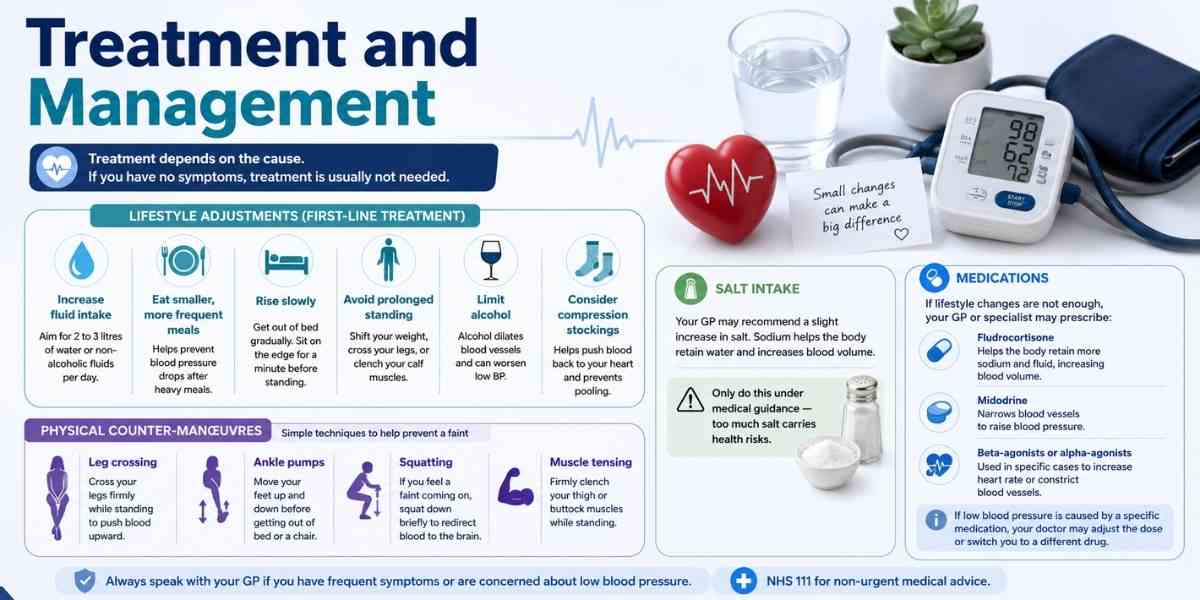 Treatment for low blood pressure depends entirely on the underlying cause. If your low blood pressure does not cause symptoms, treatment is usually not needed.
Lifestyle Adjustments (First-Line Treatment)
For most people with symptomatic hypotension, simple lifestyle changes are the most effective approach:
- Increase fluid intake: Aim for 2 to 3 litres of water or non-alcoholic fluids per day to maintain blood volume.
- Eat smaller, more frequent meals: This can prevent the large blood pressure drops that follow heavy meals (postprandial hypotension).
- Rise slowly: When getting out of bed or standing up from a chair, do so gradually. Sit on the edge of the bed for a minute before standing.
- Avoid prolonged standing: If you must stand for long periods, shift your weight, cross your legs, or clench your calf muscles.
- Limit alcohol: Alcohol dilates blood vessels and can worsen low blood pressure.
- Consider compression stockings: These apply gentle pressure to your legs, helping push blood back toward your heart and preventing pooling.
Salt Intake
While the general population is advised to limit salt, your GP may recommend a slight increase if you have low blood pressure. This is because sodium helps the body retain water, which increases blood volume. However, this should only be done under medical guidance — too much salt carries its own health risks.
Medications
In cases where lifestyle changes are not enough, your GP or specialist may prescribe medication. The British Heart Foundation notes that these may include:
- Fludrocortisone: Helps the body retain more sodium and fluid, increasing blood volume.
- Midodrine: Narrows blood vessels to raise blood pressure.
- Beta-agonists or alpha-agonists: Used in specific cases to increase heart rate or constrict blood vessels.
If your low blood pressure is being caused by a specific medication, your doctor may adjust the dose or switch you to a different drug.
Physical Counter-Manoeuvres
UK clinicians often teach patients simple physical techniques to prevent a full faint when they feel symptoms coming on:
- Leg crossing: Cross your legs firmly while standing to push blood upward.
- Ankle pumps: Move your feet up and down before getting out of bed or a chair.
- Squatting: If you feel a faint coming on, squatting down briefly can rapidly redirect blood to the brain.
- Muscle tensing: Firmly clench your thigh or buttock muscles while standing.
9. Practical Tips to Raise Low Blood Pressure Naturally
If you live with mild, symptomatic low blood pressure, these day-to-day habits can help you manage your readings and reduce the frequency of episodes:
🥦
Related: Low Blood Pressure Diet Meals — 20 Ideas That Actually Work
Evidence-based meals designed to support healthy circulation and prevent pressure drops.
10. Low Blood Pressure During Pregnancy
Low blood pressure is very common during pregnancy, particularly during the first and second trimesters. It happens because hormonal changes cause the blood vessels to relax and widen, which reduces pressure throughout the circulatory system.
For most pregnant women, this is completely normal and not a cause for concern. However, it can produce uncomfortable symptoms, including:
- Dizziness, especially when standing up quickly
- Feeling faint or actually fainting
- Blurred vision
- Nausea (beyond normal morning sickness)
- Fatigue
Tips for Managing Low Blood Pressure During Pregnancy
- Rise slowly from sitting or lying positions
- Stay well hydrated throughout the day
- Avoid standing for prolonged periods
- Avoid lying flat on your back — instead, lie on your left side to improve blood flow to your heart and baby
- Eat small, frequent meals
- Report any fainting episodes or severe dizziness to your midwife or GP
While low blood pressure in pregnancy is usually harmless, sudden or very low readings can sometimes indicate ectopic pregnancy or other complications. Always inform your midwife or GP if you experience repeated fainting, heavy bleeding, or severe abdominal pain alongside low blood pressure.
🏥 Is Your Blood Pressure in the Healthy Range?
Enter your latest reading into our free blood pressure calculator and get an instant, easy-to-understand result.
11. Frequently Asked Questions
What is considered low blood pressure in the UK?
In the UK, low blood pressure is generally defined as a reading below 90/60 mmHg. The NHS states that a low reading on its own is not usually a problem — it only becomes a concern when accompanied by symptoms such as dizziness, fainting, or persistent fatigue.
What are the main symptoms of low blood pressure?
The most common symptoms include dizziness, lightheadedness, blurred vision, nausea, fatigue, difficulty concentrating, cold or clammy skin, and fainting. Symptoms are often triggered by standing up quickly, eating large meals, or spending time in the heat.
When should I worry about low blood pressure?
You should seek urgent medical attention if low blood pressure is accompanied by confusion, rapid shallow breathing, a weak or rapid pulse, cold and clammy skin, or loss of consciousness. These symptoms could indicate shock, sepsis, or anaphylaxis — all of which are medical emergencies. Call 999 immediately.
Can dehydration cause low blood pressure?
Yes. Dehydration reduces the volume of blood circulating through your body, which directly causes blood pressure to drop. The NHS recommends drinking 6 to 8 glasses of fluid per day, and more during hot weather, exercise, or illness.
Is low blood pressure dangerous during pregnancy?
Low blood pressure is common and usually harmless during the first and second trimesters. It results from hormonal changes that cause blood vessels to relax. However, it can cause dizziness and fainting, so pregnant women should rise slowly, stay hydrated, and report any severe symptoms to their midwife.
How can I raise my blood pressure naturally?
Practical steps include drinking more fluids (2–3 litres daily), eating smaller and more frequent meals, slightly increasing salt intake with your GP’s approval, wearing compression stockings, avoiding prolonged standing, and rising slowly from sitting or lying positions.
Does low blood pressure cause tiredness?
Yes. When blood pressure is too low, your organs — including your brain — may not receive adequate blood flow. This can result in persistent fatigue, difficulty concentrating, and a general feeling of weakness.
Can anxiety cause low blood pressure?
Anxiety more commonly causes temporary spikes in blood pressure. However, the aftermath of a severe anxiety or panic attack can sometimes trigger a drop in blood pressure due to vasovagal responses, leading to dizziness or fainting.
2 Responses