Quick answer
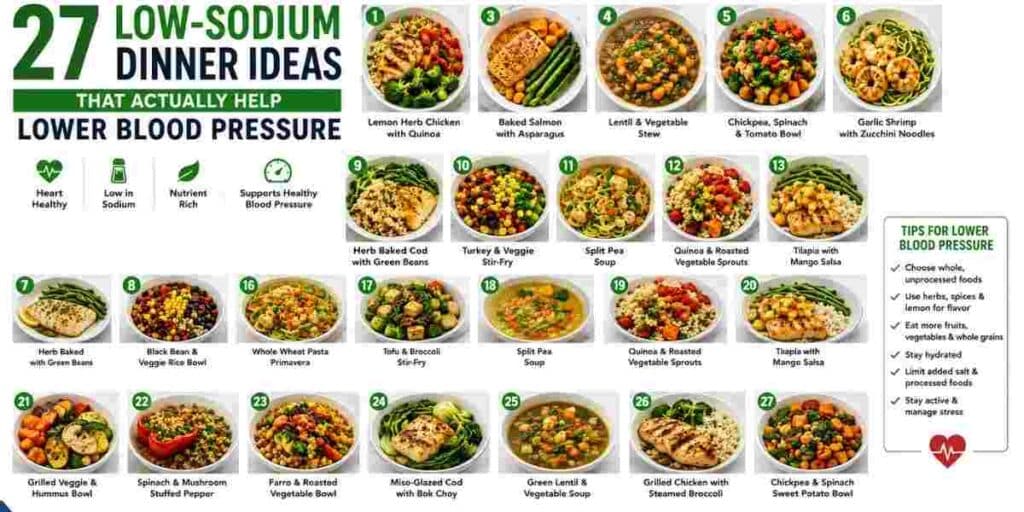
A low-sodium dinner contains 500 mg of sodium or less per serving. The NHS recommends no more than 6g of salt per day (2,400 mg sodium) — roughly 800 mg per meal. All 27 recipes below stay within this target and follow DASH diet principles to support healthy blood pressure.
If you’ve been told to watch your salt intake, dinner is usually where things go wrong. After a long day, it’s tempting to reach for a ready meal, a jar of sauce, or the takeaway menu — and those are exactly the places where sodium hides in enormous quantities. A single supermarket ready meal can contain over 1,500 mg of sodium — nearly your entire day’s allowance in one sitting.
But here’s the good news: cooking low-sodium dinners doesn’t have to mean eating bland food or spending an hour in the kitchen. These 27 recipes are designed to be quick (most under 30 minutes), genuinely tasty, and kind to your blood pressure. Every recipe includes an approximate sodium estimate, and they all follow DASH diet principles — the eating pattern proven to lower blood pressure.
Already tracking your readings? Our free Blood Pressure Average Calculator can help you see whether dietary changes are making a difference over time.
📋 In This Article
- Why What You Eat at Dinner Affects Your Blood Pressure
- How Much Sodium Should You Have Per Meal?
- 10-Minute Low-Sodium Dinners
- 20-Minute DASH-Friendly Meals
- Nourish Bowls & Salads for Blood Pressure
- Heart-Healthy Soups Under 300mg Sodium
- Comfort Food Makeovers
- Flavour Without Salt: 6 Seasoning Swaps
- Frequently Asked Questions
- You Might Also Be Interested In
Why What You Eat at Dinner Affects Your Blood Pressure
Most people consume the heaviest, saltiest meal of the day at dinner. That matters more than you might think — because your body processes sodium differently in the evening. Blood pressure naturally dips while you sleep (a pattern doctors call “nocturnal dipping”), but a high-sodium dinner can blunt that dip, keeping your pressure elevated overnight and into the next morning.
Research from the Johns Hopkins Medicine team confirms that reducing sodium intake — even modestly — produces measurable drops in blood pressure within weeks. Dinner is where you have the most control, because you’re cooking at home rather than relying on pre-packaged or restaurant food.
How Much Sodium Should You Have Per Meal?
The NHS recommends no more than 6g of salt per day (approximately 2,400 mg of sodium) for all adults. The American Heart Association goes further, recommending an ideal limit of 1,500 mg per day for people with high blood pressure.
Spread across three meals plus snacks, that works out to roughly:
| Meal | NHS Limit (6g salt/day) | AHA Ideal (1,500mg/day) |
|---|---|---|
| Breakfast | ~600 mg | ~400 mg |
| Lunch | ~600 mg | ~400 mg |
| Dinner | ~800 mg | ~500 mg |
| Snacks | ~400 mg | ~200 mg |
All 27 recipes below aim for 500 mg sodium or less per serving — well within both guidelines. Where a recipe is higher, we’ve noted it.
10-Minute Low-Sodium Dinners
These are your go-to options for evenings when energy is at rock bottom. Minimal prep, maximum flavour, and every one clocks in under 400 mg sodium.
1. Lemon-Herb Tinned Salmon Salad (~180 mg sodium)
Flake a tin of no-salt-added salmon over mixed leaves, cherry tomatoes, cucumber, and sliced avocado. Dress with lemon juice, olive oil, and a pinch of black pepper. The omega-3 fatty acids in salmon support heart health, and the potassium from the avocado helps your body flush excess sodium.
2. Smashed Avocado & Egg on Wholegrain Toast (~220 mg sodium)
Mash a ripe avocado with lemon juice and chilli flakes. Pile onto seeded wholegrain toast and top with a soft-boiled egg. Skip the salt — the egg’s natural flavour and the lemon provide all the seasoning you need.
3. Quick Chickpea & Spinach Stir (~250 mg sodium)
Drain and rinse a tin of no-salt-added chickpeas (rinsing canned pulses removes up to 40% of sodium). Sauté with garlic, cumin, smoked paprika, and a generous handful of spinach. Squeeze lemon over the top. Rich in potassium, magnesium, and fibre — three minerals that actively support lower blood pressure.
4. Mediterranean Tuna Lettuce Wraps (~200 mg sodium)
Mix no-salt-added tinned tuna with diced cucumber, tomato, red onion, and a drizzle of olive oil and lemon. Spoon into crisp little gem lettuce cups. Fresh, crunchy, and completely salt-free beyond what’s naturally in the tuna.
5. Greek Yoghurt & Herb Flatbread (~280 mg sodium)
Mix wholemeal flour with plain Greek yoghurt to form a simple dough. Roll out thin and dry-fry in a hot pan for two minutes per side. Serve with homemade hummus (made without added salt) and vegetable sticks. The yoghurt provides calcium, which plays a role in blood pressure regulation.
20-Minute DASH-Friendly Meals
A little more involved, but still comfortably weeknight-friendly. These follow the core DASH diet principles — rich in vegetables, lean protein, whole grains, and healthy fats.
6. One-Pan Lemon Chicken with Roasted Vegetables (~320 mg sodium)
Toss chicken thighs with new potatoes, tenderstem broccoli, lemon zest, garlic, and oregano. Drizzle with olive oil and roast at 200°C for 20 minutes. No salt needed — the lemon and herbs do all the heavy lifting. Lemon juice tricks your palate into perceiving more saltiness than is actually present.
7. Prawn & Pea Wholegrain Orzo (~350 mg sodium)
Cook wholegrain orzo, adding frozen peas and prawns in the final two minutes. Drain and stir through a spoonful of no-salt pesto, lemon zest, and a sprinkle of Parmesan. Prawns are naturally higher in sodium, so we’ve kept the portion modest and added no extra salt.
8. Turkey Mince Lettuce Cups with Ginger & Lime (~280 mg sodium)
Brown lean turkey mince with fresh garlic and grated ginger. Season with a splash of reduced-sodium soy sauce, rice vinegar, and lime juice. Spoon into little gem lettuce leaves and top with spring onions and sesame seeds. Turkey is one of the leanest proteins and naturally low in sodium.
9. Black Bean Tacos with Quick-Pickled Onion (~310 mg sodium)
Warm no-salt-added black beans with cumin and a pinch of smoked chipotle. Mash slightly for texture. Serve in soft corn tortillas with sliced avocado and quick-pickled red onion (red onion soaked in lime juice and a pinch of sugar for five minutes). Black beans are loaded with potassium and fibre — both protective against hypertension.
10. Creamy Tomato & Spinach Pasta (~380 mg sodium)
While wholegrain pasta cooks, simmer a tin of no-salt-added chopped tomatoes with garlic and a big handful of spinach until wilted. Stir in a tablespoon of low-fat soft cheese for creaminess. Toss with the drained pasta. Simple, satisfying, and the spinach adds potassium and magnesium.
11. Herb-Crusted Baked Salmon with Sweet Potato (~290 mg sodium)
Mix chopped fresh dill, parsley, and a squeeze of Dijon mustard into a paste. Press onto salmon fillets and bake at 190°C for 15 minutes. Serve with roasted sweet potato wedges (tossed in olive oil and paprika, no salt). The British Heart Foundation recommends oily fish at least once a week for heart health.
12. Veggie-Packed Egg Fried Rice (~340 mg sodium)
Stir-fry cold cooked brown rice with beaten eggs, frozen peas, diced carrot, spring onions, and a teaspoon of reduced-sodium soy sauce. Add a drizzle of sesame oil at the end. Using cold leftover rice makes this genuinely quick, and the eggs add protein without significant sodium.
13. Spiced Cauliflower & Chickpea Traybake (~260 mg sodium)
Toss cauliflower florets and drained chickpeas with olive oil, turmeric, cumin, and a squeeze of lemon. Roast at 200°C for 20 minutes until golden. Serve with a dollop of plain yoghurt and fresh coriander. Turmeric has anti-inflammatory properties that may support cardiovascular health.
Nourish Bowls & Salads for Blood Pressure
Bowls are naturally ideal for blood pressure management — they’re built around vegetables, grains, and lean protein, and they don’t need added salt to taste interesting.
14. Rainbow Nourish Bowl (~220 mg sodium)
Start with a base of cooked quinoa. Top with grated carrot, steamed edamame, shredded red cabbage, sliced avocado, and a soft-boiled egg. Drizzle with tahini thinned with lemon juice. The potassium from the avocado and edamame actively helps your kidneys flush excess sodium.
15. Mediterranean Chickpea & Feta Bowl (~380 mg sodium)
Combine rinsed tinned chickpeas with chopped cucumber, cherry tomatoes, red onion, olives (just a few — they’re salty), and a small amount of crumbled feta. Dress with lemon, oregano, and olive oil. Feta is higher in sodium than some cheeses, so we’ve kept the portion to about 20g.
16. Warm Lentil & Roasted Beetroot Salad (~240 mg sodium)
Toss cooked Puy lentils with roasted beetroot cubes (roast fresh beetroot, not pickled), rocket, walnuts, and a balsamic-olive oil dressing. Beetroot is rich in dietary nitrates, which the body converts into nitric oxide — a compound that relaxes blood vessels and lowers pressure.
17. Japanese-Inspired Sushi Bowl (~350 mg sodium)
Top warm brown rice with flaked no-salt-added tinned salmon or smoked salmon (small amount), sliced cucumber, avocado, edamame, and a sprinkle of sesame seeds. Use reduced-sodium soy sauce sparingly — or swap for a squeeze of lime and pickled ginger.
18. Spinach, Pomegranate & Walnut Power Salad (~190 mg sodium)
Toss baby spinach with pomegranate seeds, chopped walnuts, sliced pear, and a light lemon-olive oil dressing. Spinach is high in potassium and nitrates, pomegranate contains antioxidants linked to blood pressure reduction, and walnuts provide omega-3 fatty acids.
19. Sweet Potato & Black Bean Buddha Bowl (~270 mg sodium)
Roast cubed sweet potato with cumin and paprika. Serve over brown rice with no-salt-added black beans, diced avocado, a squeeze of lime, and fresh coriander. Sweet potato is one of the richest sources of potassium — a single medium sweet potato contains over 500 mg.
Heart-Healthy Soups Under 300mg Sodium
Shop-bought soups are one of the worst sodium offenders — a single tin can contain over 1,200 mg. Making your own is surprisingly quick and lets you control exactly what goes in.
20. Five-Ingredient Red Lentil Soup (~180 mg sodium)
Sauté an onion and carrot in olive oil. Add red lentils, low-sodium vegetable stock, and a teaspoon of cumin. Simmer for 15 minutes and blend until smooth. Lentils are rich in potassium, fibre, and magnesium — all of which support healthy blood pressure.
21. Spicy Tomato & Butterbean Soup (~210 mg sodium)
Sauté garlic and chilli flakes in olive oil. Add two tins of no-salt-added chopped tomatoes and a drained tin of butterbeans. Simmer for ten minutes, mash some beans to thicken, and top with fresh basil. Filling, warming, and the beans provide both protein and potassium.
22. Coconut & Sweet Potato Soup (~230 mg sodium)
Sauté diced sweet potato and onion with fresh ginger and a teaspoon of curry powder. Add light coconut milk and low-sodium stock. Simmer until the sweet potato is tender, then blend until smooth. The ginger adds warmth and has mild anti-inflammatory properties.
23. Leek, Potato & Herb Soup (~250 mg sodium)
Soften sliced leeks and diced potato in a little olive oil. Add low-sodium chicken or vegetable stock and simmer until tender. Blend, stir through a handful of chopped chives, and finish with a swirl of low-fat crème fraîche. Classic, comforting, and naturally low in sodium when you control the stock.
Comfort Food Makeovers
These prove you don’t need to sacrifice your favourites. Healthy swaps keep the taste and cut the sodium.
24. Sweet Potato-Topped Cottage Pie (~420 mg sodium)
Brown lean beef or turkey mince with onions, carrots, and peas in a base of no-salt-added chopped tomatoes and a splash of Worcestershire sauce (just a teaspoon — it’s salty). Top with mashed sweet potato (microwave to save time) and grill until golden. The sweet potato topping adds potassium while replacing some of the sodium-heavy regular mash.
25. Cauliflower-Topped Fish Pie (~390 mg sodium)
Poach white fish (cod or haddock) in a light sauce made with semi-skimmed milk, a teaspoon of flour, and fresh parsley. Add peas. Top with mashed cauliflower mixed with a small amount of potato, then grill until golden. Using cauliflower cuts carbohydrates and adds vitamin C.
26. Turkey & Sweet Potato Chilli (~380 mg sodium)
Brown turkey mince with onion and garlic. Add diced sweet potato, no-salt-added tinned tomatoes, no-salt-added kidney beans, and chilli powder. Simmer for 20 minutes until the sweet potato is tender. Serve with brown rice. A lighter, potassium-rich version of a classic.
27. Veggie-Loaded Bean Chilli (~300 mg sodium)
Sauté onion, pepper, and courgette. Add a three-bean mix (drained and rinsed), no-salt-added tinned tomatoes, cumin, smoked paprika, and a pinch of chilli flakes. Simmer for 15 minutes. Serve with a baked potato and a dollop of natural yoghurt. Portion and freeze for instant future dinners.
📊 Sodium at a Glance: All 27 Recipes
| Category | Recipes | Sodium Range |
|---|---|---|
| 10-Minute Dinners | #1–5 | 180–280 mg |
| 20-Minute DASH Meals | #6–13 | 260–380 mg |
| Nourish Bowls & Salads | #14–19 | 190–380 mg |
| Heart-Healthy Soups | #20–23 | 180–250 mg |
| Comfort Food Makeovers | #24–27 | 300–420 mg |
All estimates are approximate and assume no-salt-added tinned ingredients and reduced-sodium stock where indicated. Actual sodium may vary based on brands used.
Flavour Without Salt: 6 Seasoning Swaps
The biggest fear with low-sodium cooking is bland food. These six swaps solve that problem completely — every one adds depth and complexity without a grain of salt.
| Instead of Salt, Try… | Best For | BP Bonus |
|---|---|---|
| Lemon or lime juice | Fish, chicken, salads | Vitamin C supports blood vessel health |
| Fresh garlic & ginger | Stir-fries, soups, marinades | Garlic may lower BP by 5–8 mmHg |
| Smoked paprika | Roasted veg, beans, chilli | Rich smoky depth, zero sodium |
| Cumin & turmeric | Curries, lentils, rice dishes | Turmeric has anti-inflammatory properties |
| Balsamic vinegar | Salads, roasted veg, glazes | Acidity replaces perceived saltiness |
| Fresh herbs (basil, coriander, dill) | Everything | Antioxidants with zero sodium |
💡 Pro tip: Johns Hopkins dietitians recommend taking the salt shaker off the table entirely and replacing it with a lemon wedge bowl and a pepper grinder. Your palate adjusts to less salt within two to three weeks.
Frequently Asked Questions
What is considered a low-sodium dinner?
A low-sodium dinner contains 500 mg of sodium or less per serving. This aligns with guidance from the American Heart Association, which recommends a daily limit of 1,500 mg for people with high blood pressure — roughly 500 mg per meal when you account for snacks. When buying ingredients, look for labels that say “no salt added” or “low sodium” (140 mg or less per serving).
How much sodium should I have per meal with high blood pressure?
If you follow the NHS guideline of no more than 6g salt per day (2,400 mg sodium), each meal should contain roughly 600–800 mg of sodium. Under the stricter AHA target of 1,500 mg per day, aim for around 400–500 mg per meal. Reading food labels is essential — many staple foods like bread, cheese, and sauces contain more sodium than you’d expect.
What can I eat for dinner if I have high blood pressure?
Focus on meals built around vegetables, whole grains, lean protein (chicken, fish, beans), and healthy fats (olive oil, avocado, nuts). The DASH diet is the most studied eating pattern for blood pressure and is recommended by both the NHS and AHA. Avoid ready meals, takeaways, processed meats, and sauces from jars — these are typically the highest-sodium dinner options.
Can eating late at night raise blood pressure?
Eating a heavy or high-sodium meal close to bedtime can reduce the natural overnight dip in blood pressure that normally occurs during sleep. While occasional late eating isn’t a crisis, making it a regular habit — especially with salty foods — may contribute to sustained elevated pressure over time. Try to eat dinner at least two to three hours before bed.
What is the best dinner for someone with hypertension?
The best dinner for hypertension combines DASH diet principles with low sodium: baked salmon with roasted sweet potato and steamed broccoli is a near-perfect example. It delivers omega-3 fats from the fish, potassium from the sweet potato, and fibre and magnesium from the broccoli — all while keeping sodium under 300 mg per serving.
This article is for general information only and is not a substitute for professional medical advice. Always consult your GP or a registered dietitian before making significant dietary changes, especially if you take blood pressure medication. Sodium estimates are approximate and will vary based on brands and portion sizes used.