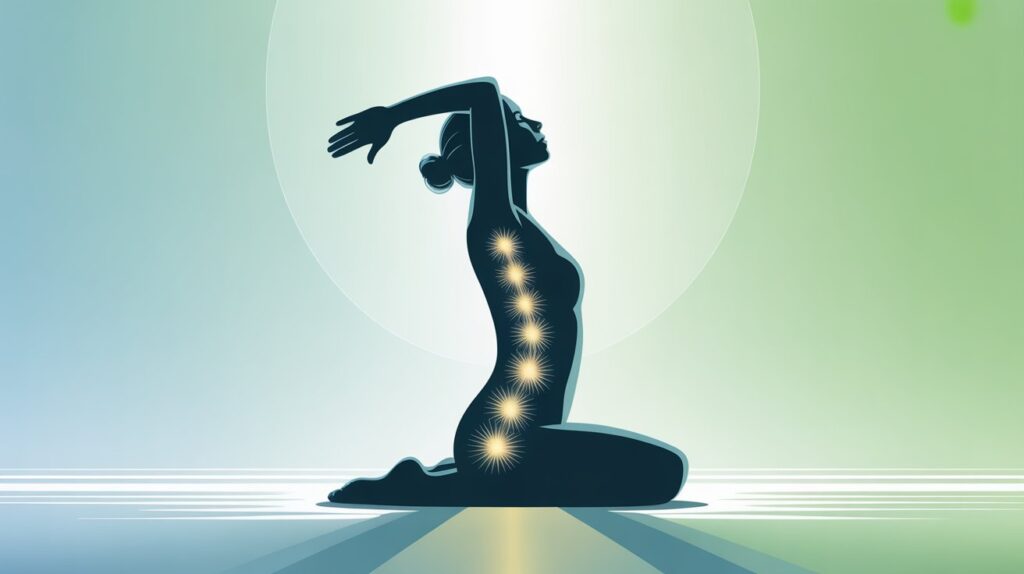
Introduction: That Nagging Ache is Trying to Tell You Something

Let me ask you a question. Right now, as you read this, where are you holding your tension?
Is it in the tight knot between your shoulder blades? The subtle clench in your jaw you only notice at the end of the day? For years, I dismissed my own lower back stiffness as just a part of life at a desk. I tried massage, which felt great but whose effects faded quickly. It wasn’t until a colleague introduced me to Body Stress Release (BSR) that I understood the difference between temporarily soothing a symptom and actually helping the body release the underlying cause.
Body stress isn’t an abstract concept; it’s a physical reality. It’s the accumulated residue of life’s bumps—both physical (that old sports injury), chemical (poor diet), and emotional (that ongoing work pressure). Your brilliant, protective nervous system stores these impacts as tension in your muscles and connective tissue, like a circuit breaker that’s tripped and won’t reset. Body Stress Release is the gentle, intelligent way to flip that switch back to “on,” allowing your body’s innate self-healing capabilities to take over.
What is Body Stress Release? It’s Not What You Think
Many people hear “bodywork” and think of deep tissue massage or bone-cracking adjustments. BSR is fundamentally different. As one of my mentors put it, “We’re not here to fix you. We’re here to facilitate a conversation with your body.”
Developed in South Africa in the 1980s, BSR is a communication-based therapy. The core principle is that your body wants to be in a state of health and balance. Stored stress blocks this. A BSR practitioner doesn’t diagnose or manipulate. Instead, we use light, precise pressure at specific points to send a message to the central nervous system, effectively saying, “The threat has passed. It’s safe to relax now.”
Think of it this way:
-
Massage is like kneading tight dough.
-
Chiropractic is like realigning a misaligned wheel.
-
Body Stress Release is like rebooting the car’s central computer so it can correct the alignment itself.
It’s a profound form of somatic therapy that works from the body up to calm the mind, making it incredibly effective for anxiety relief and chronic pain alike.
The Science Made Simple: How Your Body Gets “Stuck” in Stress

To appreciate BSR, a little understanding of your autonomic nervous system (ANS) is helpful. Your ANS is your body’s autopilot, managing functions like your heartbeat, digestion, and—crucially—the stress response.
When you experience stress (a near-miss in traffic, a sudden shock, lifting something heavy incorrectly), your ANS flips into “fight-or-flight” mode. Muscles contract to form a protective armor. Once the threat passes, your body should return to “rest-and-digest” mode.
But here’s the catch I see with clients all the time: modern life is a barrage of minor stressors. We never fully come down. That protective tension becomes chronic, stored in your tissue. This stored stress disrupts nerve communication, leading to pain, stiffness, and a feeling of being permanently “on edge.” BSR helps to complete that stalled stress cycle, allowing your nervous system to finally stand down.
A Peek Inside a Session: What It Really Feels Like
Walking into a BSR session can be surprising for first-timers. It’s quiet, respectful, and far from a clinical, intimidating environment.
-
The Conversation (The Foundation): We don’t just jump on the table. We start with a thorough chat. I ask about your history—old injuries, your daily habits, your stress levels. This isn’t just small talk; it’s detective work. That lower back pain could stem from a car accident five years ago, or from how you sit at your workstation. Understanding the potential physical, chemical, and emotional stressors is key.
-
The Assessment (Listening with Our Hands): You’ll lie fully clothed on a comfortable couch. Then, I’ll perform a series of gentle tests, applying light pressure to your legs, arms, and spine. I’m not testing your strength; I’m listening to your body’s reflexive responses. Your body, not me, will show exactly where the stress is locked. It’s a humbling process that respects the body’s own intelligence.
-
The Release (Sending the Signal): This is where the magic happens. Using controlled, light pressure on the specific points we identified, I facilitate the release techniques. It doesn’t hurt. You might feel a deep sense of warmth, a wave of relaxation, or a subtle “unwinding” sensation. One of my clients described it as “feeling like a weight I didn’t know I was carrying just slid off my back.”
-
The Aftermath (Your Body Takes Over): The real work happens after you leave. Your body continues processing the release. It’s incredibly common to feel tired, emotional, or even a bit achy for a day or two. This isn’t a bad sign! It’s a positive indicator that your system is actively rebalancing—a crucial part of your recovery strategies. We always advise rest and plenty of water to support this natural detoxification process.
A Quick Note on Blood Pressure: Chronic stress is a known contributor to high blood pressure. While BSR is not a direct treatment, the deep relaxation it promotes can be a valuable part of a holistic management plan. It’s useful to monitor your vitals; you can track trends using a tool like a blood pressure average calculator. For more on complementary approaches, you might find our article on Homeopathy and High Blood Pressure: A Gentle Approach an interesting read.
Is Body Stress Release For You? Who I See Getting the Best Results

In my practice, I’ve seen BSR help people from all walks of life. It’s particularly powerful for:
-
The Desk-Weary: Those with persistent back, neck, and shoulder pain from postural stress.
-
The Former Athlete: People living with the echoes of old injuries or niggling joint pain.
-
The Anxious Mind: Individuals seeking anxiety relief who find talk therapy isn’t enough to calm the physical symptoms of stress.
-
The “Just-Not-Right” Crowd: People who feel generally out of sorts, fatigued, or stiff without a clear medical diagnosis.
It’s important to state clearly: BSR is a fantastic complementary therapy. It works alongside conventional medicine. For any acute or undiagnosed pain, your first port of call should always be your GP or a relevant medical specialist. We are part of your wellness team, not a replacement for it.
Your At-Home Toolkit: 5 Practitioner-Backed Techniques for Daily Release

While a session with a trained practitioner is essential for deep-seated stress, you can powerfully support your well-being every day. Here are my top five recommendations:
1. The 4-7-8 Breath for Instant Calm:
This is my go-to breathwork exercise for clients. Inhale through your nose for 4 counts, hold your breath for 7 counts, and exhale slowly through your mouth for 8 counts. Repeat 3-4 times. This directly stimulates the vagus nerve, shifting your nervous system into “rest-and-digest” mode. It’s a game-changer for stress reduction.
2. The “Body Scan” for Enhanced Awareness:
Lie down and spend 60 seconds mentally scanning from your toes to your head. Don’t judge or change anything—just notice. Is your right shoulder tighter than your left? This simple body awareness practice is the first step toward release techniques.
3. Legs Up The Wall (Viparita Karani):
This restorative yoga pose is a powerful way to drain tension and reduce swelling in the legs. Simply sit sideways against a wall, then swing your legs up it as you lie back. Rest here for 5-15 minutes. It’s a profound de-stress method that can also support circulation.
4. The Tennis Ball Massage:
For DIY fascial release, stand with a tennis ball under your bare foot. Gently roll it around, pausing on any tender spots. The plantar fascia in your feet is connected to tension throughout your body. This is a fantastic way to release it.
5. Hydrate, Hydrate, Hydrate:
This sounds too simple, but it’s non-negotiable. Your body’s process of flushing out stress hormones and metabolic waste (detoxification) requires water. Dehydration alone can cause muscle cramps and brain fog, mimicking the symptoms of stored stress.
Taking the Next Step: Finding a Practitioner and What to Expect

If you’re ready to explore BSR, the best resource is the official Body Stress Release Association (International) website. They have directories for Body Stress Release practitioners in the UK, South Africa (including Cape Town, Hermanus, George, and Durbanville), and worldwide.
When you search “body stress release near me,” use this directory to ensure you’re seeing a certified practitioner.
Costs and Commitment:
The Body Stress Release cost varies by location, but think of it as an investment in foundational health. Initial sessions are typically longer. Most people need a series of sessions close together initially, tapering off as the body holds the release for longer. Be wary of anyone promising a one-time “cure.”
The Final Word: Your Body is Waiting to Let Go
Body stress release is more than a therapy; it’s a return to trust. Trust in your body’s incredible ability to heal and find balance when given the right support. It’s about moving from a state of constant, low-grade alarm to one of grounded ease.
The journey to a lighter, more comfortable you isn’t about adding another strenuous task to your life. It’s about learning the gentle art of release.
Your Journey Starts Now
Have you experienced the weight of stored tension? What techniques have you tried to find relief? I’d love to hear your story and answer any questions in the comments below. If this guide resonated with you, please share it with someone in your life who might be carrying a little too much on their shoulders.