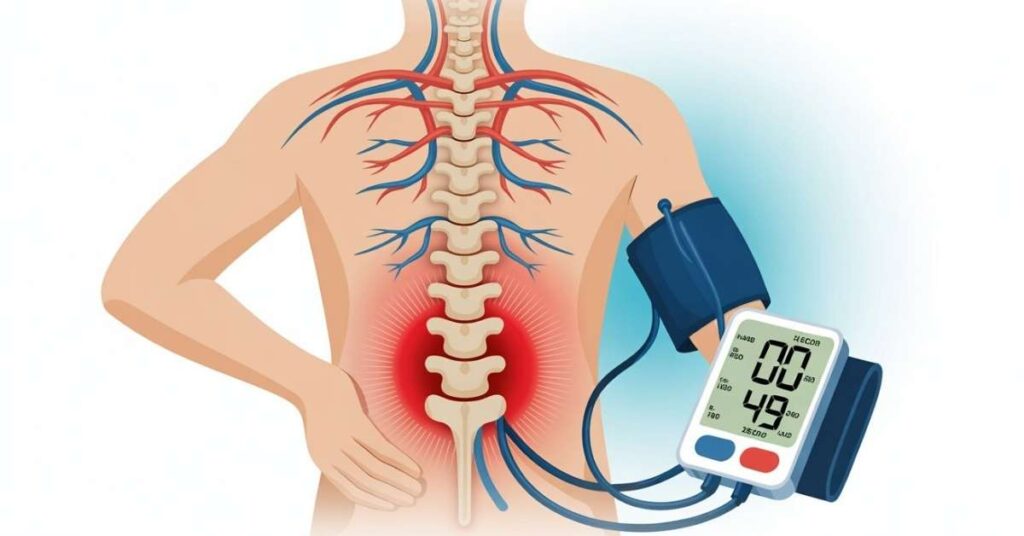
If you’re reading this, you’ve probably felt a twinge in your back and wondered if it’s linked to your blood pressure. You’re not alone. Many people search for this connection, often feeling anxious about what their symptoms might mean.
It’s a confusing area. Sometimes, the two issues are unrelated coincidences. Other times, they can influence each other in surprising ways. Recent research, including a 2023 Mendelian-randomisation study, has shed new light on this complex relationship.
This article will cut through the confusion. We’ll explore the science, separate correlation from causation, and give you clear, actionable advice. Our goal is to empower you with knowledge, so you can have more informed conversations with your GP.
Can High Blood Pressure Really Cause Back Pain?

Generally, high blood pressure (hypertension) itself does not directly cause common back pain. This is a crucial distinction. The dull, aching pain from a muscle strain or a slipped disc isn’t typically a symptom of hypertension.
However, the link becomes serious when we consider long-term complications. Persistently high BP can damage blood vessels, making them weak and prone to bulging. This is called an aortic aneurysm.
If an aneurysm forms in the part of the aorta that runs through the chest or abdomen, it can cause a deep, severe, and often sudden pain in the back or abdomen. This is a medical emergency. A 2023 study by Suri et al. highlighted this vascular link, reminding us that while hypertension doesn’t cause everyday aches, its severe complications can.
How Back Pain Can Increase Blood Pressure
This is a much more common and direct link. Pain is a significant stressor on your body. Think about the last time you had a sharp back spasm—your whole body tenses up.
This triggers your “fight or flight” response. Your body releases stress hormones like adrenaline. This causes your heart to beat faster and your blood vessels to narrow, leading to a temporary spike in blood pressure.
Chronic back pain keeps your nervous system in a constant state of low-grade alert. This can lead to sustained higher blood pressure over time. Studies in journals like Spine have consistently shown that managing chronic pain is an important part of managing overall cardiovascular health.
What Part of the Body Hurts When You Have High Blood Pressure?

Hypertension is famously called the “silent killer” because it often has no symptoms. Most people with high BP feel no pain at all.
However, in a hypertensive crisis (a dangerously high reading), the immense pressure can cause symptoms. These can include a severe headache, chest pain, or even pain that radiates to the upper back between the shoulder blades.
This type of back pain is not a simple muscle ache. It’s often described as a “tearing” or “ripping” sensation. If you experience this, especially with chest tightness or shortness of breath, it is a red flag.
Is Back Pain a Symptom of a Hypertensive Crisis?
A hypertensive crisis is when your blood pressure reaches dangerously high levels, typically above 180/120 mmHg. It is a medical emergency.
In this situation, sudden, severe back pain can be a critical warning sign. It may indicate that the high pressure is causing damage to your aorta, such as a dissection (a tear) or a leaking aneurysm.
If you have a severe headache, chest pain, severe back pain, or blurred vision alongside a very high blood pressure reading, you must call 999 or go to your nearest A&E immediately.
Can Pain and Inflammation Cause High Blood Pressure?
Yes, both acute and chronic pain can contribute to high blood pressure. The mechanism is twofold. First, as we mentioned, the stress response directly raises BP.
Second, chronic pain conditions often involve inflammation. Your body releases chemicals called inflammatory cytokines. These can damage blood vessel walls and make it harder for them to relax, leading to sustained higher pressure.
For example, someone with a chronic condition like sciatica or arthritis may find their blood pressure is more difficult to control due to this constant inflammatory state.
How Pain Affects Blood Pressure and Heart Rate

Let’s break down the physiology simply. When you feel sharp pain:
-
Your brain signals the adrenal glands to release adrenaline.
-
Adrenaline makes your heart beat faster and more forcefully (increasing heart rate).
-
It also causes your blood vessels to constrict (narrow).
-
This one-two punch of more blood being pumped through narrower pipes is what causes your blood pressure to spike.
With chronic pain, this system doesn’t get a chance to fully reset, leading to a higher average blood pressure and resting heart rate over time.
The “60-Second Trick” to Lower Blood Pressure — Myth or Fact?
You may have seen videos online claiming a “magic trick” to lower your BP in 60 seconds. It’s important to be sceptical. There is no quick fix that replaces a healthy lifestyle and prescribed medication.
However, certain breathing techniques can help calm your nervous system and temporarily lower a stress-induced BP spike. The 4-7-8 method is a good example:
-
Breathe in quietly through your nose for 4 seconds.
-
Hold your breath for 7 seconds.
-
Exhale slowly through your mouth for 8 seconds.
This can help during a painful back spasm, but it is not a cure for hypertension.
When Back Pain Needs Immediate Medical Attention (Red Flags)

Not all back pain is an emergency. But you should seek immediate medical help if your back pain:
-
Is sudden, severe, and doesn’t ease with rest.
-
Is in your upper back and accompanied by chest pain or tightness.
-
Causes weakness, numbness, or tingling in your legs.
-
Comes with loss of bladder or bowel control.
-
Is accompanied by fever, unexplained weight loss, or dizziness.
If in doubt, call 111 for advice or 999 in an emergency.
Managing Back Pain When You Also Have High Blood Pressure
Managing both conditions together requires a careful approach. Here are some practical tips:
-
Safe Movement: Gentle activities like walking, swimming, or yoga can help both back pain and BP. Avoid heavy lifting during a flare-up.
-
Heat Therapy: A hot water bottle or wheat bag on the painful area can relax tight muscles.
-
Posture: Be mindful of your posture when sitting or standing for long periods. A supportive chair can make a big difference.
-
Medication Caution: Common over-the-counter painkillers like ibuprofen (an NSAID) can raise blood pressure. Always speak to your GP or pharmacist before taking them. You can use a blood pressure average calculator to track your numbers and see how different factors affect you.
-
Talk to Your GP: They can create a coordinated plan, which might include physiotherapy for your back and a review of your BP medication.
Evidence Summary Box

-
Genetic Link: A 2023 Mendelian-randomisation study (Spine Journal) found evidence suggesting a causal link between chronic back pain and an increased risk of hypertension, but not strongly the other way around.
-
Vascular Emergency: Uncontrolled hypertension is a major risk factor for aortic aneurysm, which can cause severe back pain.
-
Pain & BP Elevation: Multiple studies confirm that acute and chronic pain activates the sympathetic nervous system, leading to measurable increases in blood pressure and heart rate.
-
Observational Data: Large population studies consistently show a higher prevalence of hypertension in people with chronic musculoskeletal pain.
FAQ Section
Does back pain cause an increase in blood pressure?
Yes, acute pain can cause temporary spikes, and chronic pain can contribute to sustained higher blood pressure due to stress and inflammation.
Is back pain a symptom of hypertensive crisis?
Sudden, severe, “tearing” back pain can be a red-flag symptom of a hypertensive emergency, such as an aortic dissection. This requires immediate medical care.
Can pain and inflammation cause high blood pressure?
Yes, the inflammatory response from chronic pain conditions can damage blood vessels over time, making it harder for them to relax and contributing to hypertension.
How does pain affect blood pressure and heart rate?
Pain triggers the release of adrenaline, which makes your heart beat faster and your blood vessels narrow. This increases both your heart rate and blood pressure.
What part of the body hurts when you have high blood pressure?
Typically, none. High blood pressure is usually silent. Only in a severe crisis might it cause a severe headache, chest pain, or unusual upper back pain.
What is the 60-second trick to lower blood pressure?
There is no magic trick. Slow, deep breathing can help calm a stress-related spike, but it is not a replacement for medical treatment. For long-term management, understanding your readings is key, and you can learn more with our guide on How to Work Out Average Blood Pressure.
Final Thoughts
Navigating back pain and high blood pressure can feel worrying, but knowledge is your greatest tool. Remember, most everyday back pain is not caused by hypertension, but the two can be connected through your body’s stress response.
The most important step is to not ignore persistent symptoms. Monitor your health, use tools like a blood pressure average calculator to track your trends, and maintain an open dialogue with your GP. By taking a proactive and informed approach, you can effectively manage both your back health and your blood pressure for your long-term well-being.