If you’ve been diagnosed with high blood pressure, you’re not alone. Nearly one in three adults in the UK lives with hypertension, and many are exploring complementary approaches alongside medication. Yoga offers a gentle, evidence-based way to support your cardiovascular health—but it’s crucial to practise safely.
This guide will show you exactly which yoga poses for hypertension are safe, how they work, and how to integrate them into your daily routine for maximum benefit.
What Is High Blood Pressure and Why Does It Matter?

High blood pressure, or hypertension, occurs when the force of blood against your artery walls remains consistently elevated—typically above 140/90 mmHg. Think of it like water flowing through a garden hose: when pressure is too high, it strains the hose walls over time.
Left unmanaged, hypertension silently damages your heart, kidneys, brain and blood vessels. It’s the leading risk factor for stroke and heart disease. The good news? Lifestyle changes can make a significant difference.
The Stress-Blood Pressure Connection
Chronic stress triggers your sympathetic nervous system—your “fight or flight” response. This releases hormones like cortisol and adrenaline, which temporarily spike blood pressure. When stress becomes constant, these temporary spikes can contribute to sustained hypertension.
Your lifestyle choices—including physical activity, diet, sleep quality and stress management—directly influence your blood pressure. This is where yoga enters the picture.
How Yoga Helps Manage High Blood Pressure
Yoga isn’t just stretching. It’s a holistic practice combining physical postures (asanas), controlled breathing (pranayama), and meditation. Research shows this combination can genuinely support blood pressure reduction.
The Science Behind Yoga for High Blood Pressure Relief
A 2016 systematic review published in the European Journal of Preventive Cardiology analysed 49 trials and found that yoga participants showed significant reductions in systolic blood pressure (average 5 mmHg) and diastolic pressure (average 4 mmHg). These reductions are comparable to some first-line blood pressure medications.
How does yoga work physiologically?
- Nervous system regulation: Yoga activates your parasympathetic nervous system (the “rest and digest” response), counteracting chronic stress activation
- Improved blood vessel function: Gentle movement and breathwork enhance endothelial function, helping blood vessels relax and dilate
- Reduced inflammation: Regular practice lowers inflammatory markers associated with cardiovascular disease
- Cortisol reduction: Meditation and relaxation techniques decrease stress hormone levels
- Heart rate variability: Pranayama improves HRV, a marker of cardiovascular resilience
The Three Pillars for Hypertension Management
- Asanas (poses): Gentle stretches promote circulation without straining the cardiovascular system
- Pranayama (breathwork): Slow, controlled breathing directly calms the autonomic nervous system
- Meditation/relaxation: Reduces mental stress and its physical manifestations
6 Safe Yoga Asanas for High Blood Pressure: Your Sequence
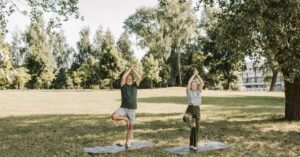
Important safety note: The following poses are suitable for stable, controlled hypertension. Avoid these if your blood pressure is severely elevated (over 180/110) or uncontrolled. Always consult your doctor before starting.
1. Supported Child’s Pose (Balasana)
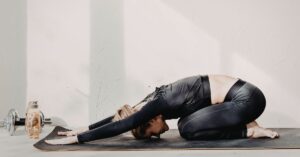
Why it helps: This deeply restful pose activates the parasympathetic nervous system, lowers heart rate, and gently stretches the lower back—where many people hold tension.
How to do it:
- Kneel on a yoga mat with knees hip-width apart or wider
- Place a bolster or folded blankets lengthways between your thighs
- Fold forwards, resting your torso on the support and turning your head to one side
- Arms can rest alongside your body or extend forwards
- Breathe slowly for 3-5 minutes
Modifications: Use more height under your torso if you have knee issues. Place a cushion under your ankles if they’re uncomfortable.
Safety tip: Keep your head level with or below your heart—never elevated above it in this pose.
2. Supported Bound Angle Pose (Supta Baddha Konasana)
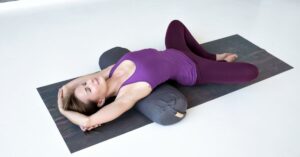
Why it helps: Opens the chest and hips, encourages deep breathing, and promotes complete relaxation. The supported version is ideal for hypertension as it requires no muscular effort.
How to do it:
- Place a bolster lengthways on your mat
- Sit in front of it with the bolster touching your lower back
- Bring the soles of your feet together, knees falling outwards
- Support each knee with a block or cushion
- Recline back onto the bolster, placing a folded blanket under your head
- Rest arms out to the sides, palms up
- Stay for 5-10 minutes, breathing naturally
Modifications: Use more support under your head to keep it slightly elevated. Add an eye pillow for deeper relaxation.
Safety tip: Never strain your hips. The support under your knees should allow your legs to relax completely.
3. Legs-Up-the-Wall Pose (Viparita Karani)
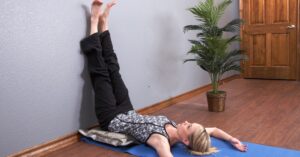
Why it helps: This gentle inversion improves venous return to the heart without the risks of full inversions. It reduces leg swelling, calms the nervous system, and helps regulate blood pressure.
How to do it:
- Place a folded blanket or bolster about 15cm from a wall
- Sit sideways with your hip touching the wall
- Swing your legs up the wall as you lie back, with your bottom on or near the support
- Your lower back should have gentle support; hips slightly elevated
- Arms rest by your sides, palms up
- Stay for 5-10 minutes
Modifications: If you feel pressure in your head, move your hips further from the wall or remove the support under your hips.
Safety tip: For uncontrolled hypertension, keep this pose under 5 minutes and ensure your head doesn’t feel heavy or pressured. Exit slowly by bending your knees and rolling to one side.
4. Seated Forward Bend (Paschimottanasana) – Supported
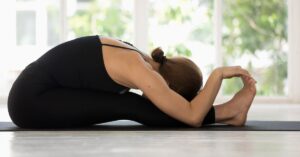
Why it helps: Calms the mind, stretches the entire back body, and encourages introspection. The supported version is gentle on the cardiovascular system.
How to do it:
- Sit with legs extended, a bolster or pillows stacked on your thighs
- Flex your feet gently (toes towards face)
- Inhale to lengthen your spine
- Exhale and hinge forwards from your hips, resting your torso on the support
- Turn your head to one side; arms can drape over the bolster
- Hold for 3-5 minutes, breathing steadily
Modifications: Bend your knees as much as needed. Use more height under your torso. Sit on a folded blanket if hamstrings are tight.
Safety tip: Never round your back or force the stretch. The fold should feel restful, not strenuous.
5. Supine Spinal Twist (Supta Matsyendrasana)
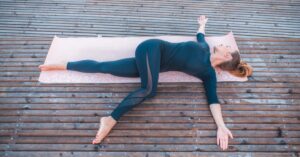
Why it helps: Releases tension in the back and shoulders, massages internal organs, and promotes spinal flexibility. The supine version is safe and deeply relaxing.
How to do it:
- Lie on your back with knees bent, feet flat
- Extend your arms out to the sides in a T-shape
- Draw your knees into your chest, then let both knees fall to the right
- Turn your head to the left (opposite direction to knees)
- Place a cushion or block under your knees if they don’t reach the floor
- Hold for 2-3 minutes, then repeat on the other side
Modifications: Keep knees higher (closer to your chest) for a gentler twist. Use support under your knees.
Safety tip: Move slowly and never force the twist. If you feel dizzy, return to centre and rest.
6. Corpse Pose (Savasana) with Guided Relaxation
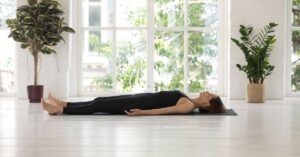
Why it helps: The ultimate relaxation pose. Research shows that Savasana with conscious relaxation can reduce blood pressure by promoting deep rest and parasympathetic activation.
How to do it:
- Lie on your back with legs extended, feet falling naturally outwards
- Place a bolster or folded blanket under your knees for lower back comfort
- Support your head with a thin cushion
- Arms rest slightly away from your body, palms facing up
- Close your eyes and systematically relax each body part, starting from your toes
- Practise for 10-15 minutes minimum
Modifications: Cover yourself with a blanket for warmth. Use an eye pillow. Place a rolled towel under your neck if needed.
Safety tip: Take your time when getting up—roll to your side and pause before sitting to prevent dizziness.
Pranayama: Breathwork for High Blood Pressure
Breathing exercises are powerful tools for blood pressure management. Here are two safe, evidence-based techniques:
Alternate Nostril Breathing (Nadi Shodhana)
Balances the nervous system and reduces stress. Practise for 5-10 minutes daily, seated comfortably. Close the right nostril, inhale left; close left, exhale right; inhale right, exhale left. Continue alternating.
Extended Exhale Breathing (2:1 Breath)
Activates the parasympathetic response. Inhale for a count of 4, exhale for a count of 6-8. Gradually extend the exhale as comfortable, practising for 5-10 minutes.
Safety: Never force your breath or hold it. Breathwork should feel calming, never strained.
Integrating Yoga into Your Hypertension Management Programme
How Often Should You Practise?
For blood pressure benefits, aim for:
- Daily practice: 15-30 minutes of gentle asanas and pranayama
- Longer sessions: 2-3 times weekly (45-60 minutes) if possible
- Consistency matters more than intensity
Best Time of Day
Morning practice can set a calm tone for your day. Evening practice helps release accumulated stress. Choose what fits your schedule—regularity is most important.
Combining Yoga with Other Lifestyle Measures
Yoga works best as part of a comprehensive approach:
- Medication adherence: Never stop prescribed medication without consulting your doctor
- Diet: Combine with a heart-healthy diet (see our guide on 8 Tips to Healthy Eating)
- Blood pressure monitoring: Track your readings regularly to observe patterns
- Sleep hygiene: Yoga can improve sleep quality, which supports blood pressure control
- Weight management: Gentle yoga aids weight loss through stress reduction and mindful eating
Progressing Safely
Start with supported, restful poses. As your confidence grows:
- Gradually increase hold times
- Reduce prop support as flexibility improves
- Add gentle standing poses (under qualified supervision)
- Never add intense vinyasa flows, hot yoga, or advanced inversions without medical clearance
Safety First: What to Avoid with High Blood Pressure

Poses to avoid or modify carefully:
- Full inversions (headstand, shoulder stand) until blood pressure is well-controlled
- Intense backbends that compress the back of the skull
- Holding your breath (breath retention)
- Fast-paced, vigorous sequences
- Hot yoga (elevated room temperature)
Warning signs to stop immediately:
- Dizziness or lightheadedness
- Headache
- Visual disturbances
- Chest discomfort
- Unusual shortness of breath
Frequently Asked Questions About Yoga for Hypertension
Can I skip my medication if I do yoga?
No. Yoga is a complementary practice, not a replacement for prescribed medication. Always consult your doctor before making any changes to your treatment plan. Some people may eventually reduce medication under medical supervision, but this decision belongs to your healthcare provider.
Are inversions safe with high blood pressure?
Full inversions (headstand, shoulder stand) are generally contraindicated for uncontrolled hypertension. Gentle inversions like Legs-Up-the-Wall may be safe once your blood pressure is stable and controlled, but always check with your doctor first.
How soon might I see changes in my blood pressure?
Research suggests consistent practice may show effects within 8-12 weeks. Some people notice stress reduction and improved sleep sooner. Keep monitoring your blood pressure and maintain realistic expectations—changes are typically gradual.
Should I practise yoga if I’m having a high reading today?
If your blood pressure is significantly elevated on a particular day, opt for gentle breathwork and Savasana only—skip the asanas. If readings are consistently high, consult your doctor before continuing yoga practice.
Can yoga help if I’m on multiple medications?
Yes. Yoga complements pharmacological treatment and may support overall cardiovascular health. However, discuss your practice with your doctor, especially if medications change, as your response to yoga may vary.
Do I need to join a class or can I practise at home?
Both options work. Initially, working with a qualified yoga teacher experienced in therapeutic yoga or cardiovascular conditions provides valuable guidance. Many people successfully practise at home using resources like this guide once they’re confident with the poses.
Your Next Steps: Start Your Yoga Journey This Week
Managing high blood pressure is a marathon, not a sprint. Yoga offers you a gentle, sustainable tool to support your cardiovascular health whilst reducing stress and improving quality of life.
Here’s your action plan:
- Consult your doctor: Show them this article and discuss whether yoga is appropriate for your current blood pressure status
- Start small: Begin with just 10 minutes daily—try Supported Child’s Pose, gentle breathing, and Savasana
- Create a blood pressure journal: Track your readings alongside your yoga practice to observe patterns over 8-12 weeks
- Find support: Consider joining a gentle yoga class or working with a yoga therapist who understands hypertension
- Be patient and consistent: Benefits accumulate with regular, sustained practice
Remember, every journey begins with a single breath. Roll out your mat, practise mindfully, and give yourself permission to move gently. Your heart will thank you.
Medical Disclaimer: This article is for educational purposes only and is not a substitute for professional medical advice, diagnosis, or treatment. Always seek the advice of your physician or qualified health provider before beginning any new exercise programme, especially if you have hypertension or other medical conditions. Monitor your blood pressure regularly and report any concerns to your healthcare team.
Ready to optimise your health further? Explore our comprehensive guide on Food Groups for a Healthy Diet to support your blood pressure management from multiple angles.
Have you tried yoga for high blood pressure? Share your experience in the comments below—your story might inspire someone else to take that first step towards better health.
Helpful Resources & Further Reading
Trusted Health Organisations:
- NHS: High Blood Pressure (Hypertension) – Comprehensive NHS guidance on diagnosis, treatment, and lifestyle management
- British Heart Foundation: Blood Pressure – UK-specific information and support resources
- Blood Pressure UK – Charity dedicated to blood pressure awareness and management
Yoga Resources:
- British Wheel of Yoga – Find qualified yoga teachers in your area
- Yoga Alliance Professionals – Directory of registered yoga professionals
- NHS: Yoga for Health – Evidence-based overview of yoga benefits
Research & Evidence:
- European Journal of Preventive Cardiology: Yoga Studies – Access to cardiovascular research including yoga trials
- National Center for Complementary and Integrative Health (NCCIH): Yoga – US government resource on yoga safety and effectiveness
Blood Pressure Monitoring:
- British Hypertension Society: Home Monitoring Guide – How to monitor blood pressure accurately at home
- Validated Blood Pressure Monitors – List of clinically validated home monitors
2 Responses