Quick answer
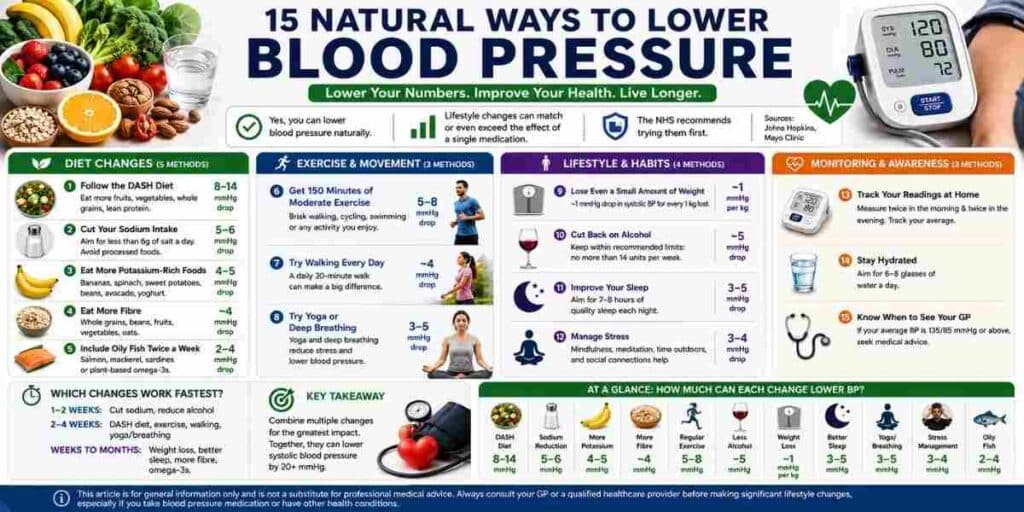
Yes, you can lower blood pressure naturally. The DASH diet can reduce systolic BP by 8–14 mmHg, regular exercise by 5–8 mmHg, and cutting sodium by 5–6 mmHg. Combined lifestyle changes can match or even exceed the effect of a single medication — which is why the NHS recommends trying them first.
Sources: Johns Hopkins, Mayo Clinic
So your GP’s told you your blood pressure is a bit high. Maybe you’ve seen the numbers on a home monitor and thought, “That doesn’t look great.” And now you’re wondering — can I actually fix this without popping pills for the rest of my life?
For a lot of people, the honest answer is yes. If your blood pressure is in the elevated or Stage 1 range (roughly 120–139 systolic), lifestyle changes alone are usually the first thing your doctor will recommend — and the evidence behind them is genuinely strong. We’re not talking about vague “eat healthy and relax” advice here. We’re talking about specific, measurable changes with real numbers attached.
This guide covers 15 natural ways to lower blood pressure, each backed by clinical research. We’ve included how much each method can realistically reduce your BP, so you can focus on the changes that’ll make the biggest difference for you.
Already tracking your readings at home? Our free Blood Pressure Average Calculator can help you spot trends and see whether your changes are actually working.
📋 In This Article
Diet Changes That Lower Blood Pressure
What you eat has a huge impact on your blood pressure — bigger than most people realise. A cardiologist at Northwestern Medicine put it perfectly: “Diet and lifestyle can have a profound impact on blood pressure, and it’s worth as much as one or two pills.” Here are the five dietary shifts with the strongest evidence.
1. Follow the DASH Diet (~8–14 mmHg drop)
The DASH diet (Dietary Approaches to Stop Hypertension) is the single most studied eating pattern for blood pressure. It was developed through clinical trials funded by the US National Institutes of Health, and the results have been replicated for over 25 years.
It’s simpler than it sounds: eat more fruits, vegetables, whole grains, lean protein, and low-fat dairy. Cut back on red meat, saturated fat, and added sugar. That’s basically it.
According to Johns Hopkins Medicine, the DASH diet can lower systolic blood pressure by 8–14 mmHg — that’s comparable to what some first-line BP medications achieve.
We’ve got a full collection of 25 DASH-friendly recipes if you want to see what this looks like in practice.
2. Cut Your Sodium Intake (~5–6 mmHg drop)
Sodium makes your body hold onto extra water, which increases blood volume and puts more pressure on your artery walls. Most people in the UK eat around 8g of salt per day — well above the NHS recommendation of 6g.
The tricky part? Most of that salt isn’t coming from the salt shaker. It’s hiding in bread, cheese, ready meals, sauces, and cereals. A single supermarket ready meal can contain over 1,500 mg of sodium.
Practical swaps make this easier than you’d think — herbs, garlic, lemon juice, and spices can replace salt entirely in most dishes. Check out our 18 low-sodium recipes for real meal ideas.
3. Eat More Potassium-Rich Foods (~4–5 mmHg drop)
Potassium works as sodium’s natural counterbalance. It helps your kidneys flush out excess salt and relaxes blood vessel walls — both of which bring pressure down. Most adults in the UK don’t get enough.
The best sources include bananas, sweet potatoes, spinach, avocado, beans, lentils, and low-fat yoghurt. Increasing your intake through food (not supplements) is the safest approach.
⚠️ Quick note: If you take certain BP medications (like ACE inhibitors or potassium-sparing diuretics), too much potassium can be harmful. Always check with your GP before significantly increasing your intake.
4. Eat More Fibre (~4 mmHg drop)
Fibre doesn’t just help your digestion — it has a direct, measurable effect on blood pressure. A major review found that increasing fibre intake lowers systolic BP by around 4.3 mmHg, with even just 5 extra grams per day making a difference.
Simple ways to add more: swap white bread for wholemeal, keep skins on potatoes, add beans to soups and stews, snack on fruit instead of biscuits, and start the day with porridge.
5. Include Oily Fish Twice a Week (~2–4 mmHg drop)
Salmon, mackerel, sardines, and herring are packed with omega-3 fatty acids. These reduce inflammation and help blood vessels relax, making your whole circulatory system work more efficiently.
The British Heart Foundation recommends at least two portions of fish per week, including one of oily fish. Not a fan? Walnuts, flaxseeds, and chia seeds are decent plant-based alternatives.
Exercise & Movement
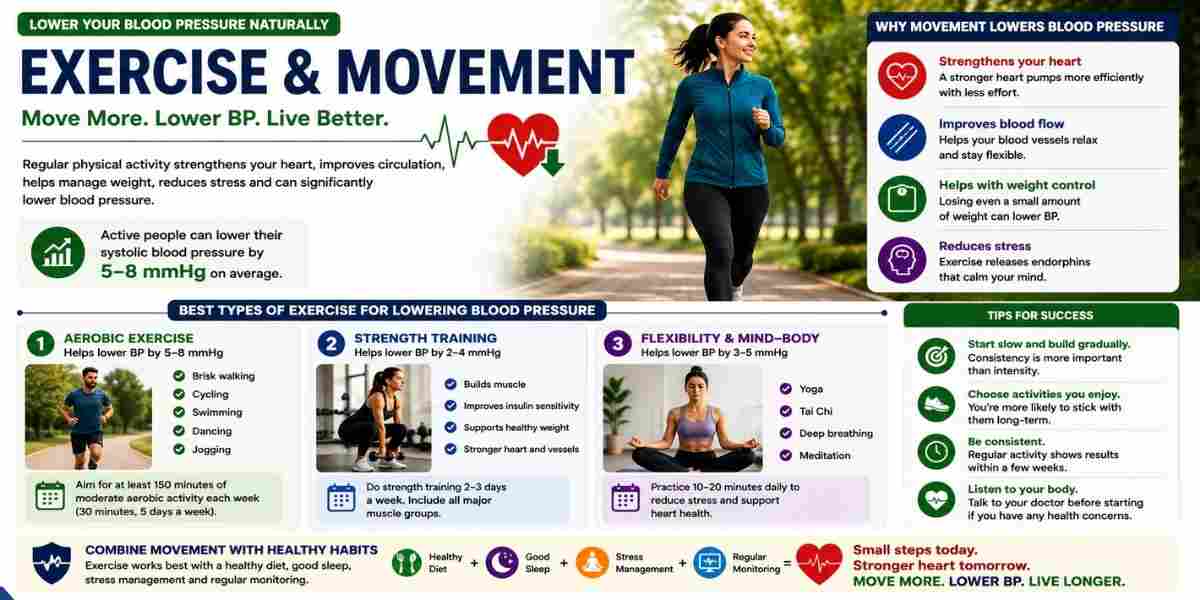 Physical activity is one of the most powerful tools you have. And the good news is, you don’t need to train like an athlete — consistency matters far more than intensity.
6. Get 150 Minutes of Moderate Exercise Per Week (~5–8 mmHg drop)
This is the headline number: regular moderate exercise — like brisk walking, cycling, or swimming — can lower systolic blood pressure by 5–8 mmHg. That’s comparable to many first-line medications.
The NHS recommends at least 150 minutes of moderate activity per week — that’s just over 20 minutes a day, or five 30-minute sessions. The key is sticking with it. Blood pressure benefits start within a few weeks of regular exercise but reverse if you stop.
For specific routines, see our guide on the 15 best exercises for high blood pressure.
7. Try Walking Every Day (~4 mmHg drop)
Don’t underestimate walking. It’s free, it requires no equipment, and it’s gentle enough for almost everyone. For some people — especially those who are currently inactive — walking is a moderate-intensity activity.
A daily 30-minute walk can lower systolic BP by around 4 mmHg over time. Even short 10-minute walks throughout the day add up. If you’re deciding between walking and running for blood pressure, we’ve compared them in detail in our walking vs running guide.
8. Try Yoga or Deep Breathing (~3–5 mmHg drop)
Yoga combines gentle movement with controlled breathing — both of which activate your parasympathetic nervous system (the “rest and digest” mode) and help lower blood pressure.
A research review found that diaphragmatic breathing practiced twice daily for four weeks led to measurable reductions in both systolic and diastolic blood pressure. You don’t need an hour-long class — even 10 minutes of slow, focused breathing can help.
We’ve put together a guide to yoga poses specifically for high blood pressure, along with a beginner’s meditation routine.
Lifestyle & Habits
Beyond diet and exercise, several everyday habits have a surprisingly large impact on your numbers. Some of these are the easiest wins on the list.
9. Lose Even a Small Amount of Weight (~1 mmHg per kg lost)
Weight loss is one of the most effective lifestyle changes for blood pressure. The relationship is roughly linear: for every kilogram of weight you lose, your systolic blood pressure drops by about 1 mmHg.
That means even a modest 5 kg loss could lower your BP by 5 mmHg — without changing anything else. And it’s not just about the number on the scale. Carrying extra weight around your middle (visceral fat) is particularly linked to higher blood pressure, because it increases arterial stiffness.
10. Cut Back on Alcohol (~5 mmHg drop)
Regular heavy drinking raises blood pressure significantly — and the effect is dose-dependent. The more you drink, the higher it goes.
The American Heart Association notes that reducing alcohol to recommended levels can lower systolic BP by about 5 mmHg. The NHS advises no more than 14 units per week, spread across several days, with at least two alcohol-free days.
11. Improve Your Sleep (~3–5 mmHg drop)
Getting less than six hours of sleep per night for several weeks significantly increases your risk of high blood pressure. Poor sleep disrupts the natural overnight blood pressure dip (called “nocturnal dipping”) that your cardiovascular system relies on for recovery.
Practical steps: keep a consistent bedtime, avoid screens for an hour before sleep, keep your bedroom cool and dark, and limit caffeine after midday. If you suspect sleep apnoea (loud snoring, waking up exhausted), talk to your GP — it’s both a cause and a consequence of high blood pressure.
12. Manage Stress (~3–4 mmHg drop)
Chronic stress keeps your body in a constant state of “fight or flight,” which pushes blood pressure up over time. While we can’t eliminate stress entirely, we can change how we respond to it.
What actually works: regular physical activity (which doubles as stress relief), mindfulness or meditation, spending time outdoors, and maintaining social connections. Even five minutes of slow, deep breathing during a stressful moment can bring your numbers down in the short term.
If work stress is a particular issue, our article on managing health while working long hours has practical advice.
Monitoring & Awareness
You can’t improve what you don’t measure. These final three points are about building the awareness that makes all the other changes more effective.
13. Track Your Readings at Home
Home monitoring gives you a much clearer picture than occasional GP visits — because blood pressure naturally fluctuates throughout the day, and many people experience “white coat syndrome” (higher readings at the doctor’s office simply due to anxiety).
Take readings twice in the morning and twice in the evening, over several days, then calculate your average. That average is what your doctor really needs. Our Blood Pressure Average Calculator makes this simple — enter your numbers and it instantly tells you your average and which category it falls into.
For tips on measuring accurately, see our guide on how to work out your average blood pressure.
14. Stay Hydrated (~supporting role)
Drinking enough water isn’t a magic cure for high blood pressure, but dehydration can make things worse. When your body is dehydrated, blood volume drops, sodium becomes more concentrated in your blood, and your body releases hormones that constrict blood vessels — all of which push pressure up.
Aim for 6–8 glasses of water per day. It won’t produce a dramatic BP drop on its own, but it supports everything else on this list — and it’s the easiest habit to start immediately.
15. Know When to See Your GP
Lifestyle changes are powerful, but they’re not always enough on their own. If your averaged home readings are consistently 135/85 mmHg or above, or if you have additional risk factors like diabetes, kidney disease, or a family history of heart disease, your GP may recommend medication alongside lifestyle changes.
That’s not a failure — it’s just how the condition works for some people. The lifestyle changes still matter, because they make medications work better and may allow lower doses over time.
Use our blood pressure by age chart to see where your numbers sit relative to what’s typical for your age group.
📊 Which Changes Work Fastest? (At a Glance)
| Method | Approx. Systolic BP Drop | Time to See Results |
|---|---|---|
| DASH diet | 8–14 mmHg | 2–4 weeks |
| Regular exercise | 5–8 mmHg | 2–4 weeks |
| Sodium reduction | 5–6 mmHg | 1–2 weeks |
| Reduce alcohol | ~5 mmHg | 1–2 weeks |
| More potassium | 4–5 mmHg | 2–4 weeks |
| More fibre | ~4 mmHg | 4–8 weeks |
| Weight loss (per kg) | ~1 mmHg per kg | Varies |
| Daily walking | ~4 mmHg | 2–4 weeks |
| Yoga / deep breathing | 3–5 mmHg | 2–4 weeks |
| Better sleep | 3–5 mmHg | 2–6 weeks |
| Stress management | 3–4 mmHg | Varies |
| Oily fish (omega-3) | 2–4 mmHg | 8–12 weeks |
These figures are drawn from clinical studies and systematic reviews. Individual results vary. Combining multiple changes produces a greater overall effect — in many cases exceeding what a single medication can achieve.
Frequently Asked Questions
Can drinking water lower blood pressure?
Staying properly hydrated does support healthy blood pressure — but it’s not a direct treatment for hypertension. What water does is prevent dehydration, which can concentrate sodium in your blood and trigger hormones that constrict blood vessels, pushing pressure up. Aim for 6–8 glasses a day. It won’t produce a dramatic drop on its own, but it creates the right conditions for everything else to work better.
What is the fastest way to lower blood pressure naturally?
The quickest measurable results come from cutting sodium and reducing alcohol — both can show improvements within one to two weeks. The DASH diet and regular exercise typically take two to four weeks to show clear results. For immediate in-the-moment relief (like during a stressful situation), slow deep breathing for five minutes can temporarily reduce your reading. But lasting change comes from stacking multiple lifestyle habits together over weeks and months.
Can you lower blood pressure without medication?
Yes, many people can — particularly if blood pressure is in the elevated or Stage 1 range. The NHS and most international guidelines recommend lifestyle changes as the first-line approach before medication. Combined changes (diet, exercise, weight loss, sodium reduction) can lower systolic BP by 20+ mmHg, which rivals or exceeds what many single medications achieve. However, if your BP is consistently in the Stage 2 range or above, your doctor may recommend medication alongside lifestyle changes — the two work very well together.
How long does it take for lifestyle changes to lower blood pressure?
It depends on the change. Sodium reduction and alcohol reduction can show results within one to two weeks. Exercise and the DASH diet typically take two to four weeks. Weight loss benefits accumulate gradually over months. The best approach is to track your average blood pressure over time using a home monitor — rather than relying on any single reading — so you can actually see the trend. Our free calculator makes this easy.
What is the best drink for high blood pressure?
Water is the simplest and most universally recommended choice. Beyond that, beetroot juice has the strongest evidence — the dietary nitrates convert to nitric oxide in your body, which relaxes blood vessels. Hibiscus tea has shown ACE-inhibitor-like effects in several studies. Low-fat milk provides calcium and potassium. The drinks to limit are sugary beverages, excessive coffee (more than 3–4 cups a day), and alcohol. Avoid energy drinks entirely if you have high blood pressure.
Does walking lower blood pressure immediately?
A single walk can temporarily reduce your blood pressure for several hours afterward — this is called “post-exercise hypotension.” But the lasting benefit comes from walking regularly. Daily 30-minute walks, maintained over weeks, can lower systolic BP by around 4 mmHg. Walking is one of the most accessible and sustainable forms of exercise, and for people who are currently inactive, it’s the perfect starting point.
This article is for general information only and is not a substitute for professional medical advice. Always consult your GP or a qualified healthcare provider before making significant lifestyle changes, especially if you take blood pressure medication or have other health conditions.