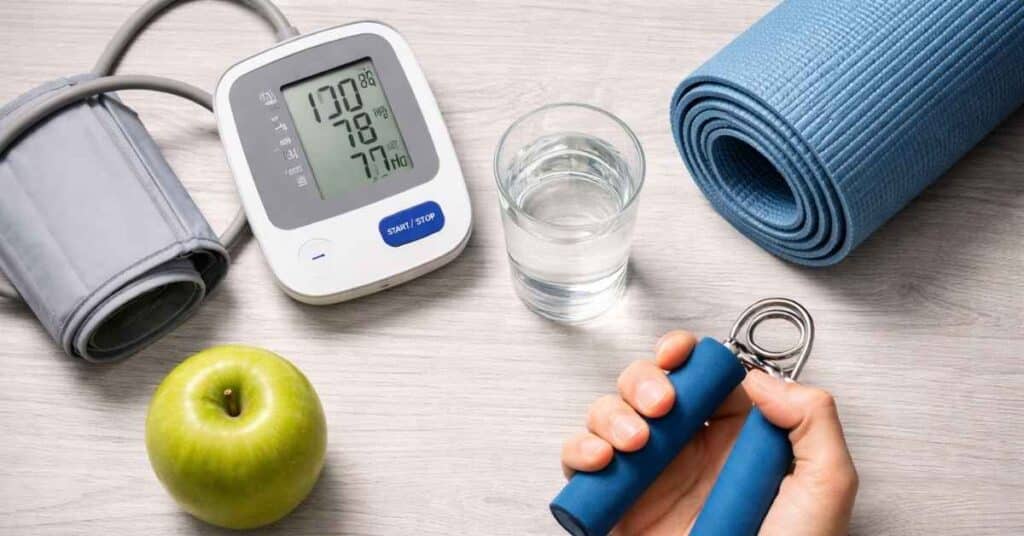
High blood pressure (hypertension) is a widespread health concern, often called the “silent killer” because it can have serious consequences without obvious symptoms . While medication is often necessary, lifestyle modifications—particularly regular exercise—are a powerful, natural way to combat it. Physical activity strengthens your heart, allowing it to pump blood with less effort, which reduces the force on your arteries and lowers your blood pressure .
Recent research suggests that some forms of exercise are even more effective than others. A landmark 2023 study published in the British Journal of Sports Medicine found that isometric exercises are the most effective for lowering blood pressure, followed by combined training, dynamic resistance training, and aerobic exercise . This article explores the 15 best exercises to help you control hypertension naturally, based on the latest science.
Before You Start: Safety First
If you have uncontrolled high blood pressure (generally reading above 160/100 mmHg) or any other pre-existing health condition, consult your healthcare professional before beginning a new exercise program . Start slowly, listen to your body, and remember to breathe regularly throughout your workout; holding your breath can cause dangerous spikes in blood pressure .
The Top 15 Exercises for Managing Hypertension
We’ve broken down the best exercises into categories, starting with the most effective based on recent research.
The Isometric Exercises (The New Gold Standard)
Isometric exercises involve contracting a specific muscle or group of muscles without moving the surrounding joints. The 2023 meta-analysis ranked these as the top performers for reducing blood pressure . The theory is that the sustained contraction and subsequent relaxation stimulate a rebound effect that improves blood vessel function and dilation .
1. Wall Squats
This was identified as the single most effective isometric exercise in the 2023 review .
-
How to do it: Stand with your back against a wall, feet shoulder-width apart. Slowly slide your back down the wall until your thighs are as parallel to the ground as possible (like sitting in an invisible chair). Hold this position.
-
Routine: Aim to hold for 2 minutes, followed by 2 minutes of rest. Repeat this cycle 4 times. This totals just 16 minutes of work .
2. Plank
This exercise strengthens your entire core by holding a static position .
-
How to do it: Lie on your stomach. Lift your body onto your forearms and toes, keeping your back straight and your body in a straight line from head to heels. Hold this position without letting your hips sag.
-
Routine: Start with 20-30 seconds and gradually increase your hold time as you get stronger. Aim for 3-4 repetitions.
3. Glute Bridge
A great exercise for strengthening the glutes and lower back.
-
How to do it: Lie on your back with your knees bent and feet flat on the floor. Lift your hips towards the ceiling, squeezing your glutes at the top. Hold the position.
-
Routine: Hold for 30-60 seconds. Repeat 4-5 times.
4. Isometric Handgrip Training
This simple exercise is incredibly effective and can be done anywhere. A 2022 study found that higher-intensity handgrip training could lower systolic blood pressure by an average of 15.5 mmHg .
-
How to do it: Hold a handgrip exerciser or a soft stress ball .
-
Routine: Using about 30-40% of your maximum strength, squeeze for 2 minutes, then rest for 1-2 minutes. Repeat this cycle for a total of 12-15 minutes, about 3 times per week .
5. Static Lunge
This isolates the leg muscles and challenges your balance.
-
How to do it: Stand with feet together. Take a big step forward with your right foot and lower your hips so your right thigh is parallel to the ground and your left knee hovers just above the floor. Hold this position. Switch legs.
-
Routine: Hold for 30-45 seconds per leg. Repeat for 3 sets.
Aerobic (Cardio) Exercises
For years, aerobic exercise was considered the cornerstone of blood pressure management. While recent studies show isometrics may have a slight edge, aerobic exercise remains crucial for overall heart health, strengthening the heart muscle, and managing weight . Aim for at least 150 minutes of moderate-intensity aerobic activity per week .
6. Brisk Walking
It’s simple, accessible, and effective. Even a 10-minute walk can be beneficial, and breaking your activity into smaller chunks throughout the day is just as good as one long session .
-
Tip: Aim for a “conversational pace”—you should be able to speak in short sentences, but not sing .
7. Swimming
This is a fantastic full-body workout that is gentle on the joints. The American Heart Association classifies swimming as a vigorous activity, meaning you only need about 75 minutes per week to meet your exercise goals .
8. Cycling
Whether outdoors or on a stationary bike, cycling is excellent for improving cardiovascular fitness. Like swimming, it can be considered a vigorous form of exercise that gets your heart pumping .
9. Jogging or Running
The 2023 systematic review indicated that running is the best aerobic activity for specifically reducing blood pressure . If you’re new to running, start with a run/walk program.
10. Dancing
Dancing is a joyful way to get your heart rate up. It combines aerobic benefits with stress reduction, which is a key factor in managing blood pressure .
11. Hiking
Taking your walk to the trails adds the benefits of nature and varied terrain, which can increase the intensity and calorie burn .
12. Stair Climbing
This is a vigorous activity you can easily incorporate into your daily life by taking the stairs instead of the elevator .
Dynamic Resistance Training
Also known as isotonic training, this involves moving your muscles through a full range of motion against resistance. It was found to be the second most helpful exercise type for reducing diastolic blood pressure . The American Heart Association recommends doing these exercises 2-3 times per week .
13. Bodyweight Squats
A foundational exercise that strengthens the large muscles of your legs and glutes.
-
How to do it: Stand with feet shoulder-width apart. Lower your body as if sitting back into a chair, keeping your chest up and back straight. Return to the starting position.
-
Routine: Aim for 2-3 sets of 10-15 repetitions.
14. Push-Ups (or Wall Push-Ups)
This classic exercise strengthens the chest, shoulders, and arms. If a standard push-up is too difficult, you can modify it by doing it against a wall or with your knees on the floor .
-
Important: Remember to breathe out during the effort (pushing up) and in during the easier part (lowering down) to avoid spiking your blood pressure .
15. Lunges
This exercise targets the legs and glutes while also challenging your balance.
-
How to do it: Step forward with one leg and lower your hips until both knees are bent at about a 90-degree angle. Push off with your front foot to return to the start. Alternate legs.
-
Routine: Aim for 2-3 sets of 8-12 repetitions per leg.
Bonus: Mind-Body Exercises
While not always classified as traditional “exercise,” practices like Yoga and Tai Chi are highly recommended for blood pressure control. They combine light physical activity with deep breathing and meditation, which effectively reduce stress hormones and improve circulation . These are excellent additions to any fitness routine.
| Exercise Category | Examples | Key Benefit | Recommendation |
|---|---|---|---|
| Isometric Training | Wall Squats, Planks, Handgrip | Most effective for lowering BP per 2023 study | Hold 2 mins, rest 2 mins; 4x/week |
| Aerobic (Cardio) | Brisk Walking, Cycling, Swimming | Strengthens heart; cornerstone of fitness | 150 mins moderate or 75 mins vigorous weekly |
| Dynamic Resistance | Squats, Push-Ups, Lunges | Improves blood vessel function | 2-3 sessions/week, 1-3 sets of 8-12 reps |
| Mind-Body | Yoga, Tai Chi | Reduces stress; improves flexibility | Incorporate 2-3 times weekly |
Putting It All Together: Your Action Plan
The key to successfully controlling blood pressure with exercise is consistency. The benefits last only as long as you continue to stay active .
-
Mix It Up: You don’t have to choose just one. A combined training approach that incorporates isometrics, aerobics, and resistance training is incredibly effective and keeps your workouts interesting .
-
Start Low and Go Slow: If you’re new to exercise, begin with activities you enjoy, like brisk walking. Once you’ve built a foundation, start adding in the isometric exercises like wall squats and planks .
-
Don’t Forget to Warm Up and Cool Down: Always start with 5-10 minutes of light activity to prepare your body, and end with a cool-down to help your heart rate and blood pressure return to normal gradually .
-
Track Your Progress: Use a home blood pressure monitor to check your numbers regularly, ideally at the same time each day. This will help you see the positive impact of your new exercise routine .
By incorporating these 15 exercises into your weekly routine, you can take a significant and natural step towards controlling your blood pressure and building a stronger, healthier heart for years to come.