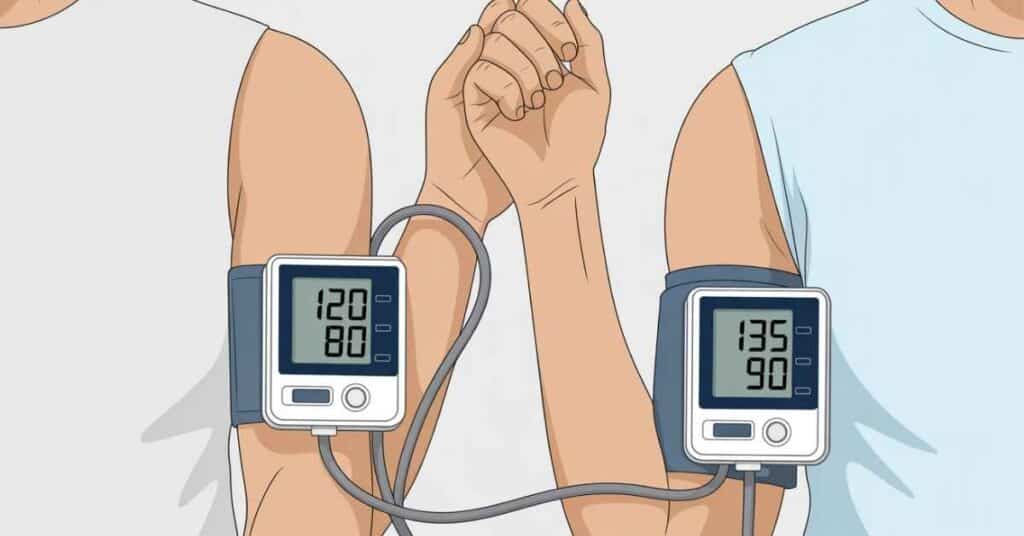
Noticing your blood pressure reading is different in both arms can be surprising and concerning. You might have measured it at home or during a routine check, only to find a significant discrepancy between your left and right arm. Is this normal, or is it a sign of a serious health problem?
This common scenario is known as an inter-arm blood pressure difference. While a small variation is often harmless, a persistent, large difference can be an important indicator of underlying cardiovascular disease and an increased risk of heart attack or stroke. This article explains the evidence-based causes, when it matters, and the clear, actionable steps you should take.
What Is Inter-Arm Blood Pressure Difference?

Clinically, an inter-arm blood pressure difference refers to a measurable disparity in the systolic (the top number) blood pressure readings taken from each arm. It’s the variation between the left and right brachial artery pressures.
-
A Minor Difference (≤10 mmHg): This is considered normal and is often due to physiological or anatomical variations.
-
A Notable Difference (10-15 mmHg): This warrants attention and should be monitored. It may be a sign of early vascular changes.
-
A Significant Difference (≥15 mmHg): This is clinically significant and is consistently linked in research to an increased risk of peripheral artery disease, cerebrovascular disease, and cardiovascular mortality. It should always be investigated.
Quick Reference Table:
| Difference (Systolic) | Clinical Significance | Recommended Action |
|---|---|---|
| Less than 10 mmHg | Normal, physiological variation | None needed. Continue routine monitoring. |
| 10-15 mmHg | Borderline significant | Monitor closely. Mention at next GP appointment. |
| 15 mmHg or more | Clinically significant | Consult your GP for assessment. Requires further investigation. |
Why Does Blood Pressure Differ Between Arms?
Physiological (Normal) Reasons
A minor, variable difference is common. Simple factors like which arm you use more (dominant arm can have slightly higher pressure temporarily), slight differences in artery anatomy, or even the order of measurement can create small discrepancies.
Pathological (Concerning) Causes
A persistent, significant difference is often a red flag for underlying issues affecting blood flow to one arm.
-
Peripheral Artery Disease (PAD): This is the most common cause. Atherosclerosis (plaque buildup) narrows the arteries, often asymmetrically, reducing blood flow and pressure to one limb. The British Heart Foundation provides excellent resources on understanding PAD.
-
Aortic Conditions: Serious conditions like an aortic dissection (a tear in the body’s main artery) or an aortic aneurysm can present with a dramatic blood pressure difference between arms and is a medical emergency.
-
Arterial Blockage or Stenosis: Narrowing in the subclavian artery (which supplies the arm) due to disease or, rarely, anatomical issues like thoracic outlet syndrome.
-
Diabetes and Chronic Kidney Disease: These conditions accelerate atherosclerosis, increasing the likelihood of vascular asymmetry.
How Common Is This?

A systematic review and meta-analysis published in Hypertension Research suggests a persistent difference of 10 mmHg or more is present in about 10-20% of the general population. The prevalence rises significantly with age and in people with existing risk factors for cardiovascular disease, such as hypertension, diabetes, or smoking.
What Research Says About Risks: The Evidence
Landmark research has solidified our understanding of the risks. A major meta-analysis in The BMJ (formerly the British Medical Journal), which pooled data from 24 studies, concluded that a difference of 15 mmHg or more between arms is associated with:
-
A 70% increased risk of dying from cardiovascular disease.
-
A 60% greater risk of death from any cause.
-
A higher likelihood of peripheral vascular disease and cerebrovascular disease.
The evidence is clear: a consistent, large inter-arm difference is not just a measurement quirk; it’s a potentially important biomarker for systemic vascular disease and future risk.
Clinical Guidelines & Expert Recommendations
UK clinical practice takes this seriously. The National Institute for Health and Care Excellence (NICE) guidelines for hypertension (NG136) recommend that blood pressure should be measured in both arms during an initial assessment. If a difference of more than 15 mmHg is found, subsequent readings should be taken from the arm with the higher reading. This practice ensures hypertension is not under-diagnosed and flags patients for further vascular assessment.
The threshold of ≥15 mmHg is widely accepted in the UK and Europe, while some US guidelines use a ≥10 mmHg threshold for considering increased cardiovascular risk. This underscores the importance of context and clinical judgment.
How to Measure Correctly: A Step-by-Step Guide
Accurate technique is crucial. Common mistakes can create false differences.
-
Rest: Sit quietly in a chair with back support for 5 minutes before measuring.
-
Position: Place both feet flat on the floor. Rest your arm on a table so the cuff is at heart level. The palm should be facing up—this position best exposes the brachial artery.
-
Cuff: Use a correctly sized, validated upper arm cuff. A cuff that’s too small or too large will give an inaccurate reading.
-
Measure Both Arms: Take two or three readings on one arm, wait 1-2 minutes, then repeat on the other. Always note which arm gave which reading.
-
Timing: Avoid measuring immediately after exercise, caffeine, or a meal. For consistent tracking, take readings at the same time each day—typically morning and evening. Blood pressure follows a circadian rhythm; it is often highest in the morning (the “morning surge”) and lowest during sleep.
-
Avoid: Don’t talk or cross your legs during the measurement.
For reliable home monitoring, consider using a blood pressure average calculator to track your trends over time.
What to Do If You Have a Large Difference

Don’t panic. A single reading is not enough. But do take it seriously.
-
Re-check Properly: Follow the correct technique above and repeat the measurements over several days.
-
See Your GP: If a difference of 15 mmHg or more persists, book an appointment with your GP. Bring your logged readings.
-
Diagnostic Pathway: Your doctor will likely:
-
Take confirmatory measurements.
-
Check pulses in your arms, neck, and legs.
-
Perform an Ankle-Brachial Pressure Index (ABPI) test, a simple comparison of arm and ankle pressures to screen for PAD.
-
Refer you for further vascular imaging (like a Doppler ultrasound) if needed.
-
Frequently Asked Questions (FAQs)
Is it normal for blood pressure to be different in each arm?
Yes, a small difference (under 10 mmHg) is normal. A persistent difference of 15 mmHg or more is not and should be checked.
What causes uneven blood pressure in the arms?
Causes range from normal anatomy to peripheral artery disease (the most common medical cause) or, rarely, serious aortic conditions.
Which arm gives the most accurate blood pressure?
The arm that gives the higher consistent reading is considered more accurate for diagnosing and managing hypertension, as using the lower-reading arm could lead to under-treatment.
Is unequal arm blood pressure an emergency?
Only if it is a new, very large difference (e.g., >40 mmHg) accompanied by severe chest, back, or arm pain, dizziness, or shortness of breath. This could signal an aortic dissection—call 999 immediately.
Why is my blood pressure different in each arm, NHS?
The NHS follows NICE guidelines. If you have a significant difference, your GP will investigate for underlying causes like vascular disease to manage your overall cardiovascular risk.
When should you not take your blood pressure?
Avoid measuring immediately after smoking, consuming caffeine or alcohol, exercising, or when you are stressed, in pain, or need the toilet.
Can drinking lots of water lower blood pressure?
Staying hydrated supports overall health, but it is not a treatment for hypertension. Significant lifestyle changes or medication are needed for high blood pressure management. For more on related conditions, see our article on Does High Blood Pressure and Diabetes Go Hand in Hand?.
Why is my blood pressure all over the place?
Natural variation throughout the day is normal (dipping at night, rising in the morning). Stress, activity, diet, and measurement error also contribute. Consistent home monitoring helps identify your true average.
Summary & Key Takeaways
-
A small difference (≤10 mmHg) in blood pressure between arms is common and usually normal.
-
A persistent difference of ≥15 mmHg is clinically significant and associated with a higher risk of vascular disease, heart attack, and stroke.
-
Always measure blood pressure in both arms at least once during initial assessment.
-
Use proper technique: rest, supported back, feet flat, arm at heart level.
-
If you find a large, consistent difference, consult your GP for a proper vascular assessment.
-
Managing overall cardiovascular risk through lifestyle—such as the activity discussed in Walking vs Running: Which is Truly Better for Your Blood Pressure?—and medical treatment is key.