
Introduction: Your Heart’s Silent Check-Up
High blood pressure, or hypertension, is often called the “silent killer” because it rarely has obvious symptoms. You can feel perfectly fine while elevated pressure is quietly straining your heart, damaging blood vessels, and increasing your risk of stroke, heart disease, and kidney problems. The earlier it’s found, the easier it is to manage with lifestyle changes or medication.
That’s why the NHS offers a vital, free check in your community: the NHS Hypertension Case-Finding Service. Available at local pharmacies across England, this service is designed to find undiagnosed high blood pressure in adults and connect them to the right care. Think of it as a proactive, accessible health MOT for your most vital system.
What Is the NHS Hypertension Case-Finding Service?

Simply put, it’s a free, structured blood pressure check offered at participating NHS community pharmacies. It’s more thorough than a casual check. The goal is to systematically identify people with undiagnosed high blood pressure and ensure they get a definitive diagnosis and follow-up with their GP.
-
Who delivers it? Trained pharmacists and pharmacy team members.
-
Why does it exist? Millions in the UK have high blood pressure without knowing it. This service brings detection to the heart of the community, making it easier and quicker to get checked.
-
How is it different? Unlike a routine check, this is a formal NHS service. If your reading is high, the pharmacy follows a clear NHS pathway, which may include arranging more accurate 24-hour monitoring and communicating directly with your GP.
Why This Service Matters for Your Health
In the UK, it is estimated that over 4 million adults have undiagnosed high blood pressure. Finding it is the crucial first step to preventing its consequences. Early detection through services like this can significantly reduce your lifelong risk of:
-
Heart attack and heart failure
-
Stroke
-
Vascular dementia
-
Kidney disease
The benefit is clear: knowing your numbers empowers you to take control of your health with support from the NHS.
Who Is Eligible for the NHS Hypertension Case-Finding Service?
The service is designed for adults who do not already have a diagnosis of hypertension. Here’s a simple eligibility guide:
| Eligibility Factor | Details |
|---|---|
| Primary Age Group | Adults aged 40 years and over, as risk increases with age. |
| Younger Adults | Adults under 40 may be eligible if they have a family history of hypertension or other risk factors, or if requested by their GP. |
| Access | You can often walk in or book an appointment. Some people are referred by their GP surgery as part of the NHS Health Check programme. |
| Not Suitable For | Those already diagnosed and treated for hypertension, or individuals with specific conditions like atrial fibrillation (which requires a different type of monitor). |
How the Service Works: A Clear, Step-by-Step Guide

Knowing what to expect can make the process feel much easier. Here’s how it typically unfolds:
Step 1: The Initial Clinic Check
You’ll have your blood pressure taken in the pharmacy consultation room using a calibrated, professional device. The pharmacist will ensure you are seated and relaxed. They will take two readings and use the average.
Step 2: Understanding the Result & Next Steps
-
If your reading is normal (< 135/85 mmHg): The pharmacist will give you general healthy heart advice and suggest when to check again in the future.
-
If your reading is raised (≥ 135/85 mmHg): This does not mean you definitely have hypertension. The pharmacist will likely recommend the next key step: Ambulatory Blood Pressure Monitoring (ABPM).
Step 3: Arranging 24-Hour ABPM (If Needed)
To get an accurate diagnosis, the NHS uses ABPM. The pharmacy can often loan you a small, wearable monitor for 24 hours.
-
The monitor automatically takes readings every 20-30 minutes during the day and at night.
-
This method avoids “white-coat syndrome” (high readings due to anxiety) and gives a true picture of your daily pressure.
Step 4: Sharing Results & GP Follow-Up
Once the ABPM results are analysed, the pharmacy will send a report to your GP. Your GP surgery will then contact you to discuss the findings and, if hypertension is confirmed, talk about a personalised management plan.
What Is ABPM? Demystifying 24-Hour Monitoring
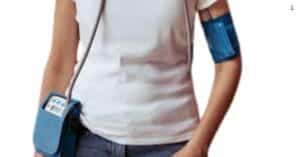
If you’re asked to wear an ABPM monitor, here’s what it involves:
-
What it is: A small digital device, worn on a belt, connected to a cuff on your upper arm.
-
How it works: It automatically inflates and takes readings at set intervals over a full day and night, even while you sleep.
-
Why it’s better: It provides an average of many readings in your normal environment, giving a far more reliable result than single clinic checks. You can track your average using tools like our Blood Pressure Average Calculator.
-
Daily life: You can usually drive, work, and sleep normally. You’ll be asked to keep your arm still when a reading starts. Read our guide on Can You Drive with a 24-Hour Blood Pressure Monitor? for detailed advice.
Understanding Your Blood Pressure Results
Here is what your blood pressure numbers mean, based on clinic and ABPM averages:
| Blood Pressure Category | Clinic Reading | ABPM/Daytime Average | What It Means |
|---|---|---|---|
| Normal | Less than 140/90 mmHg | Less than 135/85 mmHg | Your blood pressure is in a healthy range. |
| Stage 1 Hypertension | 140/90 – 159/99 mmHg | 135/85 – 149/94 mmHg | Mildly high blood pressure. Lifestyle changes are vital; medication may be considered. |
| Stage 2 Hypertension | 160/100 mmHg or higher | 150/95 mmHg or higher | Moderately to severely high blood pressure. Likely to require medication alongside lifestyle changes. |
Key Concepts:
-
White-Coat Hypertension: High readings in clinic but normal at home (shown by ABPM). This means you probably don’t have true hypertension.
-
Masked Hypertension: Normal readings in clinic but high at home. This is why ABPM is so valuable—it catches what a single check might miss.
Red Flags: When High Blood Pressure Needs Urgent Attention

Most high blood pressure is not an immediate emergency. However, very high readings or readings accompanied by certain symptoms are red flags.
Seek urgent medical advice (contact 111, your GP, or go to A&E) if you have a high reading AND any of these symptoms:
-
Severe headache
-
Blurred vision
-
Chest pain or tightness
-
Severe anxiety or shortness of breath
-
Nausea or vomiting
If you present at a pharmacy with a very high reading (e.g., 180/120 mmHg or higher), even without symptoms, the pharmacist will advise you to seek urgent medical attention immediately.
What Happens After the Case-Finding Service?
If you are diagnosed with hypertension, you’re not alone. Your GP will become your main partner in managing it.
-
GP Follow-Up: Your GP will discuss your results, assess your overall cardiovascular risk, and create a management plan.
-
Lifestyle Advice: This is always the first step. You’ll get support on diet (like reducing salt), exercise, weight management, and limiting alcohol.
-
Possible Medication: If needed, your GP will prescribe effective, well-tolerated medication. The first-line is often a type called an ACE inhibitor or an ARB.
-
Ongoing Monitoring: You’ll have regular check-ups. You may also monitor your blood pressure at home.
Your Hypertension Questions, Answered (FAQ)
❓ Who is eligible for the hypertension case-finding service?
Adults aged 40 and over without a prior hypertension diagnosis are the core group. Younger adults with risk factors (like a strong family history) may also be eligible via GP referral.
❓ What is the red flag for hypertension?
A blood pressure reading of 180/120 mmHg or higher is a hypertensive crisis that requires checking for symptoms like chest pain or severe headache and seeking urgent medical help.
❓ Who is eligible for ABPM?
Anyone whose clinic reading in the pharmacy is at or above the threshold (usually 135/85 mmHg) should be offered ABPM to confirm or rule out a diagnosis, as per NICE guidelines.
❓ What is the NHS guideline for hypertension?
The NHS follows the NICE Guideline NG136. It recommends using ABPM to confirm a diagnosis of hypertension and provides detailed advice on lifestyle changes, treatment thresholds, and medication choices.
❓ What is the first line of treatment for hypertension?
For most adults under 80, the first medication offered is usually an ACE inhibitor (or an ARB if side effects occur). This is always combined with supportive lifestyle changes.
❓ What is the number one food that causes high blood pressure?
There isn’t one single food, but excess salt (sodium) is the biggest dietary contributor. Reducing processed foods, ready meals, and adding less salt during cooking can have a major impact.
❓ Can walking lower blood pressure?
Yes, absolutely. Regular brisk walking (at least 150 minutes per week) is one of the most effective ways to help lower and manage blood pressure. For gentle exercise ideas, see our guide on Yoga Asanas for High Blood Pressure.
❓ What is the best breakfast for high blood pressure?
Opt for a breakfast low in salt and high in fibre and potassium, such as porridge oats with banana and a handful of berries, or natural yoghurt with unsalted nuts and seeds.
❓ What’s the worst thing for high blood pressure?
Consistently high salt intake, excessive alcohol consumption, smoking, and being inactive are among the most significant lifestyle factors that worsen hypertension.
❓ What should you not do when you have high blood pressure?
Do not ignore it, stop prescribed medication without talking to your GP, or assume you can’t exercise. Also, avoid adding salt to your food and regularly drinking more than 14 units of alcohol per week.
❓ Is cheese bad for blood pressure?
Some cheeses are very high in salt. You don’t need to cut it out completely, but choose stronger-tasting cheeses you can use less of, or lower-salt options like cottage cheese or mozzarella, and always check the label.
❓ What is the best time of day to take blood pressure?
If monitoring at home, take it at the same times each day—typically once in the morning before medication/food and once in the evening. Always sit quietly for 5 minutes first. Ensure your monitor is accurate; learn How to Calibrate Your Omron Blood Pressure Monitor.
Conclusion: Take the First Simple Step
The NHS Hypertension Case-Finding Service is a powerful, accessible tool designed to keep you healthy. It turns the challenge of detecting the “silent killer” into a straightforward, supportive process available on your local high street.
If you’re over 40 or have risk factors, popping into your participating community pharmacy for this free check could be one of the most important things you do for your long-term health. There is no need to worry—there is only power in knowing.
Disclaimer: This information is for general guidance only and does not replace professional medical advice from your GP or healthcare professional. Always follow the specific advice given to you by your NHS team.
For authoritative information, please refer to the official NHS website on high blood pressure and the NICE Guideline NG136.