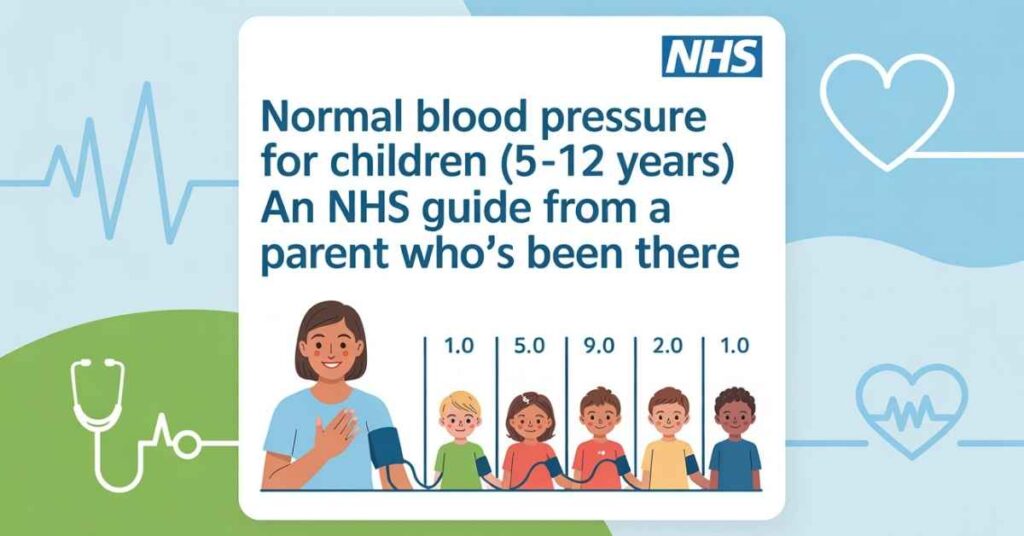
I’ll never forget the slight panic I felt when the GP suggested checking my 9-year-old’s blood pressure. My mind raced – isn’t that something for older adults? Like many, I was in the dark. The reading was fine, but it was a wake-up call. With childhood hypertension on the rise, affecting up to 5% of kids, understanding this vital sign is no longer optional; it’s a crucial part of parenting.
This guide pulls together not just the official NHS guidelines on blood pressure, but the practical, real-world context you need to feel informed and calm. We’ll walk through what the numbers mean, what’s normal for your child’s age, and actionable steps you can take today.
First Things First: Demystifying Blood Pressure for Kids

What Exactly Are We Measuring?
Think of blood pressure not as a scary medical term, but as a measure of the effort your child’s heart is making. It’s the force of blood pushing against their artery walls with each heartbeat. You can learn more about the fundamental physiology of this on the Wikipedia page for Blood Pressure.
The two numbers tell a simple story:
-
Systolic (Top Number): The pressure when the heart beats, pushing blood out.
-
Diastolic (Bottom Number): The pressure when the heart rests between beats.
They’re recorded in millimetres of mercury (mmHg), so you’ll see a reading like 100/60 mmHg.
Why Kids Aren’t Just Mini-Adults
This is the most important concept to grasp. A reading that would be perfect for you could be a red flag for your child. Their blood vessels are smaller, more flexible, and their entire cardiovascular system is still developing.
Your child’s “normal” is a moving target, influenced by:
-
Age & Height: Blood pressure naturally creeps up as they grow. A percentile chart that factors in height is essential – a tall 10-year-old will have a different “normal” than a short 10-year-old.
-
Gender: Boys often have slightly higher readings than girls.
This is why paediatricians use specialised charts, not adult standards.
Normal Blood Pressure for 5-12 Year Olds: The NHS Blueprint
How the NHS Classifies Children’s Readings
The NHS doesn’t use a single number. Instead, it uses percentiles based on age, gender, and height, comparing your child to a vast dataset of healthy peers. This is similar to how the NHS Growth Charts are used to monitor a child’s development.
Here’s a simplified, at-a-glance guide to the general ranges. Please remember: this is for context only. Your GP will use a precise percentile chart.
| Age Group | Normal BP (Approx.) | Elevated BP (Pre-Hypertension) | Hypertension |
|---|---|---|---|
| 5-7 Years | 95-105 / 57-65 mmHg | 106-115 / 66-75 mmHg | >116 / 76 mmHg |
| 8-10 Years | 100-110 / 60-68 mmHg | 111-120 / 69-77 mmHg | >121 / 78 mmHg |
| 11-12 Years | 105-115 / 65-73 mmHg | 116-125 / 74-82 mmHg | >126 / 83 mmHg |
Understanding the Percentile Chart
This is how your doctor will truly assess the reading:
-
< 90th Percentile: Normal. Your child is within the healthy range for their specific characteristics.
-
90th – 95th Percentile: Elevated Blood Pressure. A yellow light. It’s time to focus on lifestyle factors.
-
> 95th Percentile: Hypertension. A red light requiring further investigation and management.
For authoritative detail, the British Heart Foundation provides excellent resources on understanding blood pressure.
The Right Way to Measure a Child’s BP (And Why One Reading Isn’t Enough)

I’ve seen a nervous child send the reading sky-high. It’s so common it has a name: “white coat hypertension.” That’s why a proper assessment is a process, not a single moment.
A good GP or nurse will:
-
Use the correct child-sized cuff (a too-small cuff falsely elevates the reading).
-
Let your child sit quietly for 5 minutes first.
-
Take multiple readings, often over several appointments, to get a true baseline.
If the first reading is high, don’t panic. It’s the consistent pattern that matters.
High Blood Pressure in Children: Reading the Warning Signs
The Two Types of Hypertension in Kids
-
Primary Hypertension: This is the type we’re seeing more often, linked to lifestyle factors like obesity, a salty diet, and lack of exercise. It’s more common in teenagers but is increasingly seen in younger children, especially with a family history.
-
Secondary Hypertension: More common in younger children, this is high blood pressure caused by an underlying condition, such as kidney disease, heart problems, or hormonal disorders. The National Kidney Foundation has great information on the kidney-blood pressure connection.
The “Silent” Symptoms (And The Not-So-Silent Ones)
Often, there are none. That’s what makes monitoring important. However, in more advanced cases, you might see:
-
Unexplained headaches, especially in the morning.
-
Vision problems or blurry vision.
-
Fatigue that seems out of character.
-
Chest pain or shortness of breath with normal activity.
My insight: While nosebleeds are often listed, they are a rare and unreliable symptom. Don’t wait for a nosebleed to act. If your child has persistent headaches or seems unusually lethargic, it’s worth a conversation with your GP.
Practical, Real-World Ways to Support Healthy Blood Pressure
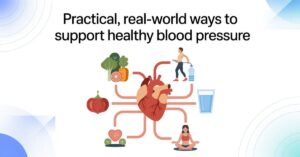
This is where you have the most power. Small, consistent changes make a world of difference.
1. The Salt Swap (It’s Not What You Think)
The biggest source of salt isn’t your salt shaker; it’s processed foods. My family’s game-changer was ditching the “beige food” rut. The NHS guidelines on salt clearly state that children aged 7-10 should have no more than 5g a day.
-
Actionable Tip: We made a rule: “One fresh item on every plate.” Swap crisps for apple slices with peanut butter. Trade frozen chicken nuggets for homemade ones (coat chicken strips in breadcrumbs and bake). Read labels – you’ll be stunned at the salt in bread, sauces, and even baked beans.
2. Make Movement Fun, Not a Chore
The NHS recommends physical activity guidelines for children: at least 60 minutes of activity a day. This doesn’t mean gruelling workouts.
-
What works in my house: “Walk and Talk” after school instead of slumping on the sofa. A 15-minute dance party in the kitchen while dinner is cooking. Walking or scooting to school, even just a few days a week. It all adds up and strengthens their heart.
3. Prioritise Sleep Like It’s Nutrition
A tired body is a stressed body, and stress raises blood pressure. Children aged 5-12 need 9-12 hours of quality sleep. The NHS guidance on healthy sleep for children is a fantastic resource for establishing good habits.
-
Our routine: No screens for an hour before bed. This was a tough sell but transformative. We replaced it with reading or a quiet card game. A consistent bedtime, even on weekends, prevents the “social jetlag” that disrupts their system.
For more on building a heart-healthy lifestyle, explore our guide on Dine Out, Stay Healthy: The Best Food Places in the UK for Blood Pressure Control and our breakdown of Vegetable Oil vs Olive Oil: A UK Guide.
Your Action Plan: When to Worry and What to Do Next
When to contact your GP:
-
If multiple readings (taken at different times) are above the 95th percentile for your child.
-
If your child has any persistent symptoms like headaches or fatigue.
-
If there’s a strong family history of early hypertension.
When it’s an emergency (call 999):
-
Severe headache, confusion, chest pain, or seizure.
Should you monitor at home?
For most kids, no. But if your child has been diagnosed with high blood pressure, invest in a validated, automatic monitor with a correct-sized paediatric cuff. Keep a log – tools like our Blood Pressure Average Calculator can help spot trends. Never adjust medication based on a home reading alone. For advice on choosing a monitor, you can refer to resources from Blood Pressure UK.
Frequently Asked Questions (UK)
What is the normal BP range for a child?
A normal blood pressure range for a child depends on their age, height, and sex. Unlike adults, children do not have one fixed “normal” number. In general, a healthy reading is one that is below the 90th percentile for their age and size, as assessed using paediatric blood pressure charts.
Is 90/60 BP normal for a 12-year-old?
Yes, 90/60 mmHg can be normal for a 12-year-old, especially if the child is slim, active, and has no symptoms such as dizziness or fainting. Doctors in the UK consider the child’s overall growth, activity level, and wellbeing before deciding whether a reading is a concern.
What is normal blood pressure in a child in the UK?
In the UK, normal blood pressure in children is assessed using age-based reference charts rather than a single number. A reading is considered normal if it falls within the healthy range for the child’s age, height, and sex, as recommended by the NHS.
Is 140 bpm high for a 5-year-old?
Yes, 140 bpm is high for a resting heart rate in a 5-year-old. However, this refers to heart rate (beats per minute), not blood pressure. A child’s heart rate can temporarily rise due to activity, excitement, fever, or anxiety. If it remains high at rest, medical advice should be sought.
What is high BP in kids?
High blood pressure in children (hypertension) is diagnosed when readings are at or above the 95th percentile for a child’s age, height, and sex on repeated measurements. Persistent high readings should always be reviewed by a GP or paediatric specialist.
What is BP range by age?
Blood pressure ranges vary by age in children. Younger children normally have lower readings, while older children and teenagers gradually approach adult values. Doctors use paediatric BP charts to compare a child’s reading with what is expected for their age and size.
WHO BP chart by age?
The World Health Organization (WHO) provides general guidance on blood pressure, but child-specific BP charts are usually country-based. In the UK, clinicians rely on NHS and paediatric reference charts rather than WHO adult standards when assessing children.
What level of BP is safe?
A safe blood pressure level is one that is appropriate for the person’s age and health. For children, this means a reading within the normal percentile range. For adults in the UK, a reading below 120/80 mmHg is generally considered healthy.
What is a normal blood pressure in the UK?
For adults in the UK, normal blood pressure is usually below 120/80 mmHg. Readings between 120/80 and 139/89 mmHg are considered raised or high-normal, while consistently higher readings may indicate high blood pressure.
What is the NHS recommended blood pressure?
The NHS recommends aiming for a blood pressure below 140/90 mmHg for most adults, or below 135/85 mmHg when measured at home. Lower targets may be advised for people with certain health conditions.
What is the best time to check blood pressure?
The best time to check blood pressure is when you are relaxed and seated, ideally in the morning or evening. Avoid exercise, caffeine, smoking, or stress for at least 30 minutes before taking a reading for the most accurate result.
What is low BP in the UK?
Low blood pressure (hypotension) in the UK is often defined as a reading below 90/60 mmHg. It is not always a problem unless it causes symptoms such as dizziness, fainting, blurred vision, or fatigue.
Conclusion: Knowledge is Your Superpower
Understanding your child’s blood pressure is an act of love. It’s not about fear; it’s about empowerment. That initial worry I had transformed into positive action for my family’s health.
Start with a simple conversation with your GP at your child’s next check-up. Review your family’s weekly meals and activities. Small, sustainable steps are the foundation of a lifetime of good heart health.
Disclaimer: This article is for informational purposes and reflects expert knowledge and personal experience. It is not a substitute for professional medical advice. Always consult your GP or a paediatrician for personalised guidance regarding your child’s health.