Article Outline: Your Quick Guide
To help you navigate this detailed discussion, here’s a clear map of what we’ll cover:
-
Understanding the Basics: What low blood pressure (hypotension) really is, its common symptoms, and when it’s a cause for concern.
-
The Medical Route: A deep dive into prescription medications for low blood pressure—how they work, their pros, and their potential cons.
-
The Natural Path: An exploration of evidence-backed lifestyle changes, dietary tweaks, and herbal supports for managing low blood pressure naturally.
-
Head-to-Head Comparison: We’ll directly compare medication and natural remedies across key factors like speed, evidence, safety, and convenience.
-
Making Your Decision: A practical, step-by-step guide to help you, in partnership with your GP, decide which path (or combination) is right for YOU.
-
Key Takeaways & Next Steps: A summary of the core lessons and a clear call to action for your health journey.
Introduction: That Dizzy Spell – More Than Just a Moment
You stand up a bit too quickly, and the room gently spins. You feel a wave of lightheadedness, perhaps a spot of blurry vision. For many, especially in the UK, this isn’t just tiredness; it’s a familiar dance with low blood pressure, or hypotension. While high blood pressure often steals the headlines, living with persistent low blood pressure can be equally draining, turning simple daily tasks into challenges.
If you’re nodding along, you’ve likely wondered: what’s the best way to manage this? Should you speak to your GP about low blood pressure medication, or can lifestyle changes and natural remedies offer a gentler solution? It’s a common crossroads, and the answer is rarely a simple “one is better.”
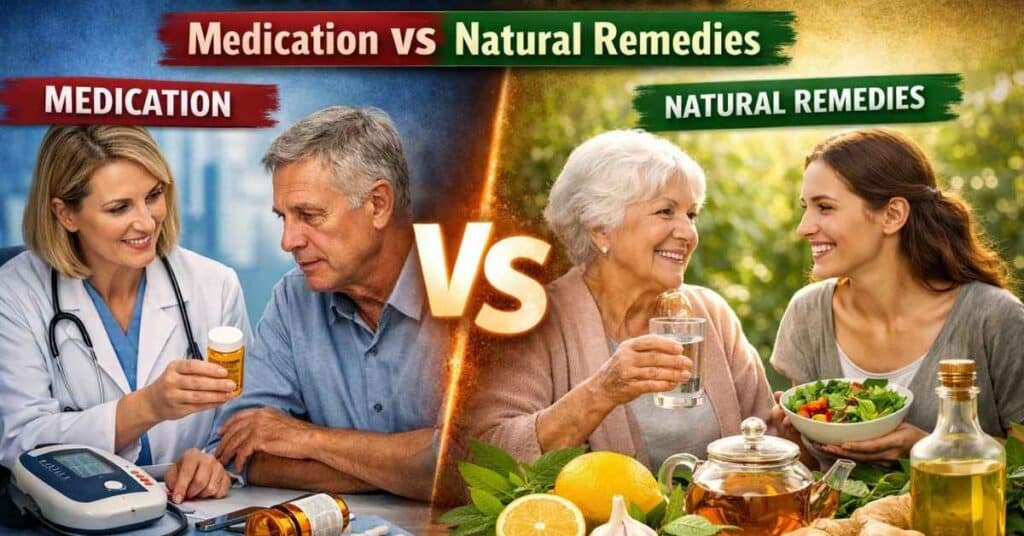
This comprehensive guide is here to walk you through that very question: Low Blood Pressure Medication vs Natural Remedies: Which Is Better? We’ll explore both paths in detail, from the science behind prescription drugs to the power of dietary salt and hydration. Our goal is to arm you with clear, trustworthy information so you can have an informed, confident conversation with your healthcare provider and take steps towards steadier days.
What Exactly is Low Blood Pressure?
Before we compare solutions, let’s understand the problem. Blood pressure is the force your blood exerts against your artery walls. It’s recorded as two numbers: systolic (pressure when your heart beats) over diastolic (pressure when your heart rests between beats).
While there’s no definitive “too low” number that applies to everyone, the NHS generally considers a reading of 90/60 mmHg or lower as hypotensive. However, some people naturally have lower readings and feel perfectly fine—this is often called “normal low blood pressure.”
The issue arises when symptoms appear. These can include:
-
Dizziness or lightheadedness (especially upon standing, known as postural hypotension)
-
Blurred vision
-
Fatigue and lack of energy
-
Nausea
-
Fainting (syncope)
-
Difficulty concentrating
If you’re experiencing these symptoms regularly, it’s important to see your GP to rule out underlying causes, which can range from dehydration and pregnancy to heart issues, endocrine problems, or nutritional deficiencies like B12 or folate. You can learn more about the less common symptoms in our detailed post on [unexpected signs of blood pressure imbalance].
The Medical Approach: Prescription Medications for Low Blood Pressure
When lifestyle adjustments aren’t enough, and symptoms are significantly impacting your quality of life or safety (e.g., frequent fainting), your doctor may suggest medication. It’s crucial to remember these are prescription-only and tailored to your specific type of hypotension and overall health.
How Do These Medications Work?
Most low blood pressure medications aim to either increase blood volume or constrict (narrow) your blood vessels, thereby raising the pressure inside them.
Common Types of Low Blood Pressure Medication
Fludrocortisone: The Volume Booster
This is often a first-line treatment. Fludrocortisone is a steroid that helps your kidneys retain sodium, which leads to fluid retention. More fluid in your bloodstream means higher blood volume and, consequently, higher blood pressure.
-
Pros: Can be very effective for orthostatic hypotension. It’s a well-established treatment.
-
Cons: Retaining sodium means you may lose potassium, so potassium supplements or a potassium-rich diet are often needed. Side effects can include headache, swelling, and, with long-term use, potential bone density issues.
Midodrine: The Vasoconstrictor
This drug works by tightening (constricting) the walls of your small arteries and veins. This narrowing increases the resistance to blood flow, which raises blood pressure. Its effects are relatively short-lived, so timing doses before activities that cause symptoms (like standing for long periods) is key.
-
Pros: Acts quickly and is very effective for acute symptom management in postural hypotension.
-
Cons: Can cause side effects like tingling, itching (especially on the scalp), and high blood pressure when lying down (supine hypertension). It requires careful dosing.
The Reality Check: Pros and Cons of Medication
The Advantages:
-
Targeted & Potent: They are designed for a specific physiological effect and can be highly effective where natural methods fall short.
-
Clinically Proven: Their efficacy and safety profiles are backed by extensive clinical trials and research, such as the studies compiled by the National Institute for Health and Care Excellence (NICE).
-
Structured & Measurable: Taking a pill provides a clear, manageable routine and its effects can be monitored with blood pressure readings.
The Disadvantages:
-
Side Effects: All medications carry the risk of side effects, which can range from mild annoyances to more serious concerns.
-
Addressing Symptoms, Not Always Causes: They often manage the symptom (low BP) rather than the root cause (e.g., an underlying condition).
-
Dependency & Cost: They can create a long-term dependency and involve ongoing prescription costs.
The Natural Path: Lifestyle and Herbal Remedies
For many, especially those with mild to moderate symptoms, natural approaches form the cornerstone of management. These strategies focus on supporting your body’s own regulatory systems through daily habits.
Foundational Lifestyle Changes
Hydration: Your First and Best Defence
Dehydration reduces blood volume—it’s one of the most common causes of a dip in blood pressure. Aim for 1.5 to 2 litres of water daily, and don’t wait until you’re thirsty. Herbal teas (non-diuretic ones) and watery fruits count too.
Strategic Salting: A Pinch Can Make a Difference
Unlike the advice for high blood pressure, increasing your sodium intake can be beneficial for hypotension. Important: Always discuss this with your GP first, especially if you have any heart or kidney concerns. If approved, you can add a pinch more salt to your meals or enjoy salty snacks like olives or broth.
Compression Stockings: A Simple Mechanical Aid
These special stockings apply gentle pressure to your legs and abdomen, helping to prevent blood from pooling in your lower extremities. This encourages more blood to return to your heart and can significantly reduce dizziness upon standing. They are a favourite natural remedy for its non-invasive, drug-free approach.
Smaller, More Frequent Meals
Large meals can cause a dramatic shift of blood to your digestive tract, leading to a post-meal drop in blood pressure (postprandial hypotension). Eating smaller, more frequent meals can help avoid this dramatic dip.
Dietary Tweaks and Herbal Supports
Caffeine: A Temporary Lift
A cup of tea or coffee can cause a short-term spike in blood pressure by stimulating your cardiovascular system. While not a long-term solution, it can be a useful tool for managing anticipated symptom triggers.
Herbal Allies: Proceed with Caution
Some herbs are traditionally used for circulatory support. Licorice root, for example, can have a mild fludrocortisone-like effect, promoting sodium retention. However, it must be used sparingly and under guidance, as overuse can lead to serious side effects like potassium loss and high blood pressure.
Crucially, you must always inform your GP or pharmacist about any herbal supplements you are taking, as they can interact with prescription medications. For a deeper look at herbal options, explore our guide on [herbs for circulatory health].
The Power of Movement: Exercise Smartly
Regular, moderate exercise (like brisk walking, swimming, or cycling) strengthens your heart. A stronger heart can pump blood more efficiently, which can help reduce hypotension symptoms over time. Avoid sudden, intense bursts if you’re prone to dizziness.
Low Blood Pressure Medication vs Natural Remedies: The Direct Comparison
Let’s put them side-by-side. This table breaks down the key differences to help you see the bigger picture.
| Feature | Medication | Natural Remedies |
|---|---|---|
| Speed of Action | Fast. Often works within hours. | Slow & Gradual. Can take weeks or months of consistency. |
| Strength of Effect | Strong & Targeted. Designed for a specific, potent effect. | Mild to Moderate. Supports the body’s natural functions. |
| Scientific Evidence | Extensive. Rigorously tested in clinical trials. | Variable. Strong for lifestyle (hydration, salt), weaker for herbs. |
| Risk of Side Effects | Higher. Potential for significant side effects and interactions. | Lower. Generally safe, but still possible (e.g., excess salt, herb interactions). |
| Cost | Prescription cost (or free on the NHS). | Varies (from free for water to cost for supplements/stockings). |
| Convenience | High. Taking a pill is straightforward. | Requires Commitment. Needs daily lifestyle integration. |
| Goal | Primarily symptom management. | Primarily root cause support & prevention. |
Making the Choice: How to Decide What’s Best For You
So, which path wins? The truth is, it’s not a battle with one winner. The best approach is often a personalised, integrated strategy developed with your GP. Here’s a step-by-step guide to finding yours:
-
Start with Your GP: Always begin with a professional diagnosis. Discuss your symptoms, get your blood pressure properly monitored, and investigate any underlying causes.
-
Assess Your Symptom Severity: Are you experiencing occasional lightheadedness, or are you fainting and unable to work? The more severe and dangerous the symptoms, the more likely medication will be a necessary part of your plan.
-
Embrace the Foundation First: Regardless of severity, everyone with hypotension should implement the core natural strategies: prioritise hydration, consider strategic salting (with GP approval), try compression stockings, and eat smaller meals. Think of this as your non-negotiable base layer of care.
-
Consider a Stepped Approach: Your GP might suggest starting with aggressive lifestyle changes for 2-3 months. If symptoms remain disruptive, you can then discuss adding a low dose of medication. This combined approach allows you to use the lowest effective dose of drugs.
-
Listen to Your Body & Monitor: Keep a simple diary of your symptoms, activities, diet, and, if possible, blood pressure readings. This is invaluable information for you and your doctor to see what’s working. Our post on [tracking your vital signs at home] offers practical tips for this.
Conclusion: A Partnership for Your Wellbeing
The journey to managing low blood pressure isn’t about choosing sides in a debate between Low Blood Pressure Medication vs Natural Remedies. It’s about building a tailored toolkit. Natural remedies offer a fundamental, sustainable way to support your body daily, while medication provides a powerful, scientifically-validated tool for when those foundations need a boost.
The most effective plan is one born from a partnership between you and your healthcare provider, blending the wisdom of lifestyle medicine with the precision of modern pharmacology when needed.
Your experience is unique. What works for one person may not work for another. The key is to be patient, proactive, and persistent.
Your Next Step: Join the Conversation
Have you tried managing your low blood pressure with lifestyle changes or medication? What’s been your biggest challenge or most helpful tip? Share your story in the comments below—your experience could be the encouragement someone else needs. And if you found this guide helpful, please pin it to your Pinterest health board or share it with a friend who might benefit. Let’s build a community of support, one steady step at a time.