Article Outline
To help you navigate this guide, here’s a clear outline of what we’ll cover:
-
Introduction: Why understanding blood pressure is crucial for women’s health, and what a [high blood pressure chart women] can truly tell you.
-
Decoding the Numbers: A simple breakdown of systolic and diastolic pressure—what they mean for your body.
-
The Essential [High Blood Pressure Chart Women] Need to See: A detailed, easy-to-understand chart with categories from Normal to Hypertensive Crisis, specifically contextualised for women.
-
What’s Different for Women? How hormones, pregnancy, menopause, and even birth control can uniquely affect a woman’s blood pressure journey.
-
From Chart to Action: Practical, everyday steps you can take if your numbers are in the elevated or hypertension stages.
-
Monitoring at Home: A beginner’s guide to choosing a monitor, tracking your readings accurately, and creating your own personal log.
-
Conclusion & Next Steps: Empowering yourself with knowledge and knowing when to seek professional help.
Introduction
Let’s start with a simple question: when was the last time you really thought about your blood pressure? For many of us, it’s just a quick squeeze of the arm at the GP’s surgery, two numbers mumbled by a nurse, and then… we forget about it. But what if those two numbers held the key to understanding your long-term heart health, energy levels, and overall well-being?
For women especially, blood pressure isn’t a static thing. It can dance to the rhythm of our hormones, change with life stages like pregnancy and menopause, and be influenced in unique ways by our stress and lifestyle. This is why a one-size-fits-all chart doesn’t tell the full story. What you need is clarity tailored to you.
This guide is your friendly, comprehensive look at the [high blood pressure chart women] should use as their health compass. We’ll move beyond confusing medical jargon and translate those numbers into actionable knowledge. Whether you’re perfectly healthy, keeping an eye on things, or managing a diagnosis, understanding this chart is your first powerful step towards taking control.
Blood Pressure Basics: What Do The Two Numbers Actually Mean?
Before we dive into the chart, let’s demystify the reading itself. That result, say 120/80 mmHg, isn’t just a random figure. It’s a snapshot of the force of blood pushing against your artery walls at two specific moments.
-
The Top Number (Systolic Pressure): This is the higher number. It measures the pressure in your arteries when your heart beats and pushes blood out. Think of it as the surge of pressure.
-
The Bottom Number (Diastolic Pressure): This is the lower number. It measures the pressure in your arteries when your heart is resting between beats. Think of this as the baseline pressure.
Both are important, but for most adults over 50, doctors pay particular attention to the top number (systolic), as it’s a major risk factor for cardiovascular disease. A good analogy is a garden hose: the systolic pressure is like the force when you first turn the tap on full, and the diastolic is the steady flow that remains.
The High Blood Pressure Chart Every Woman Should Know
Now, let’s get to the heart of the matter. This chart, based on guidelines from authorities like the NHS and the British Heart Foundation, categorises blood pressure readings. Important: This chart is a guide. A diagnosis of hypertension (high blood pressure) is usually based on multiple readings taken over time.
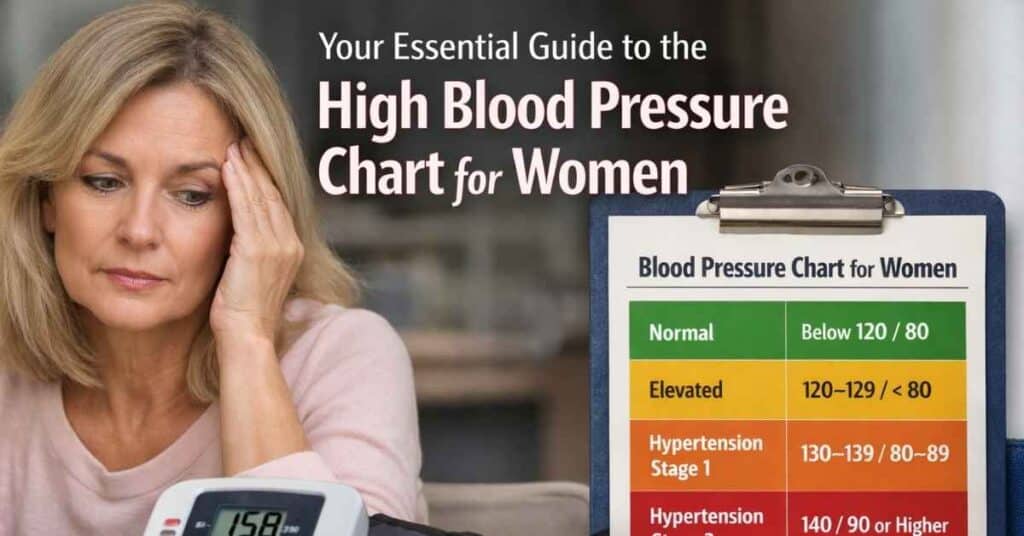
Here is the essential [high blood pressure chart women] can reference:
| Category | Systolic (Top Number) | Diastolic (Bottom Number) | What It Means & What to Do |
|---|---|---|---|
| Normal | Below 120 mmHg | and Below 80 mmHg | Excellent! This is the ideal range. Keep up your healthy habits with regular exercise and a balanced diet. |
| Elevated/ High-Normal | 120 – 129 mmHg | and Below 80 mmHg | A warning sign. Your blood pressure is higher than ideal. This is your cue to focus on lifestyle changes to prevent it from rising further. |
| Hypertension Stage 1 | 130 – 139 mmHg | or 80 – 89 mmHg | Mild high blood pressure. Your GP will likely advise lifestyle changes and may consider medication depending on your overall risk. |
| Hypertension Stage 2 | 140 mmHg or higher | or 90 mmHg or higher | Established high blood pressure. Medication is very likely to be recommended alongside significant lifestyle modifications. |
| Hypertensive Crisis | 180 mmHg or higher | and/or 120 mmHg or higher | Seek immediate medical attention. This is a dangerous level requiring urgent care. |
A Real-Life Example: Sarah, 48, has a home monitor. She takes her reading one morning and sees 128/82. According to the chart, her systolic (128) is in the Elevated range, and her diastolic (82) is just in Stage 1. This tells her it’s time to book a chat with her GP for confirmation and to review her daily salt intake and stress management techniques.
Why Blood Pressure is Different for Women: Hormones, Pregnancy & Menopause
This is where the generic chart meets female biology. Our blood pressure has its own lifecycle, influenced heavily by hormones.
-
Pregnancy & Blood Pressure: Monitoring is crucial. Conditions like gestational hypertension (high BP after 20 weeks) and pre-eclampsia (high BP with protein in urine) are serious pregnancy complications. This is why your midwife checks your pressure at every appointment.
-
The Menopause Transition: As oestrogen levels drop, blood vessels can become less flexible, and it’s common for blood pressure to rise. Many women find their numbers creep up during perimenopause and after menopause, increasing the risk of heart disease.
-
Birth Control Pills: Some combined contraceptive pills can cause a small increase in blood pressure. Your GP should check your BP before prescribing and at follow-ups.
-
The Stress Factor: While not exclusive to women, the “mental load” and chronic stress many women manage can contribute to sustained higher blood pressure over time.
Understanding these nuances means you can have a more informed conversation with your doctor. It’s not just “your numbers are up,” but “my numbers are up, and I’m navigating menopause – what are my best options?”
From Chart to Action: What to Do If Your Numbers Are High
Seeing your numbers in the “Elevated” or “Hypertension” categories can be worrying, but it’s also a powerful opportunity for change. Lifestyle modifications are the cornerstone of management.
-
Embrace the DASH Diet: The Dietary Approaches to Stop Hypertension (DASH) diet is proven to lower BP. It’s rich in fruits, vegetables, whole grains, and lean protein, and low in saturated fat and salt. For a practical start, check out our guide to 21 Healthy Breakfast Ideas for High Blood Pressure: Start Your Day Right.
-
Shake Off the Salt: The NHS recommends adults eat less than 6g of salt a day (about a teaspoon). Hidden salt is in processed foods, bread, sauces, and ready meals. Read labels and flavour food with herbs and spices instead.
-
Move Your Body Regularly: Aim for at least 150 minutes of moderate-intensity activity (like brisk walking, cycling, or swimming) per week. Consistency is key!
-
Manage Stress Mindfully: Chronic stress keeps your BP elevated. Explore what works for you: daily walks, yoga, meditation, deep breathing exercises, or a hobby that brings you joy.
-
Limit Alcohol & Quit Smoking: Both can raise blood pressure and damage artery walls. Following the UK guidelines of no more than 14 units of alcohol per week, spread over 3+ days, is important.
How to Monitor Your Blood Pressure at Home
Home monitoring can provide a clearer picture than occasional clinic readings, which can be affected by “white coat syndrome” (nervousness at the doctor’s). Here’s how to do it right:
-
Choose a Validated Monitor: Opt for a digital, upper-arm cuff monitor. The British and Irish Hypertension Society (BIHS) maintains a list of validated devices. Wrist monitors are generally less reliable.
-
The Right Technique:
-
Sit quietly for 5 minutes before taking a reading.
-
Rest your arm on a table so the cuff is level with your heart.
-
Keep feet flat on the floor and avoid talking.
-
Take two readings, 1-2 minutes apart, and record the average.
-
-
Keep a Log: Note the date, time, reading, and which arm you used. Share this log with your GP—it’s invaluable data. You can find printable logs on the Blood Pressure UK website.
Conclusion: Your Health, In Your Hands
Understanding the [high blood pressure chart women] is more than just memorising numbers—it’s about gaining insight into the rhythm of your own body. It empowers you to ask the right questions, make proactive changes, and partner effectively with your healthcare team.
Remember, a single high reading isn’t a diagnosis, but a sign to pay attention. Start by incorporating one or two positive lifestyle changes, consider home monitoring if advised, and always follow up with your GP for personalised advice. Your heart health is a lifelong journey, and you are firmly in the driver’s seat.
One Response