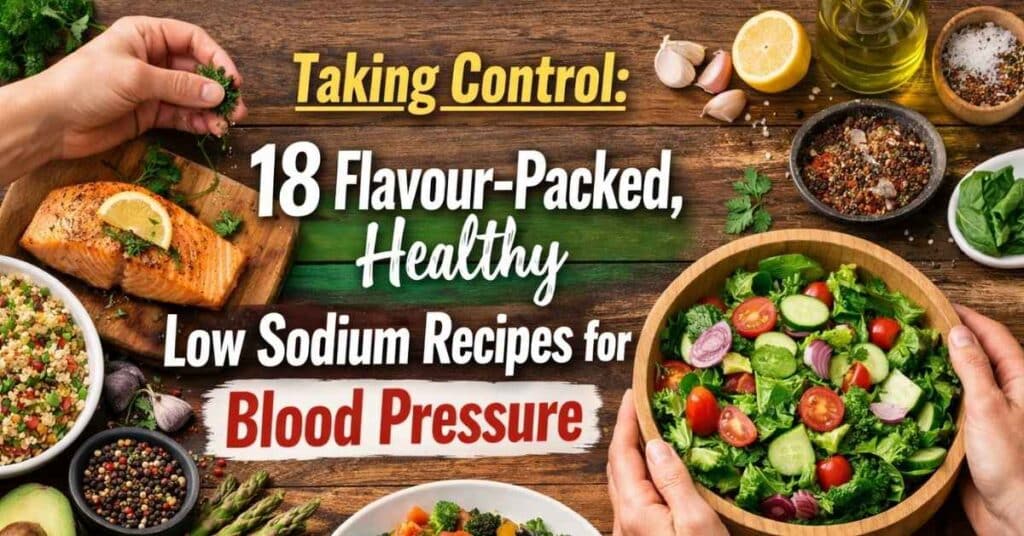
Let’s be honest, the phrase “low sodium diet” can sound about as exciting as watching paint dry. It often brings to mind bland chicken, unseasoned vegetables, and a general feeling of culinary disappointment. If you’re worried about your blood pressure, you might be fearing that a life of flavourless food lies ahead.
But what if we told you that reducing your sodium intake could be the most delicious and rewarding health decision you ever make? The truth is, a diet for healthy blood pressure isn’t about taking away taste; it’s about unlocking a whole new world of vibrant, fresh, and exciting flavours. By moving the salt shaker to the side, you make room for the bright zing of lemon, the earthy depth of herbs, the warm kick of spices, and the natural sweetness of perfectly cooked vegetables.
This article is your friendly, practical guide to turning that “what if” into reality. We’ll walk you through the why and the how in simple terms, and then dive into 18 healthy low sodium recipes for blood pressure that will make your taste buds sing. Think of this not as a restrictive plan, but as a culinary adventure for your heart’s sake.
The Science Made Simple – Salt, Pressure, and You
Before we get to the good stuff (the recipes!), let’s quickly clear up why this is so important. Understanding the “why” makes the “how” much easier to stick with.
Why Sodium Matters for Your Blood Pressure
Imagine your bloodstream as a busy network of roads. Sodium (a key part of salt) acts like a magnet for water. When you eat too much of it, it pulls more water into your bloodstream. More water in the same space means higher pressure against the walls of your blood vessels—that’s high blood pressure, or hypertension.
Over time, this constant high pressure can strain your heart and damage your arteries, increasing your risk of serious problems like heart disease and stroke. The good news? According to the British Heart Foundation, reducing salt intake is one of the most straightforward ways to help lower your blood pressure and protect your heart.
How Much is Too Much? Decoding UK Guidelines
In the UK, public health advice is clear. Adults should aim to eat no more than 6g of salt per day—that’s about one level teaspoon. For sodium specifically, the limit is under 2,300mg.
The shocker? Most Brits are consuming far more than this, often without realising it. The key isn’t just to use less salt in cooking or at the table (that only accounts for about 20-25% of our intake). The real secret is knowing where it’s hidden.
The Hidden Salt Trap: Where Sodium Lurks Lurks
This is the game-changer. Around 75-80% of the salt we eat is already in the everyday foods we buy. The main culprits are:
-
Processed Meats: Bacon, ham, sausages, sliced chorizo.
-
Ready Meals & Sauces: Pasta sauces, curry kits, soups, and frozen dinners.
-
Bread & Breakfast Cereals: Even seemingly plain bread can contain surprising amounts.
-
Cheese: Especially hard cheeses and processed cheese slices.
-
Stock Cubes, Gravy Granules & Condiments: Soy sauce, ketchup, and ready-made salad dressings are often very high in salt.
The first step towards better heart health is becoming a label detective, which we’ll cover later. But for now, remember: cooking from scratch is your single most powerful tool for controlling your sodium intake.
Part 2: Your Low-Sodium Kitchen Toolkit
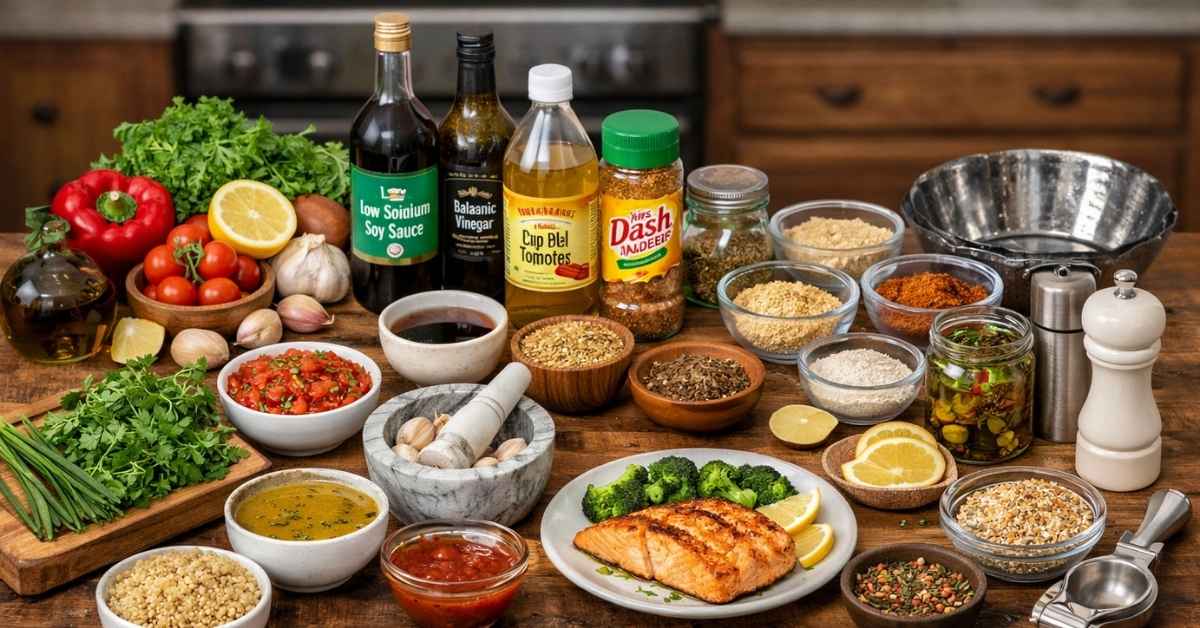
Transforming your diet starts with transforming your kitchen. Think of this as gathering your flavour armoury.
Stocking Your Pantry: The Essentials
A well-stocked cupboard means you can always whip up a healthy low sodium recipe for blood pressure. Here are your new best friends:
-
No-Salt-Added Tinned Goods: Tomatoes, pulses (beans, lentils, chickpeas), and sweetcorn. Always check the label.
-
Whole Grains: Brown rice, quinoa, wholewheat pasta, and oats.
-
Healthy Oils: A good quality olive oil for dressings and low-heat cooking is a must. (Confused about oils? Our guide on Vegetable Oil vs Olive Oil: A UK Guide breaks it down simply).
-
Vinegars: Balsamic, apple cider, and red wine vinegar add instant acidity and depth.
-
Unsalted Nuts & Seeds: For crunch and healthy fats.
-
Fresh & Frozen Vegetables: Frozen veg are a fantastic, nutrient-packed shortcut.
Flavour Without the Salt Shaker: Herbs, Spices & Techniques
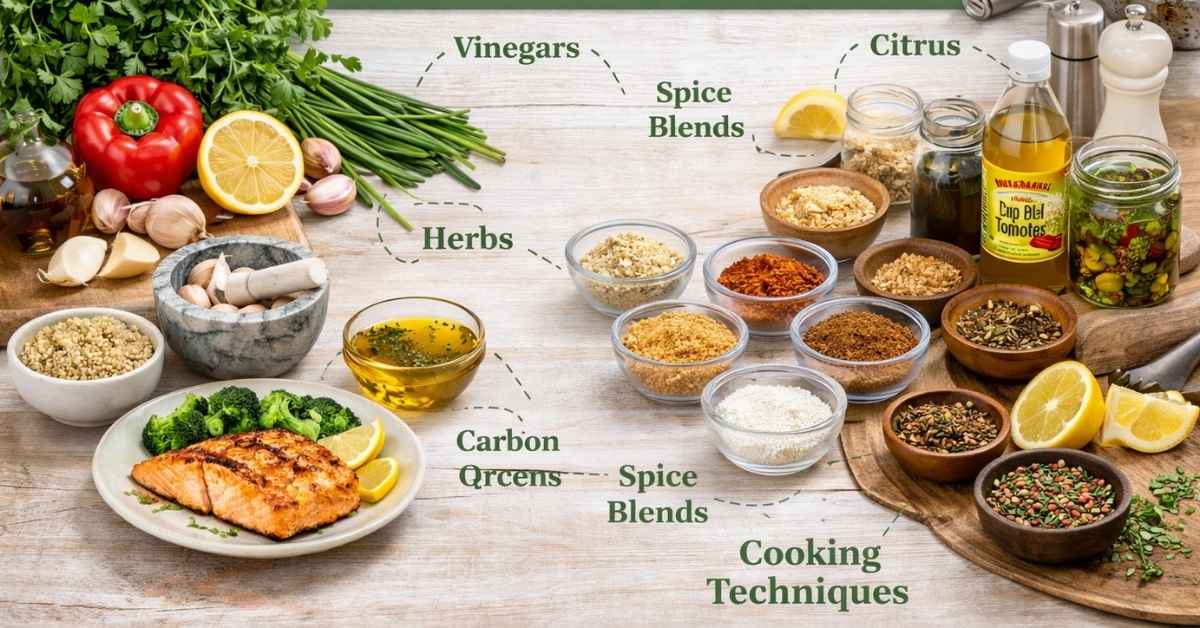
This is the heart of delicious low-sodium cooking. Salt is just one flavour; we have a whole orchestra to play with!
-
Fresh Herbs: Parsley, coriander, basil, dill, and mint add a burst of fresh flavour at the end of cooking.
-
Dried Herbs & Spices: Oregano, thyme, smoked paprika, cumin, coriander, cinnamon, and chilli flakes are pantry heroes. Toasting whole spices (like cumin seeds) in a dry pan before grinding releases incredible aroma.
-
Alliums: Garlic, onions, shallots, and leeks are the flavour foundation for countless dishes.
-
Acidity: A squeeze of lemon or lime juice, or a dash of vinegar, can brighten a dish and balance flavours perfectly.
-
Umami Boosters: Ingredients like mushrooms, nutritional yeast, and a splash of low-sodium tomato paste add a deep, savoury richness.
Smart Swaps: Healthier Alternatives
-
Instead of table salt: Try a potassium-based “low sodium salt” substitute (check with your GP first if you have kidney issues).
-
Instead of regular stock cubes: Use reduced-salt stock cubes, make your own stock, or use a spoonful of miso paste (choose a lower-sodium variety) dissolved in hot water.
-
Instead of soy sauce: Opt for a reduced-sodium soy sauce or tamari, and use it sparingly.
Part 3: 18 Healthy Low Sodium Recipes for Blood Pressure Control
Now for the main event! Here are 18 healthy low sodium recipes for blood pressure, designed to be simple, satisfying, and full of flavour. These are conceptual recipes—guides to inspire your own kitchen creations.
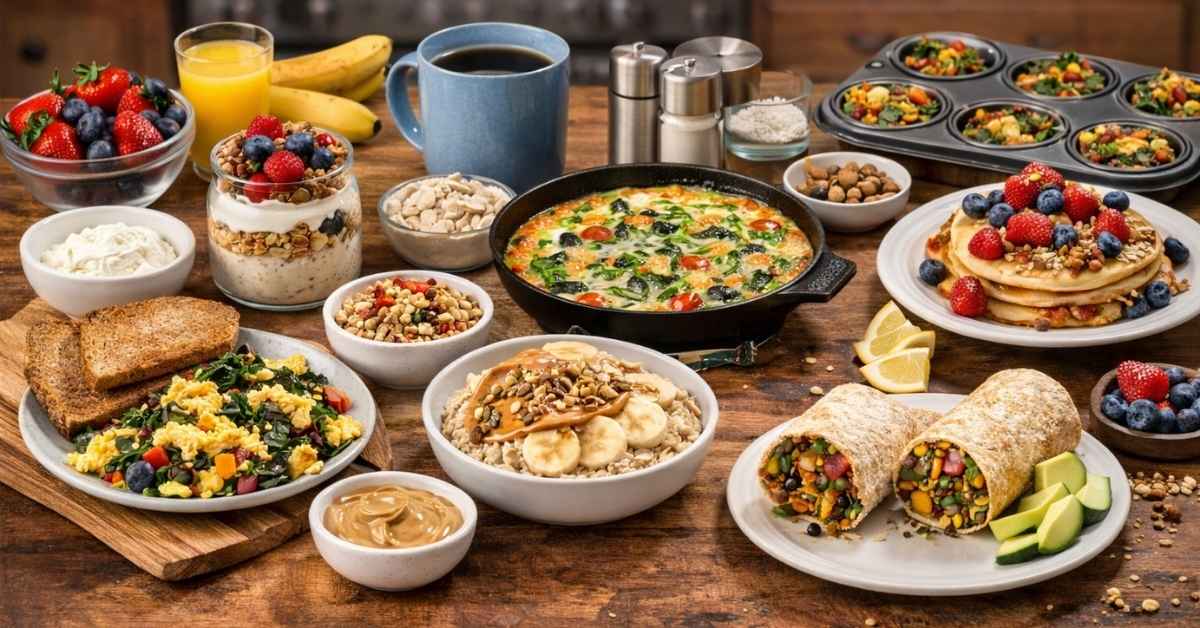
Hearty Breakfasts to Start the Day Right
-
Creamy Avocado & Chilli Smash on Seeded Toast: Mash ripe avocado with a squeeze of lime, a pinch of black pepper, and a sprinkle of chilli flakes. Pile onto toasted seeded bread. Key Benefit: Heart-healthy monounsaturated fats and fibre.
-
Summer Berry & Yoghurt Power Bowl: Layer plain Greek yoghurt with mixed fresh/frozen berries, a handful of oats, and a few unsalted walnuts. Key Benefit: High in calcium, antioxidants, and protein to keep you full.
-
Herby Mushroom & Spinach Scramble: Sauté sliced mushrooms in a little olive oil with garlic. Add fresh spinach until wilted, then pour in beaten eggs and scramble with fresh chives. Key Benefit: A great source of protein and potassium.
-
Overnight Oats with Apple & Cinnamon: Mix rolled oats with unsweetened almond milk, grated apple, a dash of cinnamon, and a teaspoon of chia seeds. Leave in the fridge overnight. Key Benefit: Excellent soluble fibre for heart health.
Light Lunches & Vibrant Salads
-
Lentil, Roasted Vegetable & Feta Salad: Toss cooked Puy lentils with roasted peppers, courgette, and red onion. Crumble over a small amount of feta and dress with lemon juice and oregano. Key Benefit: Fibre-rich and packed with vitamins. (For more on building balanced plates, see our guide to Food Groups for a Healthy Diet).
-
Classic Hummus & Crudité Platter: Blend a tin of no-salt-added chickpeas with garlic, lemon juice, tahini, and a drizzle of olive oil. Serve with carrot, cucumber, and pepper sticks. Key Benefit: A perfect, portable snack or light lunch.
-
Hearty Sweet Potato & Black Bean Soup: Sauté onion, celery, and garlic. Add cubed sweet potato, a tin of no-salt-added black beans, low-sodium vegetable stock, and cumin. Simmer until tender, then blend until smooth. Key Benefit: Rich in beta-carotene and fibre.
-
Wholemeal Pitta with Turkey & Rainbow Slaw: Fill a wholemeal pitta with slices of home-cooked, unseasoned roast turkey breast and a crunchy slaw made from shredded cabbage, carrot, and a yoghurt-lemon dressing. Key Benefit: Lean protein and a colourful array of vegetables.
Satisfying Dinners
-
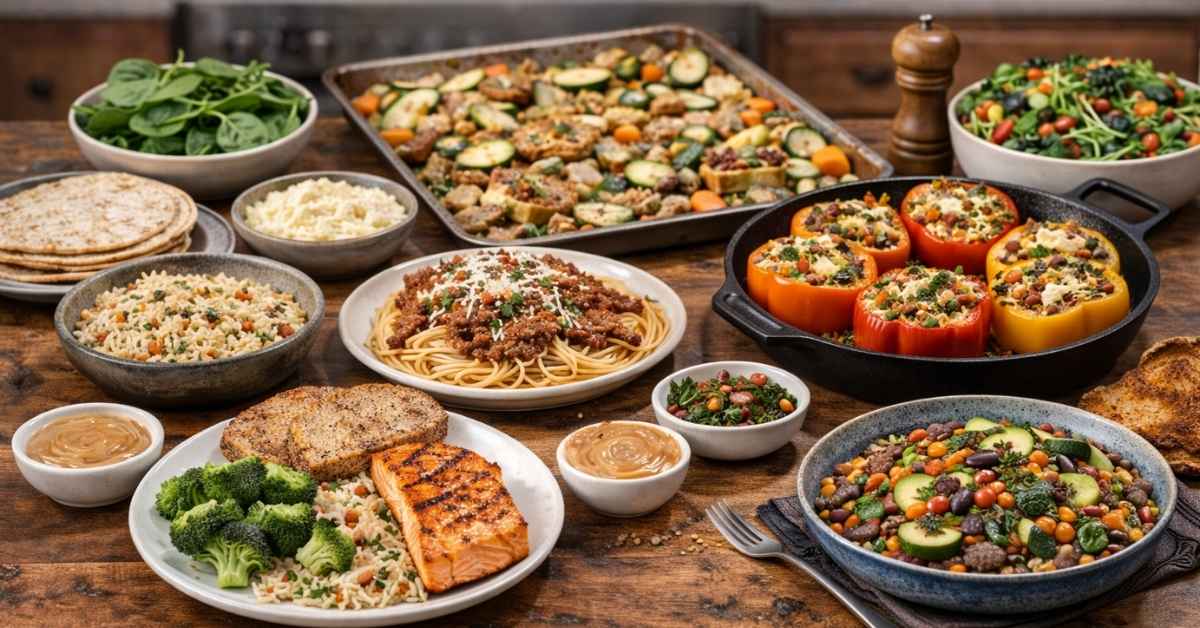
One-Pan Lemon & Herb Baked Salmon: Place salmon fillets on a tray with broccoli florets and cherry tomatoes. Drizzle with olive oil, lemon slices, and fresh dill. Bake until the salmon is cooked through. Key Benefit: Omega-3 fatty acids are brilliant for heart health.
-
Spicy Bean Chilli with Cauliflower Rice: Cook onion, garlic, and chilli. Add peppers, tins of no-salt-added kidney beans and chopped tomatoes, paprika, and cumin. Simmer and serve over “rice” made by grating and lightly frying cauliflower. Key Benefit: High-fibre, plant-based, and incredibly flavourful.
-
Herb-Crusted Chicken with Roasted New Potatoes: Coat chicken breasts in a mix of wholemeal breadcrumbs, lemon zest, parsley, and black pepper. Bake alongside halved new potatoes tossed in rosemary. Key Benefit: A comforting classic, made over.
-
Speedy Prawn & Vegetable Stir-fry: Stir-fry prawns with broccoli, mange tout, and bell peppers in a wok. Flavour with fresh ginger, garlic, a splash of reduced-sodium soy sauce, and lime juice. Key Benefit: Quick, light, and packed with protein and veg.
-
Lentil & Vegetable Bolognese: Use brown lentils instead of mince in your favourite pasta sauce recipe. Cook with plenty of onions, carrots, celery, garlic, herbs, and no-salt-added tinned tomatoes. Serve with wholewheat spaghetti. Key Benefit: A hearty, fibre-packed family favourite.
-
Stuffed Roasted Peppers: Halve and deseed bell peppers. Fill with a mixture of cooked quinoa, chopped tomatoes, sweetcorn, black beans, and smoked paprika. Top with a little mozzarella and bake until tender. Key Benefit: A complete, colourful meal in one.
Simple Snacks & Sides
-
Crunchy Spiced Chickpeas: Rinse and dry a tin of no-salt-added chickpeas. Toss with olive oil, smoked paprika, and cumin. Roast in the oven until crispy. Key Benefit: A satisfying, crunchy alternative to salted nuts or crisps.
-
Homemade Popcorn with Nutritional Yeast: Air-pop plain popcorn. Toss with a little olive oil and a tablespoon of nutritional yeast for a cheesy, nutty flavour. Key Benefit: A wholegrain snack with added B-vitamins.
-
Garlic & Rosemary Roasted Sweet Potato Wedges: Cut sweet potatoes into wedges, toss with a tiny amount of olive oil, crushed garlic, and fresh rosemary. Roast until golden. Key Benefit: A high-potassium, flavourful side dish.
-
Cucumber & Mint Raita: Grate cucumber, squeeze out excess water, and mix with plain yoghurt, chopped fresh mint, and a pinch of ground cumin. Key Benefit: A cooling, creamy dip or side that’s perfect with spicy dishes.
Part 4: Making It Stick – A Sustainable Approach
Adopting new habits takes time. Be kind to yourself and focus on progress, not perfection.
Reading Food Labels Like a Pro
In the UK, use the traffic light system as a quick guide, but always check the “salt per 100g” figure:
-
High is more than 1.5g salt (0.6g sodium) per 100g. Try to avoid these or eat them rarely.
-
Low is 0.3g salt (0.1g sodium) or less per 100g. These are good choices.
Aim to choose more greens and ambers, and fewer reds. Resources from NHS.uk are incredibly helpful for this.
Tips for Dining Out and Social Occasions
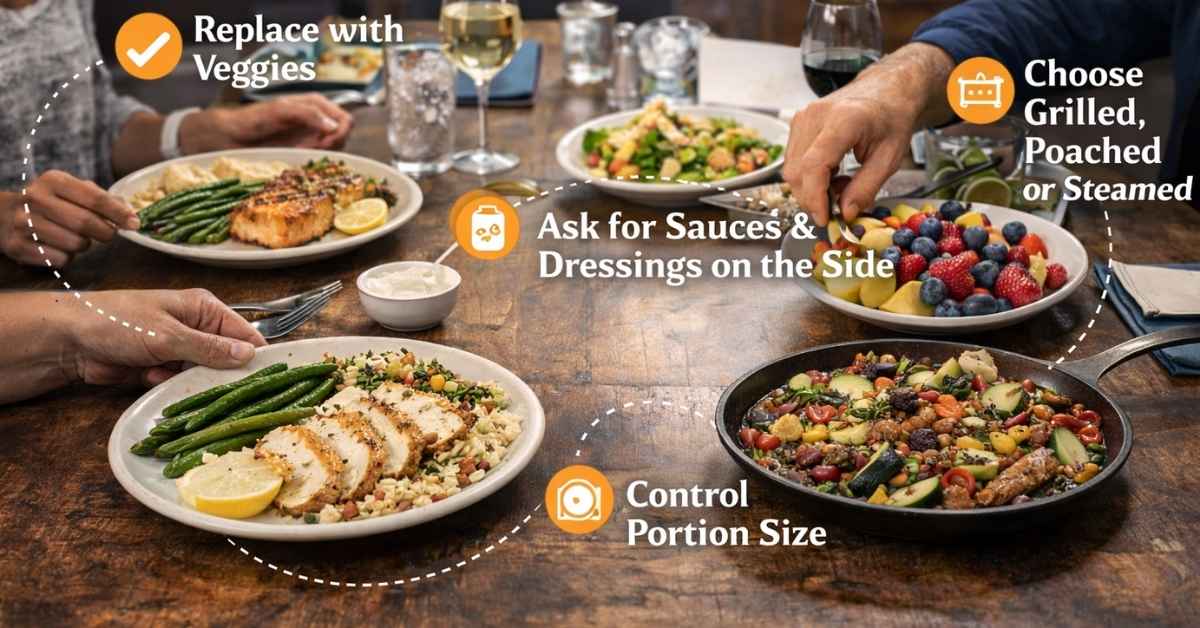
You don’t have to miss out! Ask for sauces and dressings on the side, choose grilled over fried options, and don’t be shy to ask if a dish can be prepared with less salt. For some great UK-specific ideas, check out our article on Dine Out, Stay Healthy: The Best Food Places in the UK for Blood Pressure Control.
Building Habits: Small Steps for Lasting Change
-
Start with one meal: Begin by making one of your daily meals a low-sodium, home-cooked one.
-
Cook once, eat twice: Make double portions to have a healthy lunch ready for the next day.
-
Taste before you salt: Get into the habit of tasting your food before automatically reaching for the salt shaker.
-
Find a buddy: Share your goals with a friend or family member. Cooking and eating together makes the journey more enjoyable.
Conclusion: Your Journey to Better Heart Health Starts Here
Embracing a diet full of healthy low sodium recipes for blood pressure is far from a punishment. It’s an invitation to explore fresh ingredients, experiment with global flavours, and nourish your body in the most fundamental way. By cooking more at home, becoming savvy with labels, and learning the magic of herbs and spices, you’re taking powerful control of your heart health.
Remember, every small change adds up. Whether you try one new recipe this week or decide to make your own soup instead of buying a tin, you’re moving in the right direction. Your heart—and your taste buds—will thank you for it.
We’d love to hear about your journey! Which of these healthy low sodium recipes for blood pressure are you excited to try first? Do you have a favourite salt-free flavour trick? Share your thoughts, questions, or your own recipe ideas in the comments below. If you found this guide helpful, please pass it on to a friend or family member who might benefit. Let’s build a community of heart-healthy food lovers together
6 Responses