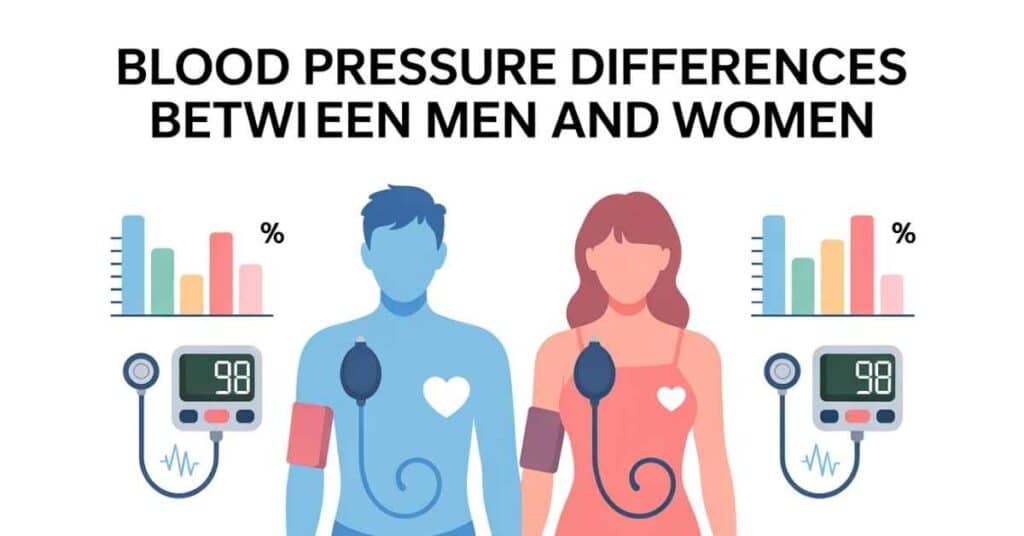
Introduction: It’s Not Just a Number—It’s Personal
Picture this: John and Sarah, both healthy and 45 years old, sit side-by-side at their NHS Health Check. The nurse takes their blood pressure. John’s reading is 135/85 mmHg. Sarah’s is 125/80 mmHg. “Nothing to worry about,” they’re told. But why are John’s numbers naturally higher? Is this normal, or a hidden problem?
For decades, blood pressure was treated as a one-size-fits-all metric. But emerging research and daily clinical practice reveal a more nuanced truth: blood pressure differs significantly between men and women, not just in numbers, but in causes, patterns, and risks across a lifetime.
Understanding these differences isn’t just academic—it’s vital for your health. It affects when you should start monitoring, what your target should be, and how you interpret that reading on your home monitor. As a nurse with over 15 years in UK cardiology clinics, I’ve seen how personalised knowledge empowers patients. This guide will cut through the confusion, explaining the ‘why’ behind the numbers and giving you practical, actionable insights for your health journey.
The Fundamental Divide: Why Men and Women Have Different Blood Pressure

Let’s start with the basics. Blood pressure isn’t static; it’s a dynamic force influenced by anatomy, hormones, and lifestyle.
The Role of Anatomy and Physiology
Men, on average, have larger hearts and wider blood vessels than women of the same size. Think of plumbing: a wider pipe can handle higher pressure with less strain. However, this doesn’t mean high pressure is safe for men—it just means the starting point of ‘normal’ can be different. Women’s vascular systems are generally more responsive and can be more susceptible to stiffness over time.
The Powerful Influence of Hormones
This is the cornerstone of the difference. Oestrogen, the primary female sex hormone, acts as a natural vasodilator—it helps relax and widen blood vessels, promoting healthy blood flow and generally keeping pressure lower in premenopausal women.
Testosterone, while important for men’s health, does not offer this same protective effect on blood vessels. This hormonal shield is why, until menopause, women typically enjoy a natural cardiovascular advantage. It’s a key reason why men often develop hypertension earlier in life.
A Real-Life Insight: I recall a patient, Mark, who at 38 had a worrying BP of 142/92. His wife, Lisa, same age, was consistently at 118/76. He was baffled, thinking they had similar lifestyles. This hormonal and anatomical baseline was a crucial part of our conversation.
A Lifetime View: How Blood Pressure Changes with Age and Gender

Looking at a single reading is like judging a film by one frame. You need to see the whole story. Let’s chart the typical journey.
The Early and Middle Years (20s – 40s)
-
Men: Blood pressure tends to rise gradually from early adulthood. Stress, diet, and lifestyle factors begin to show their effects.
-
Women: Thanks to oestrogen, blood pressure usually remains lower than male peers. Pregnancy can cause temporary changes (like gestational hypertension), which is a critical monitoring period.
The Turning Point: Menopause (Late 40s – 50s)
This is a major shift. As oestrogen levels decline, women’s protective vascular shield diminishes.
-
Women: Blood pressure begins to climb, often quite steeply. By their late 50s or early 60s, women’s rates of hypertension frequently catch up to and can even surpass men’s.
-
Men: The rise continues, but the gradient may be less steep compared to women’s post-menopausal surge.
Practical Tip: For women approaching or in menopause, I advise starting regular home monitoring even if previous checks were normal. Don’t wait for your next NHS Health Check. Catching an upward trend early is powerful. A Blood Pressure Average Calculator is perfect for tracking this.
The Later Years (70+)
-
Women: Often have higher systolic pressure (the top number) than men of the same age. This is linked to increased vessel stiffness.
-
Men: Patterns can vary more based on lifelong management.
-
Crucial Note: While we discuss averages, individual variation is huge. Your health, genetics, and lifestyle are the lead actors in this play.
Decoding the Charts: What’s “Normal” for You?
“What is a normal blood pressure for a woman?” or “What is normal for a 70-year-old?” are among my most common questions. Let’s simplify.
The NHS and the British Heart Foundation define a target blood pressure for most healthy adults as below 140/90 mmHg in a clinic setting, and below 135/85 mmHg at home.
However, context is everything. Here’s a simplified, practical guide:
-
For a healthy woman in her 30s-40s: A reading around 110/70 to 120/80 mmHg is very common.
-
For a healthy man of the same age: 120/80 to 130/85 mmHg might be more typical.
-
For a 70-year-old woman: Under 140/90 mmHg (clinic) remains the goal, but artery stiffness can make the top number (systolic) creep up. The focus is on controlled, stable numbers. If you’re wondering, What is normal blood pressure for a 74 year old woman?, the same clinic target applies, but your GP will personalise it based on your overall health.
-
For a 70-year-old man: Similar targets apply. The key is consistency and avoiding large swings.
Important: These are not rigid bins. A one-off high reading needs context. This is where understanding What Are the Reasons for High Blood Pressure? A Complete Guide becomes essential. Is it stress, salt, sleep, or something else?
Actionable Health Tips for Men and Women
Knowing the differences is step one. Using this knowledge is step two.
For Men (Especially Under 60):
-
Start Monitoring Earlier: Don’t wait until your 40s. Get a baseline in your 30s.
-
Be Salt-Savvy: Men often consume more processed foods. Read labels.
-
Manage Stress Proactively: High-stress jobs and internalised stress are significant, silent contributors.
-
Listen to Your Body: Erectile dysfunction can be an early warning sign of vascular issues, including hypertension.
For Women (Focusing on the Transition):

-
Embrace Menopause Monitoring: See menopause as a vital health checkpoint. Start home checks annually.
-
Understand Symptom Overlap: Menopause symptoms (hot flushes, palpitations) can feel like anxiety, which itself raises BP. Knowing the difference is key.
-
Prioritise Sleep and Weight: Post-menopausal weight gain and sleep disruption (from night sweats) are major BP drivers. Tackle these holistically.
-
Don’t Dismiss “White Coat Hypertension”: It’s more common in women. If clinic readings are high but home readings are normal, a 24-hour ambulatory monitor like The Mobil-O-Graph Blood Pressure Monitor can provide clarity.
For Everyone: Regular, gentle exercise, a diet rich in potassium (fruit, veg), and limiting alcohol are universal wins. If you get a sudden high reading, don’t panic—follow the steps in our guide: Your Action Plan for a Sudden High Blood Pressure Reading: A UK Clinician’s Guide.
Frequently Asked Questions (FAQs)
Why are male and female blood pressure different?
Primarily due to anatomy (men generally have larger hearts and vessels) and the protective effect of oestrogen in premenopausal women, which relaxes arteries.
What is normal BP for male and female?
For adults, the universal clinical target is below 140/90 mmHg. However, an ideal reading is often considered around 120/80 mmHg. Women often sit in the ideal range earlier in life, while men may be in the high-normal range (130/85) without it being immediately concerning, though it warrants watching.
Why is BP high in females?
Before menopause, causes are often similar to men: family history, diet, stress. After menopause, the sharp drop in oestrogen is a major new risk factor, leading to stiffer arteries and higher pressure.
What is dangerously high blood pressure for a woman?
Any reading 180/120 mmHg or higher is a hypertensive crisis and requires immediate medical attention—call 999. This is the same emergency threshold for men.
What is the 60 second trick to lower blood pressure?
The fastest safe method is deep, paced breathing. Try the “4-7-8” technique: inhale for 4 seconds, hold for 7, exhale slowly for 8. This activates your relaxation nervous system and can lower a stress-induced spike within minutes.
Does drinking water lower blood pressure?
Yes, if you are dehydrated. Chronic mild dehydration can cause blood vessels to constrict. Staying consistently well-hydrated supports healthy blood pressure. Don’t chug water before a reading, though, as that can temporarily raise it.
Does anxiety raise blood pressure?
Absolutely, and significantly. Anxiety triggers adrenaline, which causes your heart to race and vessels to constrict. This is why single high readings need context—was it the reading, or the stress of the reading itself? Tracking your average with a Blood Pressure Average Calculator helps see past these spikes.
What is the best time to check blood pressure?
First thing in the morning, before food, caffeine, or medication, and again in the evening. Always sit quietly for 5 minutes first.
What not to do before BP reading?
Don’t drink caffeine, smoke, exercise, or talk during the measurement. Sit with your back supported and feet flat, with the cuff at heart level.
Does caffeine raise blood pressure?
Yes, temporarily (for 3-4 hours). If you’re monitoring, have your coffee after your morning check. Regular consumers may develop a tolerance, but it’s still a potent acute trigger.
When to See Your GP

Don’t self-diagnose based on charts alone. Contact your GP if:
-
Your home readings are consistently at or above 135/85 mmHg.
-
You notice a sudden, sustained increase in your readings.
-
You have symptoms like persistent headaches, vision changes, or chest pain with high readings.
-
You’re planning a pregnancy and have a history of high BP.
Remember, conditions like [Back Pain and Hypertension: What’s the Real Connection?] also exist, showing how systemic health is linked.
Conclusion: Knowledge is Your Best Prescription
Understanding that blood pressure isn’t gender-neutral empowers you to take charge of your health at the right time and in the right way. For men, the message is vigilance from a younger age. For women, it’s recognising menopause as a critical new chapter for heart health.
Your next step? If you haven’t already, consider getting a validated home monitor (look for the British Hypertension Society mark). Start logging your readings calmly and consistently. Share this log with your GP—it’s the most valuable thing you can bring to an appointment.
Your heart’s story is unique. Make sure you’re reading the right chapters.
Sources & Further Reading
-
NHS: High Blood Pressure – The essential UK authority.
-
British Heart Foundation: Gender and Heart Disease – Excellent resource on biological differences.
-
Blood Pressure UK – Fantastic charity with clear guides and tools.