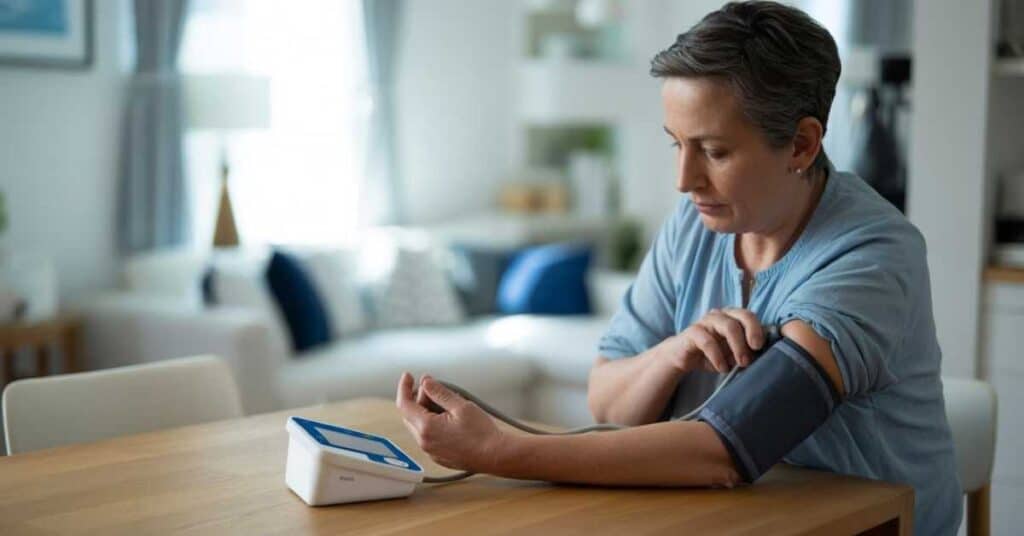
You’ve just taken your blood pressure. The numbers stare back from the monitor, higher than you expected. That familiar flutter of anxiety starts in your chest. What do you do right now?
First, breathe. I’ve been in your shoes, both as a nurse managing patients on the ward and as someone who has watched a family member navigate hypertension. That initial spike of worry is normal, but your next steps are crucial. While hypertension often requires long-term management with your GP, there are safe, evidence-based techniques you can use at home to help lower a sudden elevation—provided you know when it’s safe to do so.
This guide will walk you through those immediate steps, filtered through a lens of practical clinical experience and UK-specific advice. We’ll cover what works, what doesn’t, and the red flags that mean you must reach for the phone, not a breathing exercise.
Understanding the Numbers: A UK Healthcare Professional’s Perspective

Before you act, you need to understand what you’re seeing. In my practice, I’ve found confusion around readings causes unnecessary panic.
Blood pressure is recorded as two figures: systolic (pressure when your heart beats) over diastolic (pressure when your heart rests). The NHS uses the following categories:
-
Ideal: Below 120/80 mmHg
-
Elevated: 120-129/80-89 mmHg
-
High (Stage 1): 130-139/90-99 mmHg
-
High (Stage 2): 140/90 mmHg or higher
-
Hypertensive Crisis: 180/120 mmHg or higher — This is a medical emergency.
A crucial note from experience: One high reading isn’t a diagnosis. I’ve seen countless patients with “white coat hypertension,” where anxiety in a clinical setting skews results. That’s why proper home monitoring is key. If you’re tracking over time, using a blood pressure average calculator can help you spot true trends and provide your GP with far more useful data than a single figure.
The Golden Rule: When to Act at Home vs. When to Call 999

This is the most important judgment call. Drawing a line here has prevented emergencies in my clinical experience.
Home management may be appropriate if:
-
Your reading is elevated but consistently below 180/120 mmHg.
-
You have no severe symptoms (chest pain, crushing headache, vision changes, shortness of breath).
-
You are already under a GP’s care and this is a known, manageable fluctuation.
Call 999 immediately if:
-
Your reading is 180/120 mmHg or higher, even if you feel okay.
-
You have any of these symptoms alongside a high reading: chest pain, severe headache, blurred vision, nausea, confusion, or difficulty breathing.
-
You suspect a hypertensive crisis. Waiting is not an option.
Immediate, Effective Actions to Take at Home (The “Now” Protocol)

If it’s safe to proceed, follow this sequence. I’ve taught this “Now Protocol” to patients for years.
1. Stop, Sit, and Breathe (Properly)
Anxiety and stress cause a catecholamine surge (adrenaline), which will push your numbers up further. Break the cycle.
-
Sit: Get into a supportive chair, feet flat on the floor, back supported. Rest your arms on a table.
-
Re-check Correctly: After 5 minutes of quiet sitting, take a second reading with a validated monitor (look for the BHS or ESH mark). Ensure the cuff is at heart level. Don’t talk.
-
Practice 4-7-8 Breathing: This isn’t just fluffy advice; it physiologically activates your vagus nerve. Exhale fully, inhale through your nose for 4, hold for 7, exhale through your mouth for 8. Repeat 4 times. I’ve seen this drop readings by 10-15 points in anxious patients in-clinic.
2. Use Dietary Leverage – What to Reach For & Avoid
What you consume in the next hour can have a direct, though temporary, effect.
Reach for:
-
A glass of water: Dehydration can cause vasoconstriction. Sip, don’t gulp.
-
Potassium-rich foods: A banana or a handful of spinach. Potassium helps balance sodium. The NHS recommends 3,500mg daily, but most UK diets are deficient.
-
Nitrate-rich foods: A small glass of beetroot juice. A landmark study from Queen Mary University of London showed it can lower systolic BP by 4-8 mmHg within hours by boosting nitric oxide, which dilates blood vessels.
Avoid absolutely:
-
Caffeine: That cup of tea or coffee will wait. Caffeine is a vasoconstrictor.
-
Salt: Put the crisps or salted nuts away. Sodium draws fluid into your bloodstream, increasing pressure.
-
Alcohol: Don’t be tempted by the “it relaxes me” myth. It’s a direct pressor.
3. Apply a Cold Compress

A simple trick with a solid physiological basis: the “diving reflex.” Splashing very cold water on your face or placing a cold, damp flannel on your neck can slow your heart rate and prompt a modest BP drop. I often suggest patients keep a small gel mask in the fridge for this purpose.
4. Engage in Very Gentle Movement
Not exercise. Vigorous activity will raise it. But gentle movement can relieve vascular tension.
-
Try seated leg marches for 2 minutes.
-
Slow, deliberate shoulder rolls.
-
A leisurely 5-minute walk around your garden or a quiet room, focusing on your breath.
What Actually Works: Natural Aids with Clinical Backing
In my work with patients, I’ve reviewed the evidence on popular remedies. Here’s my take:
-
Hibiscus Tea: The data is surprisingly strong. The anthocyanins act similarly to some ACE inhibitor drugs. Steep it strong and drink 2-3 cups daily. It’s tart, so add a little honey.
-
Garlic: For it to work, it must be fresh. Crush a clove, let it sit for 10 minutes to activate the allicin, then add to food. The smell is part of the deal!
-
Magnesium: Often overlooked. A deficit is linked to hypertension. A handful of pumpkin seeds or almonds is a good quick source.
-
Important: Always, always discuss any supplements or medications with your GP before starting, especially if you’re on existing treatment. For instance, if you’re wondering about specific prescriptions, read our guide Does Diazepam Reduce Blood Pressure? A Complete UK Medical Guide (2025) and then speak to your doctor. Never self-medicate.
The Long Game: Turning Immediate Relief into Lasting Management

An immediate fix is just that—immediate. Lasting control is built on daily habits. From what I’ve seen, the patients who succeed best are those who partner with their GP and make sustainable changes.
-
Invest in a Good Monitor: Get a BHS-validated upper arm cuff. Wrist monitors are often inaccurate. Bring it to your next appointment to check its calibration against the clinic device.
-
Keep a Simple Log & Find Your Average: Time, reading, notes (e.g., “after stress at work,” “post-walk”). This data is gold dust for your GP. Use a blood pressure average calculator to understand your How to Work Out Average Blood Pressure: A Complete Guide for Better Heart Health. It moves the conversation from “I think it’s high sometimes” to “Here’s the proven pattern.”
-
Rethink Your Salt: It’s not just the shaker. In the UK, bread, sauces, and ready meals are the biggest culprits. Cooking from scratch, even a few times a week, makes a dramatic difference.
-
Move Consistently: The 150-minute weekly goal isn’t arbitrary. It’s the dose that strengthens your heart so it doesn’t have to work as hard. Find something you enjoy—a brisk walk listening to a podcast, swimming, dancing.
-
Manage Stress Proactively: Don’t wait for a spike. Build daily body stress release into your routine, whether it’s 10 minutes of mindfulness via the NHS-approved ‘Mindful’ app, gardening, or our beginner’s guide to progressive muscle relaxation.
-
Understand Your Triggers: Management is easier when you know your personal risk factors. For a deep dive into causes, our article on What Are the Reasons for High Blood Pressure? A Complete Guide is an essential read.
Final Thoughts from Experience
Managing high blood pressure is a marathon, not a sprint. There will be days with higher readings—that’s normal. The goal is the overall trend.
Your most powerful tool is not any single technique in this article; it’s the partnership with your healthcare team. Use this guide for the immediate, mindful management of fluctuations, but always loop back to your GP with your logs, your questions, and your concerns. They are your greatest ally.
Disclaimer: This article is for informational purposes and reflects UK clinical guidelines and professional experience. It is not a substitute for personalised medical advice from your GP or consultant. Always follow the guidance of your healthcare provider.