Introduction: More Than Just a Number
That quick blood pressure check at your doctor’s office only tells part of the story. It’s a single snapshot on a day that might be stressful. But what about your blood pressure while you’re sleeping, working, or relaxing at home? This is where the Mobil-O-Graph Blood Pressure Monitor comes in.
Think of it as a silent, 24-hour detective for your heart. I’ve worked with patients using these devices, and the data they reveal is often a game-changer. It moves beyond a single, potentially misleading number and paints a full, dynamic picture of your cardiovascular health throughout your entire day and night.
In this guide, we’ll demystify the Mobil-O-Graph. We’ll walk through how it works, what to expect during a 24-hour test, and how to understand the results. My goal is to turn any anxiety you might have into confidence.
What is a Mobil-O-Graph? Unpacking the Device

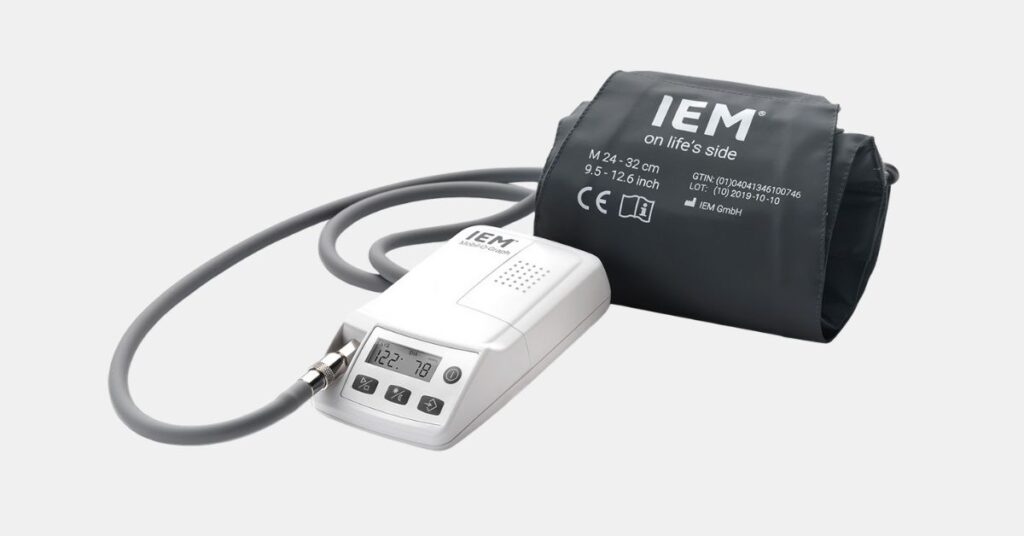
At its core, the Mobil-O-Graph, often made by the German company IEM (Industrial Engineering and Medical), is an Ambulatory Blood Pressure Monitor (ABPM). Unlike the cuff you might have at home, this device is designed to be worn for a full 24-hour period while you go about your normal life.
It consists of two main parts:
-
A small, portable computer unit (about the size of a small radio) that you wear on a belt or a shoulder strap.
-
A blood pressure cuff connected to the unit by a tube, worn on your upper arm.
But the Mobil-O-Graph isn’t just any ABPM. It often uses a technology called oscillometric measurement with brachial artery waveform recording. That’s a mouthful, so let’s break it down in simple terms.
How Does the Mobil-O-Graph Ambulatory Monitor Work?
Every 15 to 30 minutes during the day and every 30 to 60 minutes at night, the device will automatically spring to life. The cuff will inflate, feel tight for a moment, and then deflate. Here’s what’s happening behind the scenes:
-
The Inflation: The cuff inflates to a pressure that temporarily stops the blood flow in your brachial artery.
-
The “Listening” Phase: As the cuff deflates, the artery begins to pulse again. The monitor doesn’t use a microphone like a doctor’s stethoscope. Instead, it senses the vibrations (oscillations) these pulses create against the wall of the artery.
-
The Analysis: The device’s computer analyzes these vibrations with incredible precision. It uses a sophisticated algorithm to calculate your systolic pressure (the pressure when your heart beats) and diastolic pressure (the pressure when your heart rests between beats).
Some advanced Mobil-O-Graph models even analyze the shape of the pulse wave to provide additional data on arterial stiffness, a key indicator of long-term heart health. This makes it a powerful tool for a comprehensive assessment.
To understand what your average readings mean, you can use our Blood Pressure Average Calculator.
Why Your Doctor Might Recommend a 24-Hour Monitor

A single high reading in the clinic can be “white coat hypertension” – anxiety-induced high blood pressure that disappears when you’re home. Conversely, “masked hypertension” is when your pressure is normal at the clinic but high elsewhere. The Mobil-O-Graph catches these hidden patterns.
Doctors typically recommend a 24-hour ABPM like the Mobil-O-Graph for:
-
Diagnosing white coat or masked hypertension.
-
Seeing how well your blood pressure medication is working over a full 24-hour cycle.
-
Assessing “nocturnal dipping” – your blood pressure should naturally dip by 10-15% at night. Not dipping is a risk factor.
-
Investigating hard-to-control or erratic blood pressure.
-
External Link: The British Hypertension Society provides excellent patient resources on why monitoring is so important.
Your Practical Guide to the 24-Hour ABPM Experience
Wearing the monitor can feel a bit strange at first, but knowing what to expect makes all the difference.
What Not to Do When Wearing a 24-Hour Blood Pressure Monitor
To ensure accurate readings, there are a few key things to avoid:
-
Strenuous Exercise: Avoid heavy lifting, running, or gym workouts.
-
Submerging the Device: You absolutely cannot shower, swim, or take a bath with it on.
-
Tugging on the Tubing: Be mindful when dressing or moving to avoid dislodging the cuff.
-
Using Power Tools or Strong Electromagnetic Sources: These can potentially interfere with the device’s electronics.
A Day in the Life with Your Mobil-O-Graph

Let me walk you through a typical day based on patient experiences:
-
The Fitting: Your nurse or doctor will fit the cuff snugly on your non-dominant arm (usually your left if you’re right-handed). They’ll start a test reading to ensure it’s working.
-
During the Day: You’ll hear a whirring sound before each reading. When it starts to inflate, my top tip is to stop what you’re doing, relax your arm, and keep it still at heart level. If you’re walking, just stop and let your arm hang loosely by your side. Don’t bend the arm with the cuff.
-
At Night: Try to sleep as normally as possible. You can place the unit on your bedside table. If a reading wakes you, don’t worry—just relax until it’s finished. The night-time readings are some of the most valuable.
-
A common question is, Can You Drive with a 24-Hour Blood Pressure Monitor? We have a full article that covers the safety and practicalities.
Decoding the Technology: Oscillometric Measurement Explained
You might be wondering: Is oscillometric measurement better than manual measurement?
It’s not necessarily “better,” but it’s perfectly suited for ambulatory use. The traditional manual method (auscultatory) requires a trained professional with a stethoscope. The oscillometric method is automated, eliminating human error and making 24-hour monitoring possible.
What affects the accuracy of an automatic BP machine?
-
Cuff Size: An ill-fitting cuff is the number one cause of error.
-
Movement: Talking or moving your arm during a reading.
-
Body Position: Not having your arm supported at heart level.
- For a deeper dive into accuracy, see our guide on How to Calculate Average Blood Pressure Over a Week for reliable at-home tracking.
Addressing Common Questions and Concerns (FAQ)

Is the Mobil-O-Graph accurate for 24-hour blood pressure monitoring?
Yes, the Mobil-O-Graph is a clinically validated device used in research and clinical practice worldwide. Its algorithms are rigorously tested to ensure they provide accurate and reliable readings comparable to other gold-standard methods.
How often does a 24-hour BP monitor take readings?
This is usually pre-set by your clinician. A typical schedule is every 30 minutes during the day (e.g., 7 AM – 10 PM) and every 60 minutes at night (10 PM – 7 AM).
What brand of BP monitor is most trusted by doctors?
For clinical-grade ambulatory monitoring, brands like IEM (Mobil-O-Graph), Spacelabs, and Microlife are highly trusted and commonly used in hospitals. For home use, brands like Omron and Microlife are often recommended. External Link: Organizations like the American Heart Association provide lists of validated devices.
Why does the BP monitor inflate so tightly?
It needs to inflate to a pressure high enough to temporarily stop the blood flow in your main artery. This is essential for it to accurately detect the vibrations of your pulse as the cuff deflates. It should be snug, but not painful.
Can movement affect the readings?
Yes, significant arm or body movement during a reading can cause an error. The device will usually try to take the reading again a few minutes later. This is why keeping your arm still is so important.
Are home BP monitors as accurate as clinical ABPM devices?
A high-quality, clinically validated home monitor is very accurate for spot-checking. However, an ABPM like the Mobil-O-Graph is considered the gold standard for diagnosis because it provides a much larger dataset and captures your natural blood pressure rhythm, free from “white coat syndrome.”
What do I do if I see an error code?
The Mobil-O-Graph may display error codes like “E-01” or “E-04.” These usually indicate a problem with the cuff or tubing, like a leak or a kink. Do not try to fix it yourself. Note the time and the error code, and inform your doctor or technician when you return the device. They are trained to handle these issues.
Sometimes, high blood pressure can have surprising symptoms. Learn more in our UK guide: Can High Blood Pressure Cause Flashing Lights in Your Eyes? A UK Guide.
Conclusion: Empowering Your Health Journey
Undergoing a 24-hour blood pressure test with a device like the Mobil-O-Graph is one of the best ways to get a true understanding of your heart’s health. It provides a wealth of data that a single reading simply cannot.
While the experience might be slightly inconvenient for a day, the insights it gives your doctor are invaluable for making the right treatment decisions. It turns guesswork into precision.
I’d love to hear from you! Have you used a 24-hour monitor before? What was your experience like? Share your stories or questions in the comments below – your insights could help others feel more at ease.
Disclaimer: This article is for informational purposes only and does not constitute medical advice. Always follow the instructions of your healthcare provider and the technician who fits your device.